BertazzoniRepair Miami

23 conditions, read from the maker's own paper

Bertazzoni error codes, and most of this kitchen has none.

This is a gas company, and gas equipment does not report — it signals. The dishwashers publish an error table and part of the refrigeration publishes another; every range, every gas oven and all thirty-seven hoods publish nothing at all. So this archive is short, everything in it is real, and where a machine flashes at you instead of numbering itself, that is here too and labelled as what it is.

  • 18 numbered codes the maker prints
  • 5 documented indicators, not codes
  • 69 of the maker's manuals read
  • from $95 diagnostic, credited to the repair

Search the archive

Type what the display is showing

Partial entries work, and letters matter — F1 and FF are different things. If your appliance has no display at all, which on this make is the commoner case, describe what it is doing and start from the symptom pages instead.

Nothing here is invented. Every entry names the manual or the FAQ page it came from, and where this maker publishes no code for a machine, this archive says so rather than filling the gap.

Why this archive is short

Two hundred pages of codes would mean somebody invented them.

Two hundred and eighty-eight product pages on this maker’s own US site were read for the manuals they link to. Sixty-nine distinct manuals came back. Three of them contain a table of codes. Not three per appliance — three in total.

That is not a documentation failure, it is what the equipment is. A gas range diagnoses by flame: how it sits on the port, what color the tip is, whether it holds when you let the knob go. There is nothing for a display to say. So this site puts its weight on the symptom pages, which describe what an appliance is doing, and keeps this archive to what the maker actually prints. A sister site on this fleet was once caught publishing about thirty-eight “codes” that were somebody’s guesses dressed as a table, and that is the mistake this page exists to make impossible.

Start from what it is doing instead
An open appliance manual lying flat on a cream worktop, photographed at a steep angle so the pages read as grey blocks of text and simple line drawings with no legible words, a pencil resting in the gutter.

Before you clear it

Four things worth doing while the display is still showing something

On a machine that only reports occasionally, what is on the panel right now is the whole of the evidence. None of this takes more than a minute.

Photograph it

  • The letter matters as much as the number — F1 and FF are different things
  • A photograph beats writing it down, and beats reading it out on the phone

Note what the machine was doing

  • Which program, how far into it, and whether it had run normally before
  • A code with a story attached is worth several times a code on its own

See whether it survives a power cycle

  • Two full minutes at the breaker, not two seconds at the control
  • Whether it comes back, and how quickly, separates a confused control from a real failure

Check the free causes it names

  • Several of these codes point at a tap, a hose filter or a drain rather than at the appliance
  • The page for each one says which, and what to look at first

By appliance

Which machine is showing it

The dishwasher F-numbers and the refrigeration E-numbers are different sets that happen to share a letter shape. Start from the machine and the number means what it says.

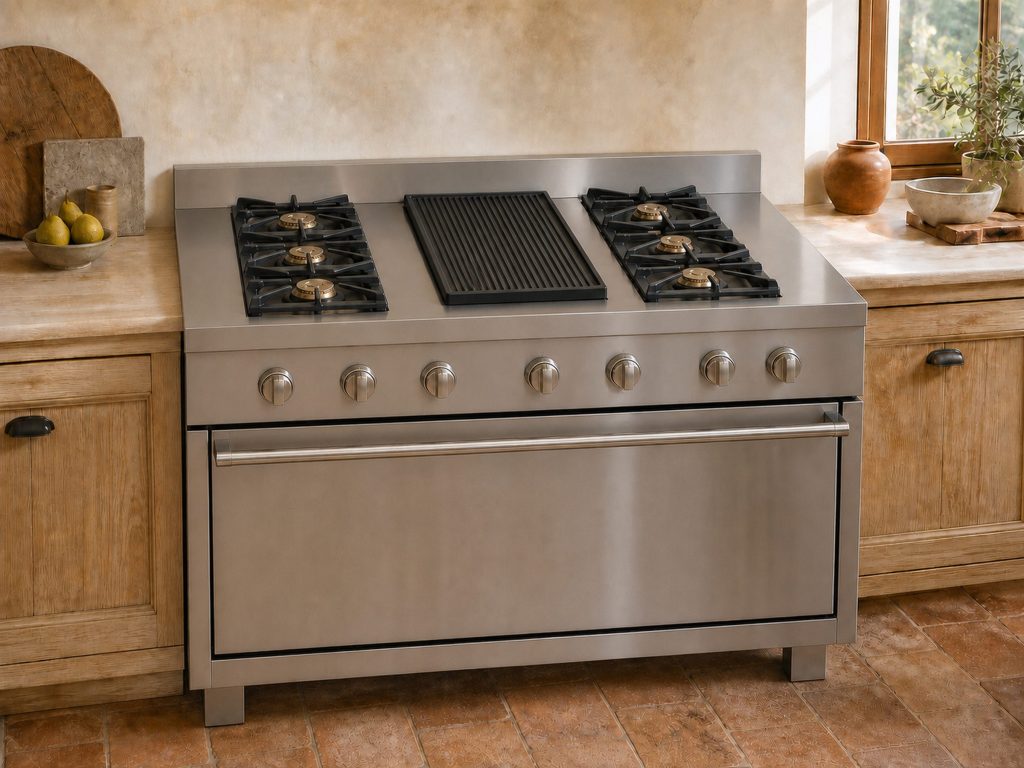
  • A wide freestanding stainless cooking range standing in a cream Italian kitchen, six brass burners under heavy cast-iron grates with a ribbed cast-iron griddle plate occupying the center section, a plain metal control fascia with unmarked knobs, one large oven door below.
    All gas · Dual fuel · Induction · Brass burners · Cast iron griddle · 30" · 36" · 48"

    Ranges

    Thirty-seven ranges in the current line and the reason most people know this maker at all. Eleven are all gas, nine dual fuel, thirteen induction; ten of them run brass burners and sixteen carry a cast iron griddle across the middle. A 48-inch range is two ovens, six burners and that griddle in one machine, and any one of those is a reason to call. Almost none of it announces a code when it stops — this is a make you diagnose by what it does, not by what it displays.

    Range repair
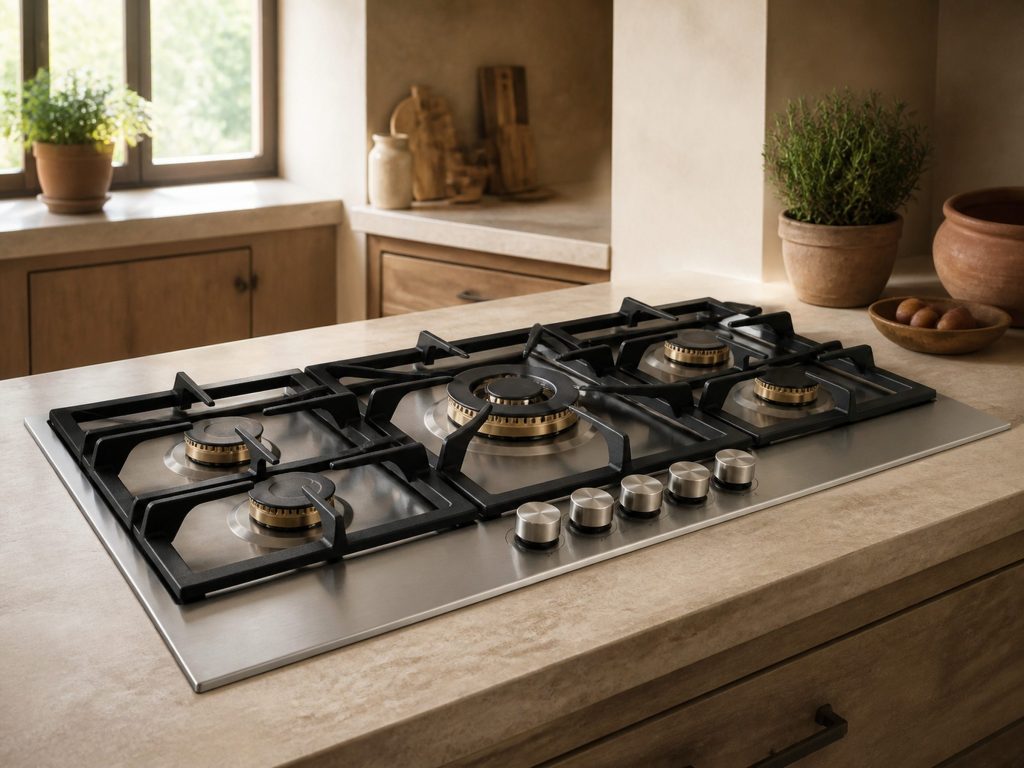
  • A stainless gas cooktop set flush into a cream stone worktop, five brass burners under cast-iron grates, seen from a low three-quarter angle so the burners read clearly.
    Induction · Sealed gas · Brass burners · Rangetops · 24" · 30" · 36" · 48"

    Cooktops and rangetops

    Thirty-four surfaces: nineteen gas, fifteen induction, and nine of them rangetops rather than cooktops — the same repair under a different word. Ten run the same brass burners as the ranges. The induction tops publish no code table — the maker issues installation sheets for them and nothing more — so what settles an induction call is the cabinet underneath and whether its boards can shed their heat.

    Cooktop repair
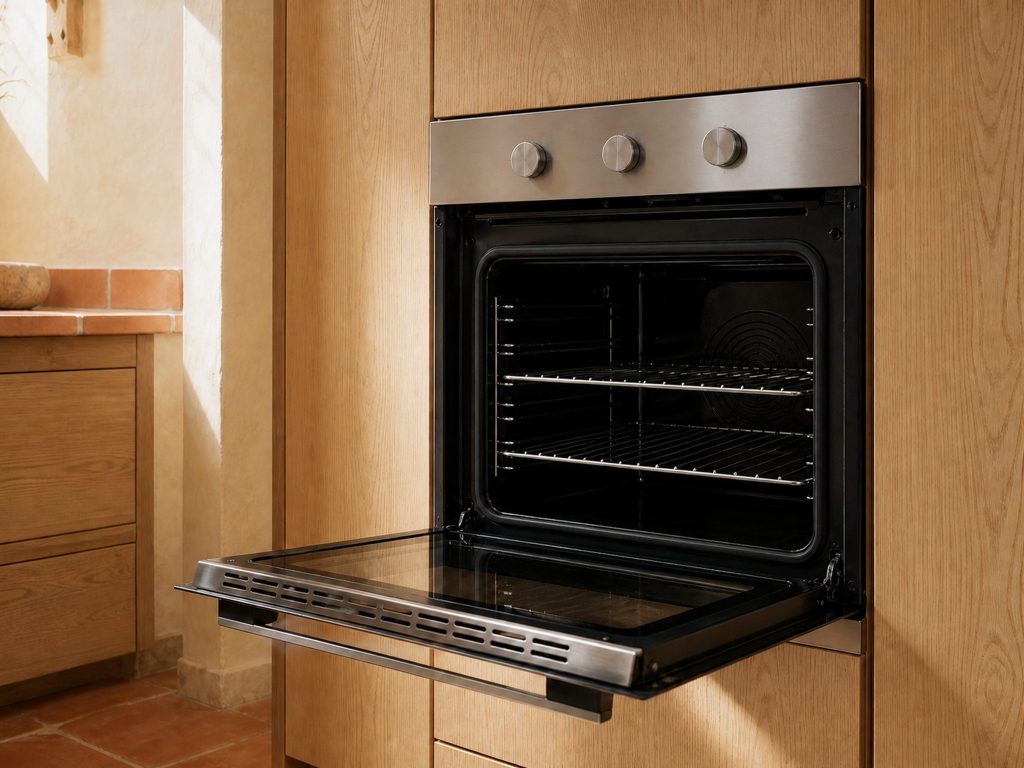
  • A single stainless built-in wall oven in a run of pale oak cabinetry, its door standing fully open on empty chrome racks, the cavity clean and dark.
    Single · Double · Speed oven · Steam · Self-clean · 24" · 30"

    Wall ovens

    Eighteen built-in ovens, and they are not all the same machine. Five are speed ovens — a microwave and a convection oven sharing one cavity — five cook with steam, eight self-clean, and three carry the maker's own guided cooking. Two are doubles. What they have in common is that they are built into cabinetry, which decides how a repair starts: the oven comes forward before anything else happens.

    Oven repair
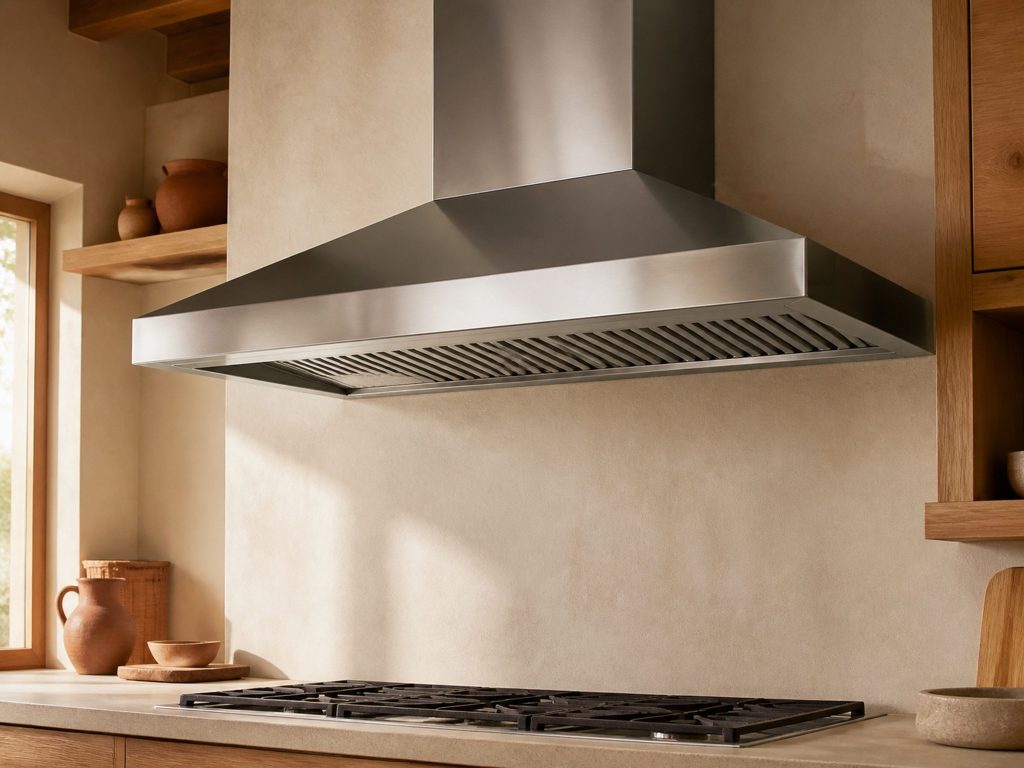
  • A stainless wall-mounted chimney range hood above an empty cooking surface in a cream kitchen, its angled canopy and clean baffle filters visible from below and slightly to the side.
    Wall mount · Island · Chimney · Insert · 600 CFM and up · 24" to 48"

    Range hoods and ventilation

    Thirty-seven hoods, which is as many as there are ranges — this maker expects the two to be bought together. Twenty-one are wall mounts, seven chimney hoods, five inserts built into a cabinet, three island hoods hanging over a counter. Nineteen move 600 cubic feet a minute. When one stops pulling, most of the diagnosis is not in the hood.

    Range hood repair
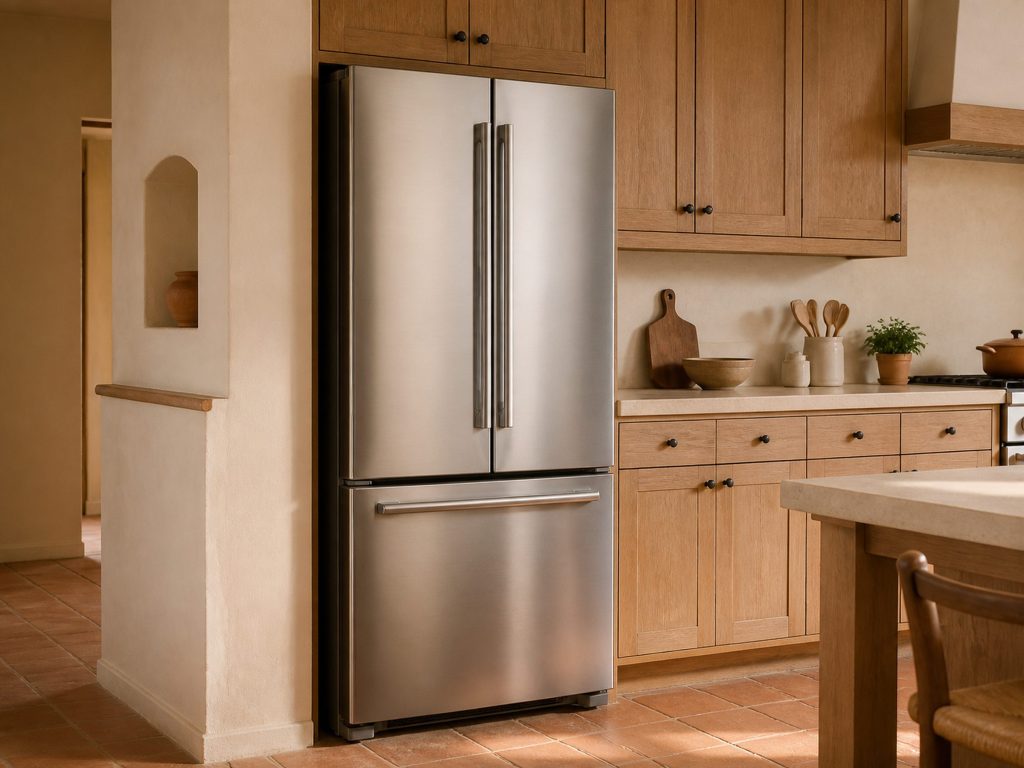
  • A tall stainless French-door refrigerator with a bottom freezer drawer, standing closed in a cream Italian kitchen beside a run of oak cabinets.
    Freestanding · Built-in · Columns · French door · Bottom mount · Panel ready

    Refrigerators

    Thirty refrigerators, and they divide sharply: seventeen freestanding machines that can be pulled out into the room, eleven built-in, and five columns that live behind your own cabinet fronts. Twelve are French door, thirteen bottom mount. Which of those you have decides almost everything about how the visit goes — a column comes apart before it can be diagnosed, and a freestanding bottom mount does not.

    Refrigerator repair
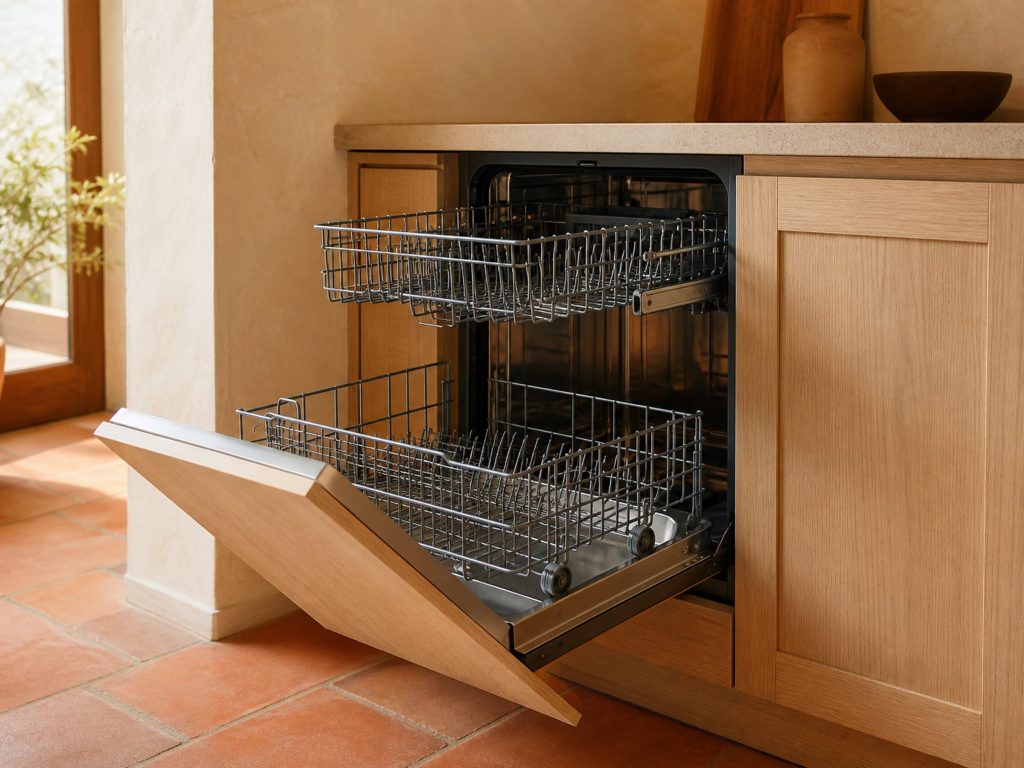
  • A built-in dishwasher faced with a pale oak cabinet front, standing open at forty-five degrees with both wire baskets pulled out and empty, in a cream Italian kitchen.
    Tall tub · Standard tub · Panel ready · 39 dB · 18" and 24"

    Dishwashers

    Eight dishwashers, and the one part of this make that talks. Five are tall tub, three standard; one is panel ready and one is an 18-inch. Two run at 39 decibels, which is quiet enough that "it has stopped" and "it is running" can be hard to tell apart. Unlike almost everything else here, these publish a real error table — F1 through F9, plus FF and HI, each with a meaning the maker prints — and a code is worth writing down before you touch anything.

    Dishwasher repair
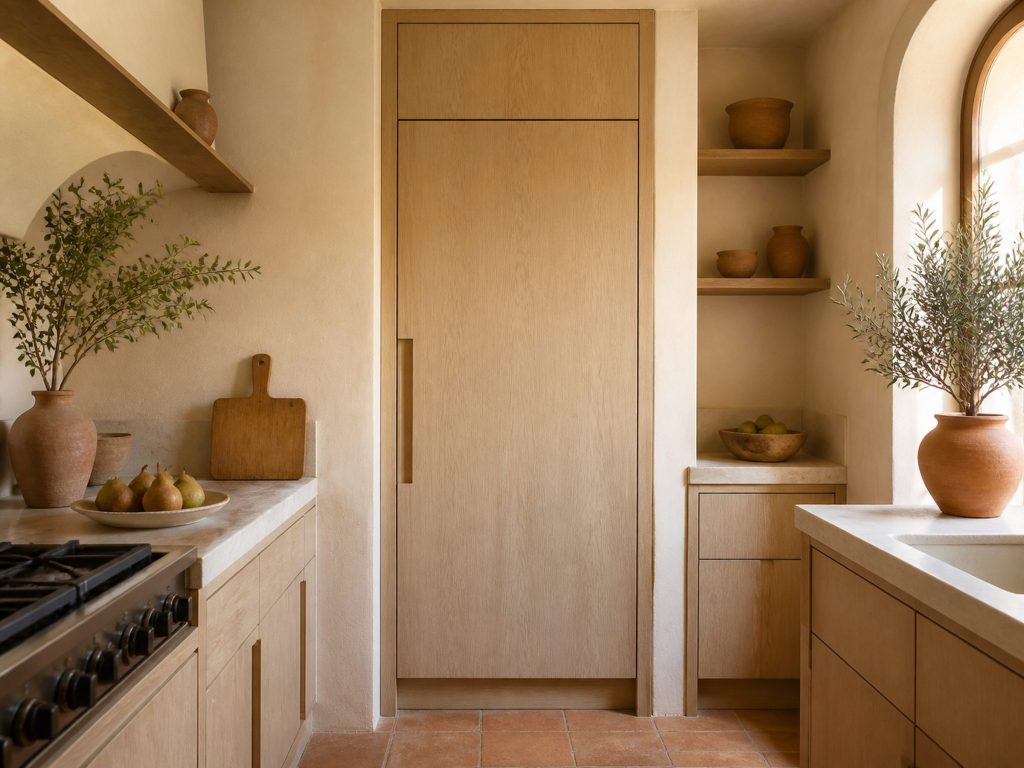
  • A tall built-in freezer column faced with a pale oak cabinet front so it reads as tall joinery, identifiable only by the thin shadow gap and a recessed pull, standing in a cream kitchen.
    Built-in columns · 18" · 24" · 30" · Two with ice makers

    Freezer columns

    Five freezers, and every one of them is a built-in column — 18, 24 and 30 inches, two of them with an ice maker inside. There is no chest freezer and no freestanding upright in this line at all. A column is a piece of the kitchen rather than an appliance standing in it, and that decides how the repair begins: the front comes off before anything is measured.

    Freezer repair
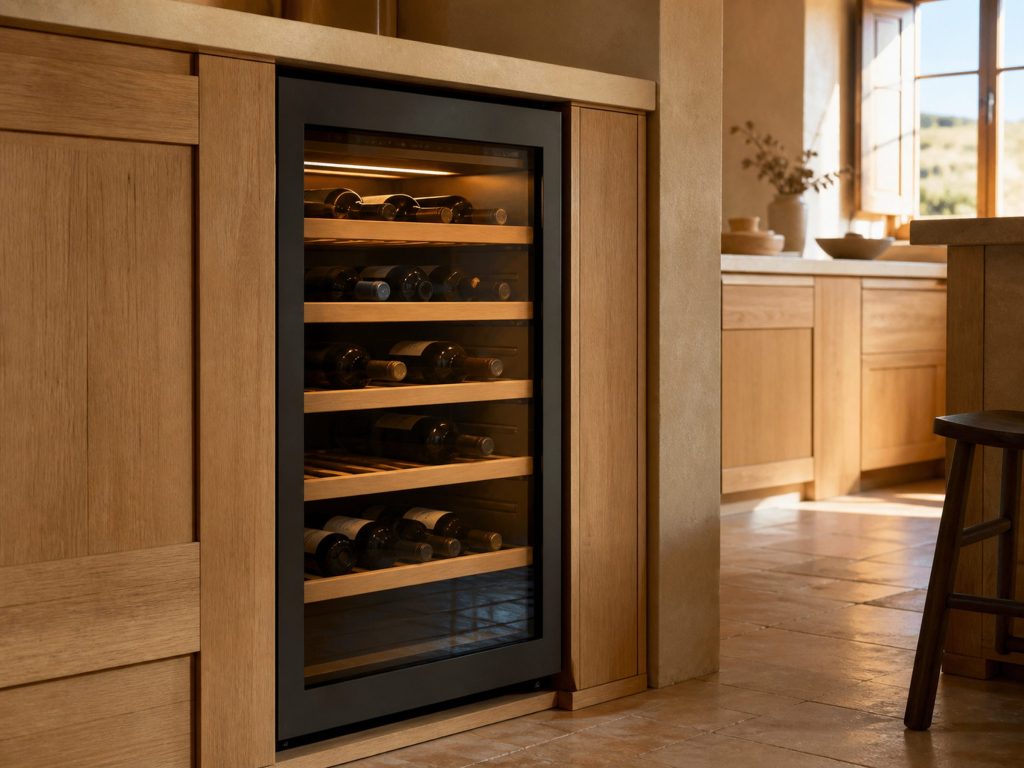
  • A built-in wine cabinet with a glass door standing in a cream kitchen, its interior softly lit from within, wine bottles lying on wooden shelves behind the glass.
    Built-in columns · 18" · 24" · Panel ready

    Wine cellars

    Four wine cellars, both widths, all of them built-in columns that wear your own cabinet fronts. A wine cellar is not a cold refrigerator: it is asked to hold a narrow band of temperature and a sensible humidity for years without interruption, and to do it quietly and without vibration. That is why the complaints here are different from every other cold appliance on this site.

    Wine cellar repair
  • A stainless microwave drawer built into a run of oak cabinetry below a worktop, the drawer slid fully open to show an empty cavity, seen from slightly above.
    Over the range · Built-in · Microwave drawer · 24" · 30"

    Microwaves

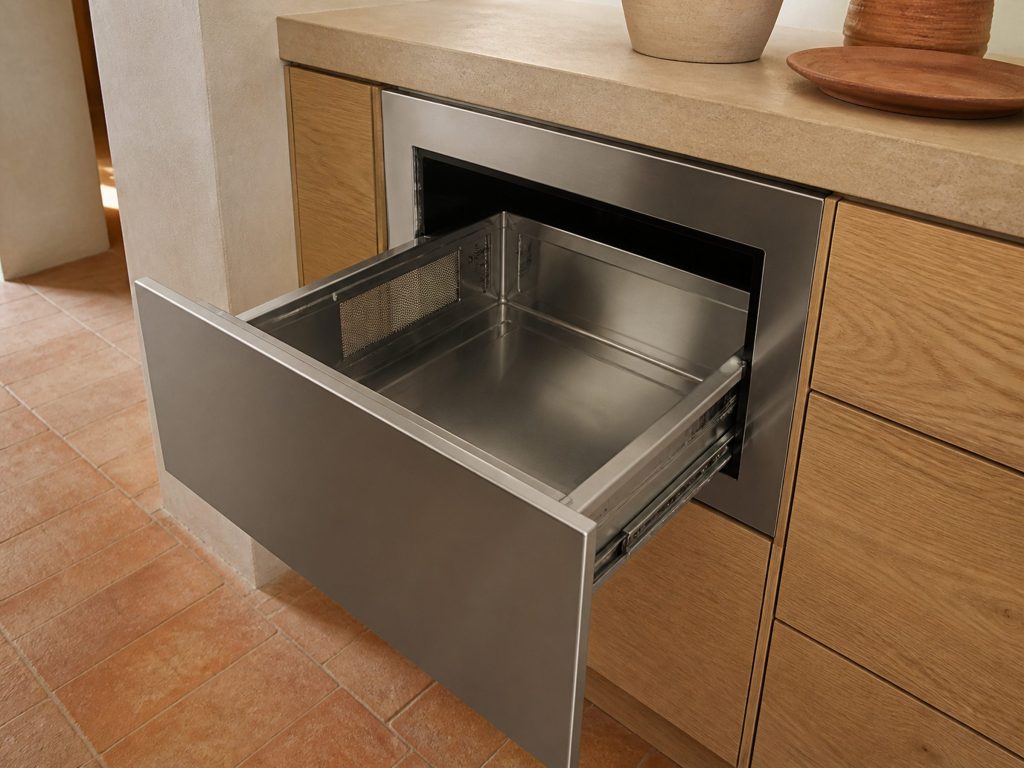
    Four microwaves and three of them are different machines: two over-the-range units that double as the hood, a 30-inch built-in, and a microwave drawer that opens downward from under the counter. The drawer is the one worth knowing about — it is a different mechanism from anything else on this site, and it fails in ways a door-and-hinge microwave never does.

    Microwave repair
  • A stainless built-in coffee machine set into a run of pale oak cabinetry at eye height, its front closed, twin brew spouts visible below a plain dark fascia.
    One machine in the line · 24" · Built in · Plumbed or reservoir

    Built-in coffee makers

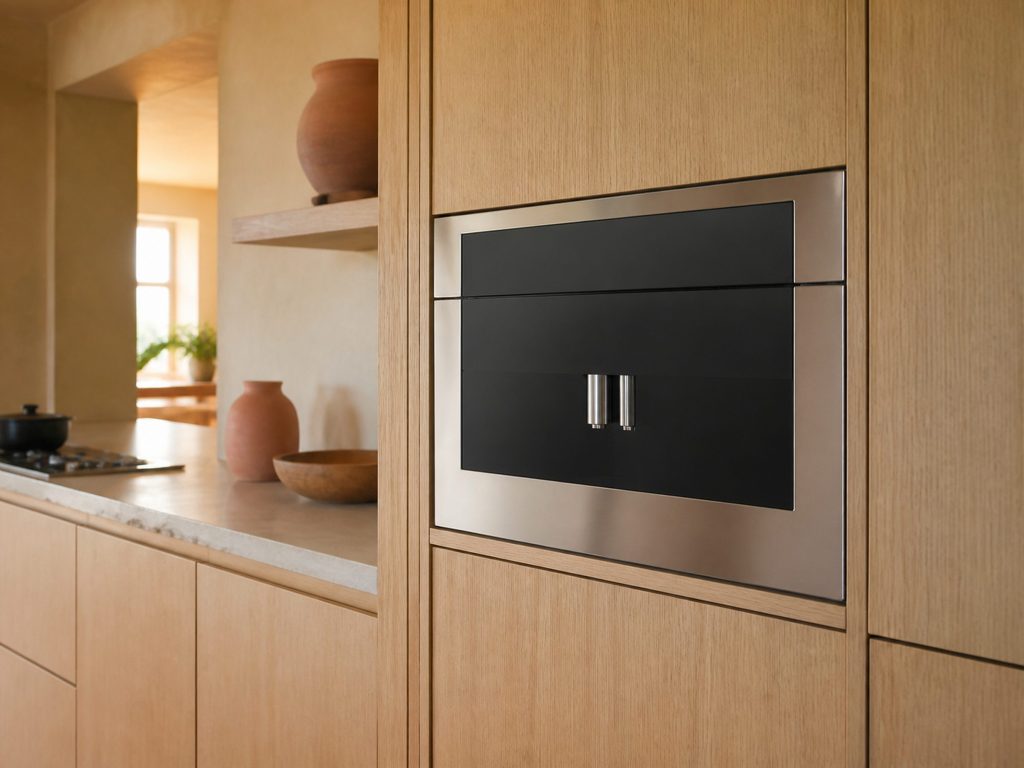
    One built-in coffee maker, 24 inches, and it is the most mechanically busy appliance in the kitchen: a grinder, a brew group, a pump, a boiler, a milk path and a water path, all of them working several times a day. Almost every call we get about one of these is water, scale or the milk circuit — and in South Florida the first two are the same subject.

    Coffee machine repair

If there is no code and no light

That is normal here, and it is not a dead end.

Most of this equipment has nothing to show you. What it has instead is behavior — a burner that lights and dies, an oven that browns on one side, a hood that sounds right and clears nothing — and that is a diagnosis, not a shrug. Tell us what it does and when it started.

About the codes

The questions this archive is asked

Where is the Bertazzoni error code list for my range?

There is not one, and that is the honest answer rather than an evasion. This maker publishes no code table for any range, rangetop, gas oven or hood in its current catalog — we read every manual its product pages link to in order to be sure. If a site is showing you a confident table of range codes for this make, somebody wrote it rather than found it.

Which appliances here do publish codes?

The dishwashers, which print F1 through F9 plus FF and HI, and part of the refrigeration, which prints E1, E2, E5, E6, E7, EH, EO and EE. Those are the two families where a number on the display genuinely shortens a repair.

My hood lights are flashing. Is that an error?

Almost certainly it is the filter alarm rather than a problem. Three hood families do it three different ways on this make — a flashing display item, a key that flashes at one rate for grease filters and a faster rate for charcoal, or a saturation alarm cleared from the speed-three key. Each of those has its own page here.

Should I clear the code before calling?

Write it down first, and photograph the display if you can. On an intermittent problem the code is often the only evidence there is, and clearing it erases the thing that would have told a technician where to start.

Does a code tell you which part to bring?

It narrows it, usefully, and it is not a part number. A dishwasher F5 says the pressure system rather than the pump; a refrigeration E1 says the sensing rather than the cooling. That is the difference between an accurate visit and a return trip, which is worth a great deal, but the measurement still happens on site.

In more detail

How to read a Bertazzoni display in Miami

Start with the machine, not the number. The two code sets on this make share a shape and mean entirely different things: the dishwashers use F followed by a digit, the refrigeration uses E followed by a digit or a letter, and there is no relationship between them beyond the alphabet. Every page in this archive names the appliance in its own title for that reason.

On the dishwashers the table is genuinely useful and the maker’s own instructions and ours agree. FF is water not arriving and the inlet hose filter is the first thing to clean. F2 is water not leaving, and the filter housing and the sump are where a large share of those calls end — both are removable by hand and neither needs a technician. F1 and F3 are the two that mean stop: an overflow and a machine filling when it should not, and the right response to either is to close the tap rather than to run another cycle. HI is not about the dishwasher at all — it is the electricity supply reaching it.

On the refrigeration the E-numbers are sensing problems, and the maker’s own note beside the table is worth repeating: the appliance will usually go on cooling and freezing while showing one. That makes them urgent in a different way — not “the food is at risk tonight” but “this machine has lost the ability to measure itself and will drift”. dr is not a problem at all: it is a door that has been open too long, and a machine showing it with the door apparently shut is describing an alignment problem rather than a sensor.

Everything else in this kitchen signals. The hoods flash when their filters are saturated, and each family does it differently enough that the pattern matters more than the fact. The water filters count days rather than measuring anything, which is why the counter has to be reset by hand after a change. And the gas equipment — the ranges this maker is known for, the gas ovens, the rangetops — says nothing whatsoever, forever. That is the shape of this make, and a site that pretended otherwise would be easier to write and worse to trust.
Tell us what it is showing, or what it is doing.

Either one is a starting point. You will have the scope and the price in writing before anything is opened.

This article is based on:

  • Official manufacturer documentation
  • Internal repair procedures
  • Technician repair history
  • Company quality standards
Call (305) 985-4136