BertazzoniRepair Miami

Ten appliance types, one Italian kitchen

Bertazzoni appliance repair in Miami, appliance by appliance.

This maker builds a whole kitchen and is known for one part of it: the range. Behind that there are induction and gas cooktops, rangetops, wall ovens that cook with steam and with microwave energy, hoods sized to match the ranges, refrigerator and freezer columns behind your own cabinet fronts, wine cellars, dishwashers, microwaves and a built-in coffee maker. Tell us which one you have and what it is doing.

  • 10 appliance types we repair
  • 3 counties covered end to end
  • OEM parts available on order
  • from $95 diagnostic, credited to the repair

Book a visit

Book a diagnostic visit

Your model number and a line about what it is doing is enough to get started. We will confirm the earliest slot we can genuinely keep.

  • Diagnostic from $95, credited toward the repair when you go ahead
  • The work and the price in writing before anything is opened
  • A warranty on our workmanship
  • Miami-Dade, Broward and Palm Beach counties
  1. 01 You tell us the model and what the unit is doing. A photo of the display helps.
  2. 02 We come back with the earliest slot we can genuinely keep, not the earliest one that sounds good.
  3. 03 Diagnosis on site, then the scope and the price in writing before anything is opened.

Your details stay private. No spam, ever.

Loading the booking form…

The booking form is taking longer than it should. Call (305) 985-4136 and we will book the visit with you.

Every appliance we are called out to

Ten kinds of machine, and they do not fail alike

A hundred and eighty machines in the current line, and the repair depends far less on the badge than on what the appliance is asked to do. Pick yours.

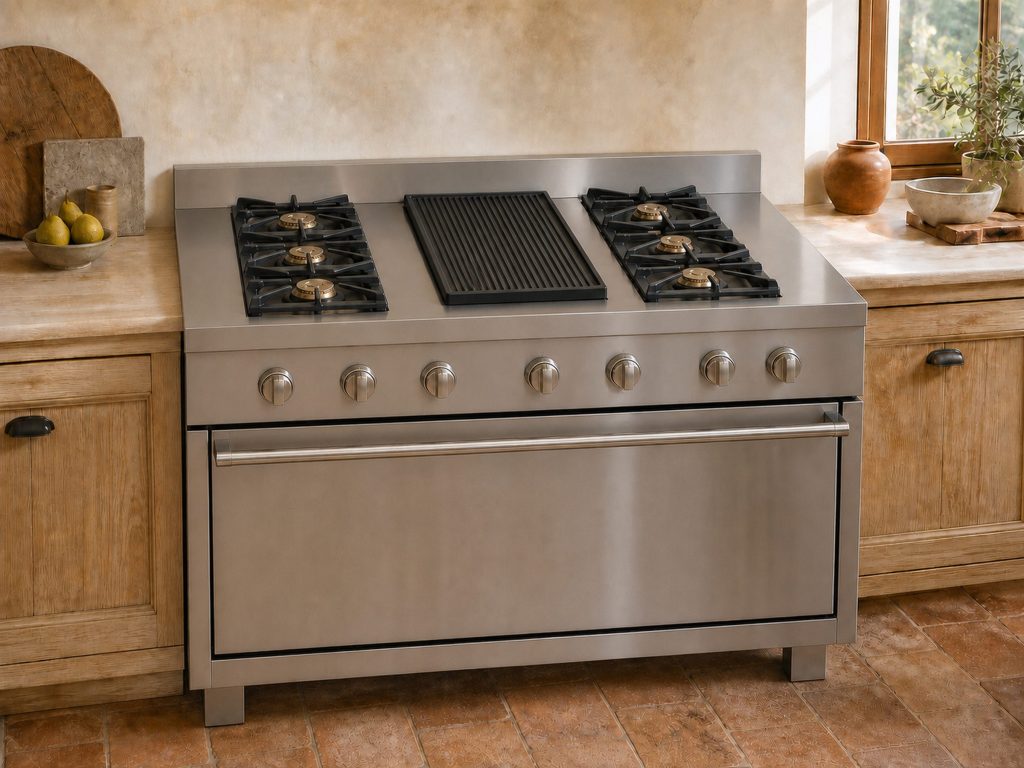
  • A wide freestanding stainless cooking range standing in a cream Italian kitchen, six brass burners under heavy cast-iron grates with a ribbed cast-iron griddle plate occupying the center section, a plain metal control fascia with unmarked knobs, one large oven door below.
    All gas · Dual fuel · Induction · Brass burners · Cast iron griddle · 30" · 36" · 48"

    Bertazzoni range repair in Miami

    Thirty-seven ranges in the current line and the reason most people know this maker at all. Eleven are all gas, nine dual fuel, thirteen induction; ten of them run brass burners and sixteen carry a cast iron griddle across the middle. A 48-inch range is two ovens, six burners and that griddle in one machine, and any one of those is a reason to call. Almost none of it announces a code when it stops — this is a make you diagnose by what it does, not by what it displays.

    • A burner that clicks and will not catch, or catches and drops out
    • The oven running hot or cold with nothing on the display to say so
    • The griddle heating unevenly while the burners either side are perfect
    Range repair
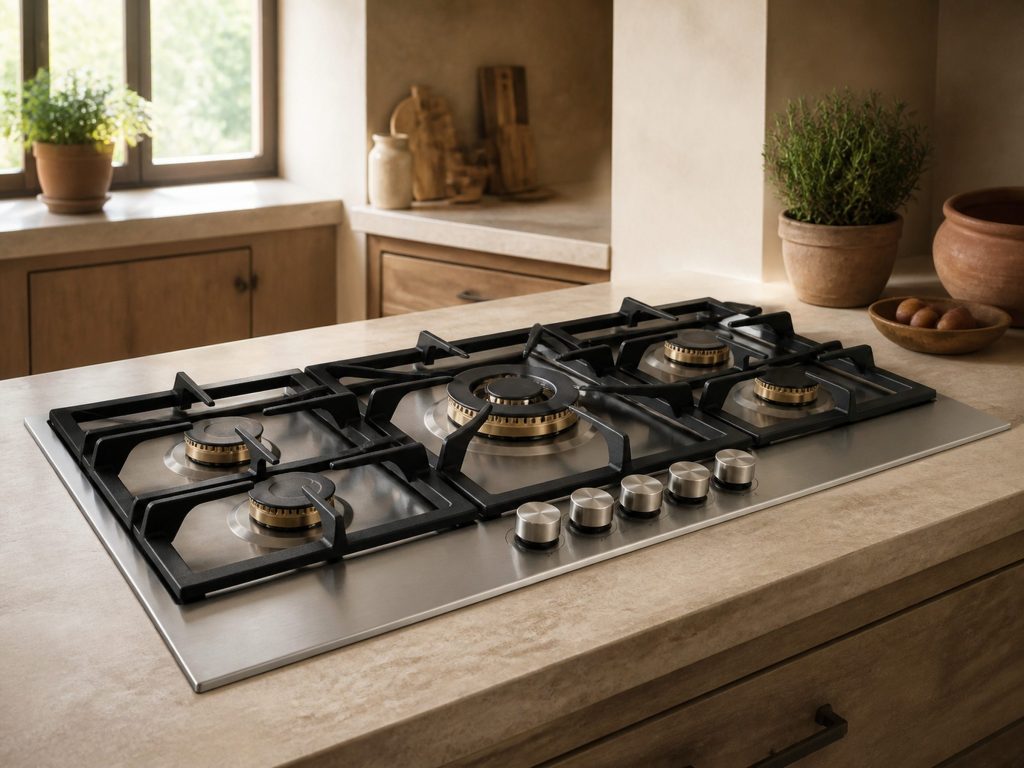
  • A stainless gas cooktop set flush into a cream stone worktop, five brass burners under cast-iron grates, seen from a low three-quarter angle so the burners read clearly.
    Induction · Sealed gas · Brass burners · Rangetops · 24" · 30" · 36" · 48"

    Bertazzoni cooktop repair in Miami

    Thirty-four surfaces: nineteen gas, fifteen induction, and nine of them rangetops rather than cooktops — the same repair under a different word. Ten run the same brass burners as the ranges. The induction tops publish no code table — the maker issues installation sheets for them and nothing more — so what settles an induction call is the cabinet underneath and whether its boards can shed their heat.

    • One induction zone cutting out while the rest keep going
    • A gas burner clicking without catching, or dropping out on simmer
    • A code on the induction panel that comes back after the power is cycled
    Cooktop repair
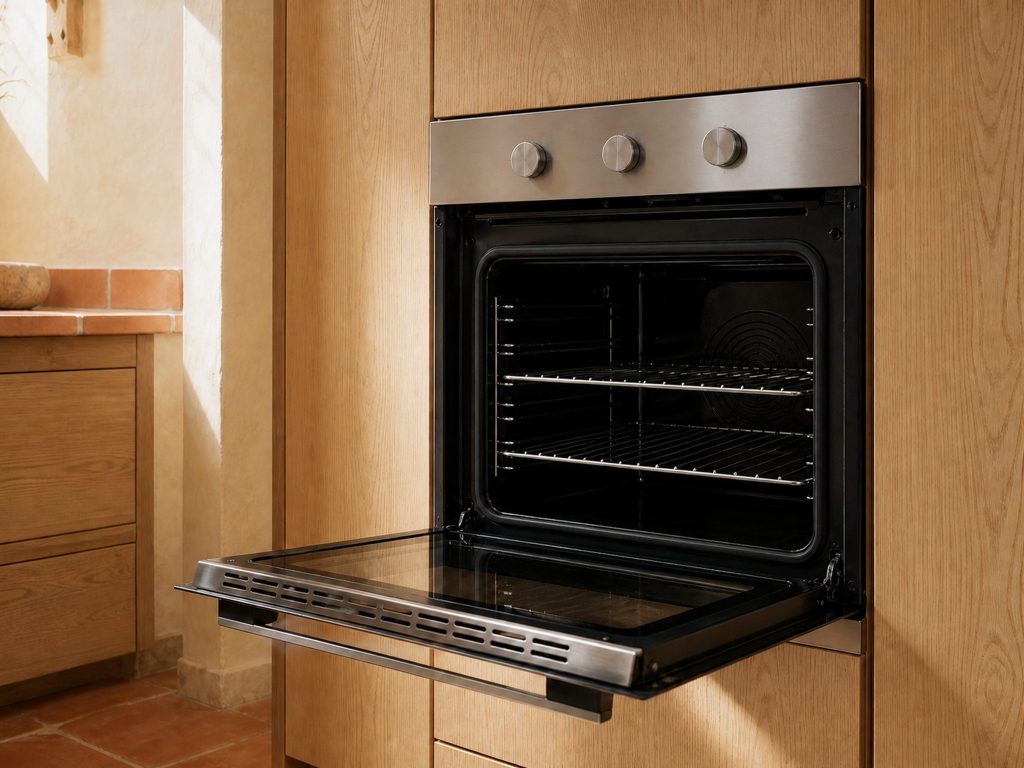
  • A single stainless built-in wall oven in a run of pale oak cabinetry, its door standing fully open on empty chrome racks, the cavity clean and dark.
    Single · Double · Speed oven · Steam · Self-clean · 24" · 30"

    Bertazzoni oven repair in Miami

    Eighteen built-in ovens, and they are not all the same machine. Five are speed ovens — a microwave and a convection oven sharing one cavity — five cook with steam, eight self-clean, and three carry the maker's own guided cooking. Two are doubles. What they have in common is that they are built into cabinetry, which decides how a repair starts: the oven comes forward before anything else happens.

    • An oven that will not reach temperature, or overshoots it
    • A door that locks after a clean cycle and stays locked
    • A speed oven that heats on convection but no longer on microwave
    Oven repair
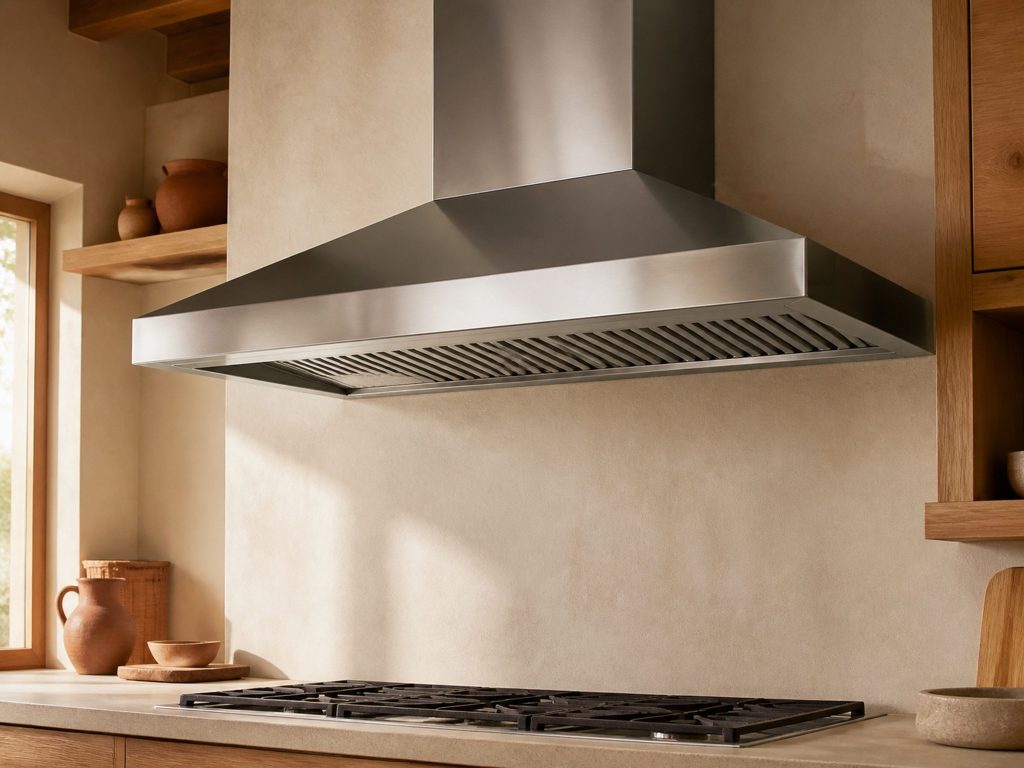
  • A stainless wall-mounted chimney range hood above an empty cooking surface in a cream kitchen, its angled canopy and clean baffle filters visible from below and slightly to the side.
    Wall mount · Island · Chimney · Insert · 600 CFM and up · 24" to 48"

    Bertazzoni range hood repair in Miami

    Thirty-seven hoods, which is as many as there are ranges — this maker expects the two to be bought together. Twenty-one are wall mounts, seven chimney hoods, five inserts built into a cabinet, three island hoods hanging over a counter. Nineteen move 600 cubic feet a minute. When one stops pulling, most of the diagnosis is not in the hood.

    • A hood that runs but no longer clears the steam
    • Lights working, motor silent, or the reverse
    • Controls that respond to some presses and not others
    Range hood repair
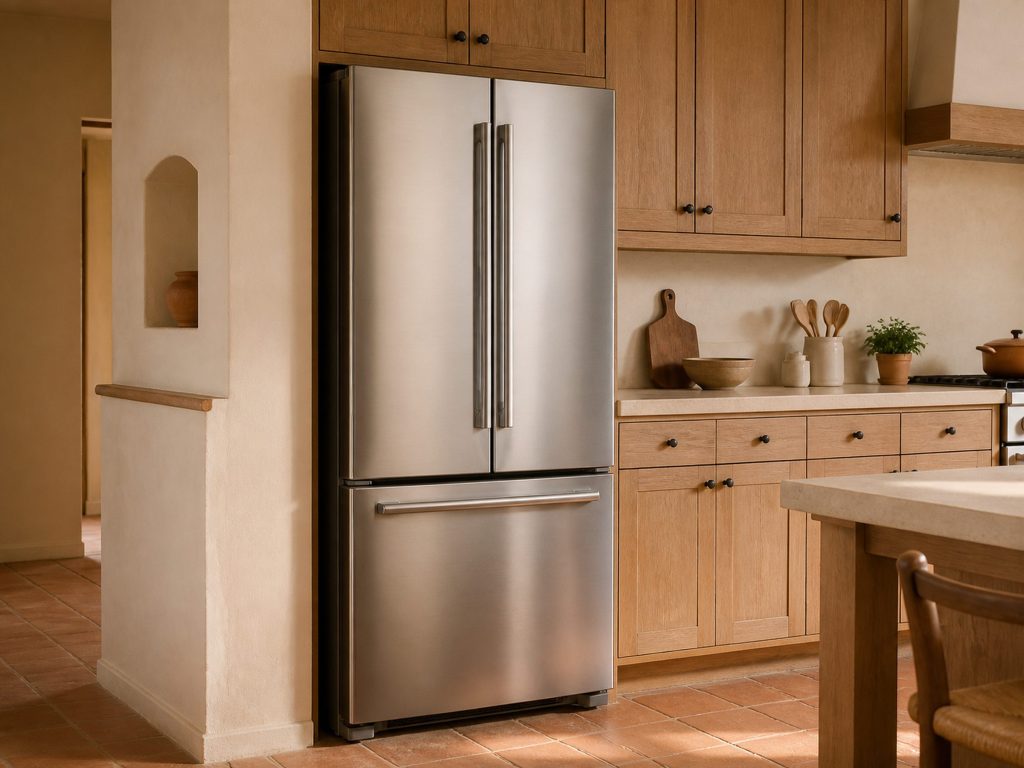
  • A tall stainless French-door refrigerator with a bottom freezer drawer, standing closed in a cream Italian kitchen beside a run of oak cabinets.
    Freestanding · Built-in · Columns · French door · Bottom mount · Panel ready

    Bertazzoni refrigerator repair in Miami

    Thirty refrigerators, and they divide sharply: seventeen freestanding machines that can be pulled out into the room, eleven built-in, and five columns that live behind your own cabinet fronts. Twelve are French door, thirteen bottom mount. Which of those you have decides almost everything about how the visit goes — a column comes apart before it can be diagnosed, and a freestanding bottom mount does not.

    • A refrigerator that is not holding temperature while the freezer is fine
    • Water on the floor of the fresh food compartment
    • An ice maker that has stopped, or fills and will not release
    Refrigerator repair
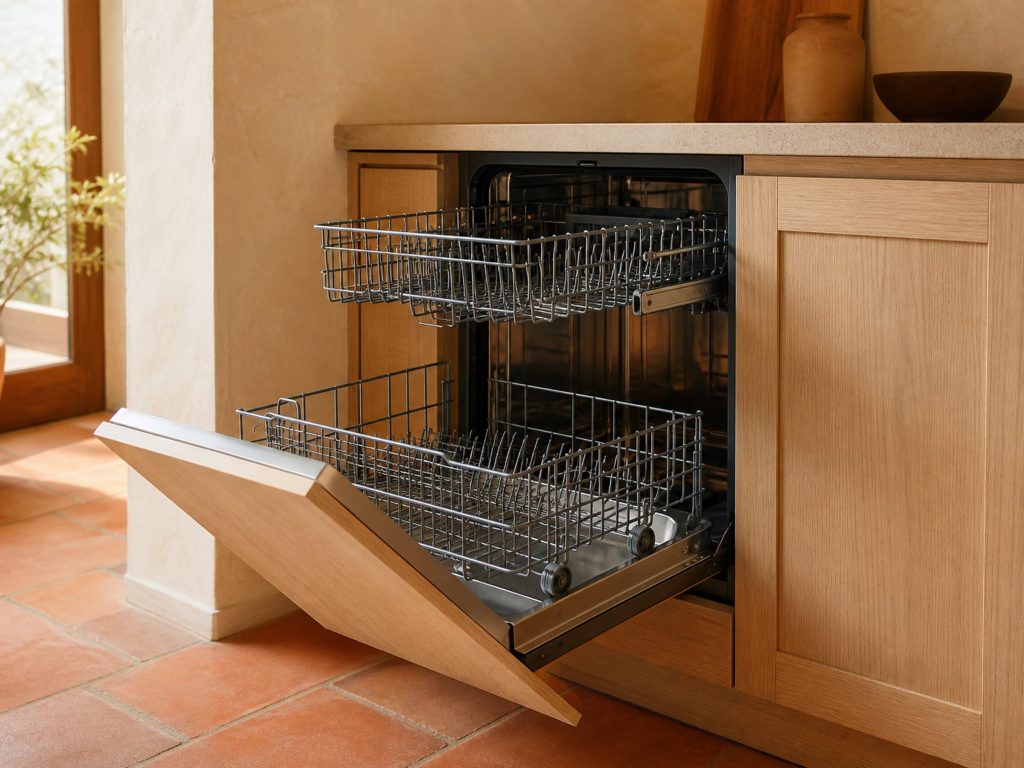
  • A built-in dishwasher faced with a pale oak cabinet front, standing open at forty-five degrees with both wire baskets pulled out and empty, in a cream Italian kitchen.
    Tall tub · Standard tub · Panel ready · 39 dB · 18" and 24"

    Bertazzoni dishwasher repair in Miami

    Eight dishwashers, and the one part of this make that talks. Five are tall tub, three standard; one is panel ready and one is an 18-inch. Two run at 39 decibels, which is quiet enough that "it has stopped" and "it is running" can be hard to tell apart. Unlike almost everything else here, these publish a real error table — F1 through F9, plus FF and HI, each with a meaning the maker prints — and a code is worth writing down before you touch anything.

    • A code on the panel that returns after the power is cycled
    • Water standing in the bottom at the end of a cycle
    • A door that no longer latches, or latches and will not start
    Dishwasher repair
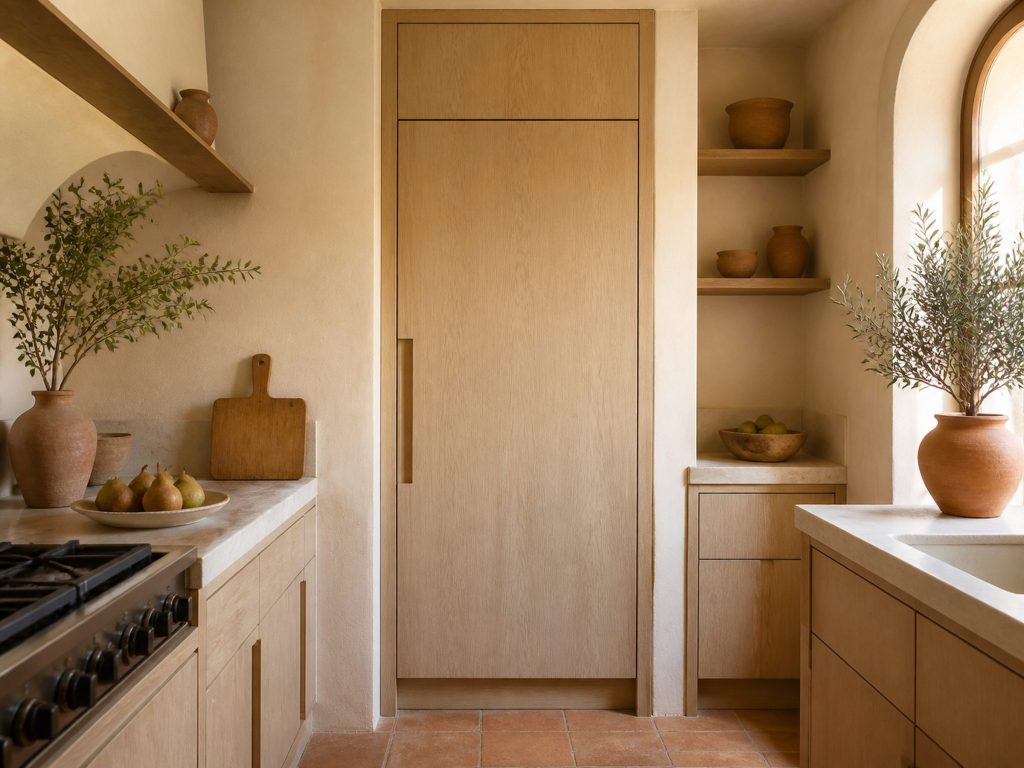
  • A tall built-in freezer column faced with a pale oak cabinet front so it reads as tall joinery, identifiable only by the thin shadow gap and a recessed pull, standing in a cream kitchen.
    Built-in columns · 18" · 24" · 30" · Two with ice makers

    Bertazzoni freezer repair in Miami

    Five freezers, and every one of them is a built-in column — 18, 24 and 30 inches, two of them with an ice maker inside. There is no chest freezer and no freestanding upright in this line at all. A column is a piece of the kitchen rather than an appliance standing in it, and that decides how the repair begins: the front comes off before anything is measured.

    • A column running constantly and still not holding temperature
    • Frost building up on the back wall or around the fan
    • An ice maker in the column that has stopped cycling
    Freezer repair
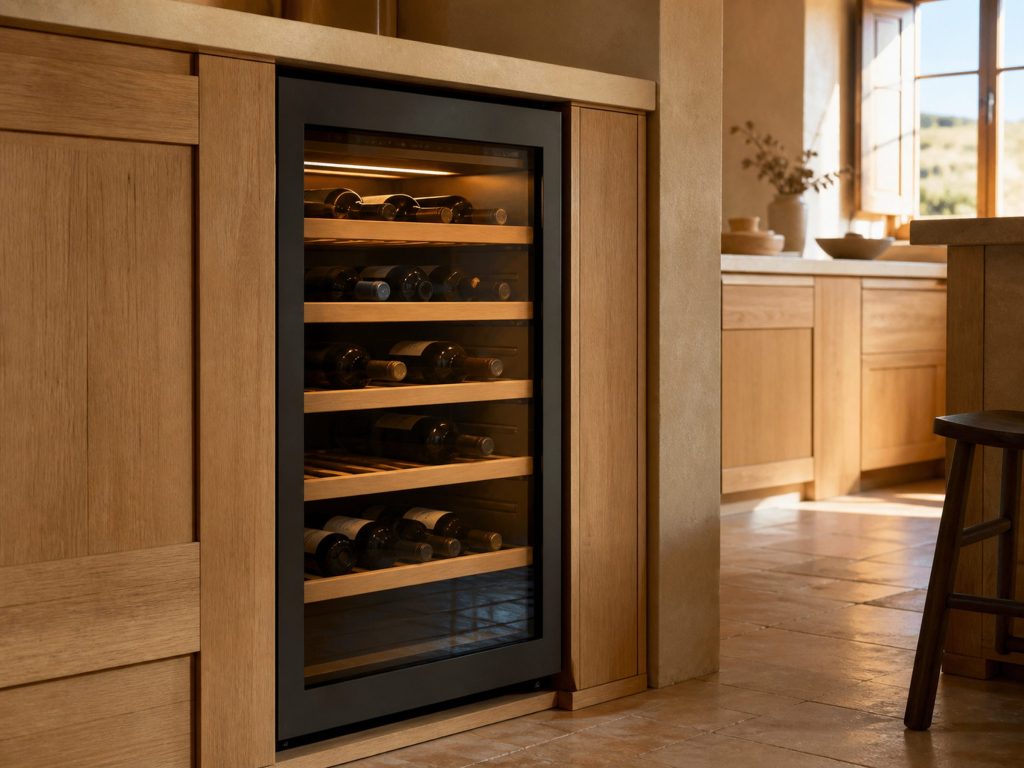
  • A built-in wine cabinet with a glass door standing in a cream kitchen, its interior softly lit from within, wine bottles lying on wooden shelves behind the glass.
    Built-in columns · 18" · 24" · Panel ready

    Bertazzoni wine cellar repair in Miami

    Four wine cellars, both widths, all of them built-in columns that wear your own cabinet fronts. A wine cellar is not a cold refrigerator: it is asked to hold a narrow band of temperature and a sensible humidity for years without interruption, and to do it quietly and without vibration. That is why the complaints here are different from every other cold appliance on this site.

    • A cabinet drifting a few degrees off its set point and staying there
    • Condensation on the glass or on the bottles
    • A cabinet that has started to hum, buzz or vibrate
    Wine cellar repair
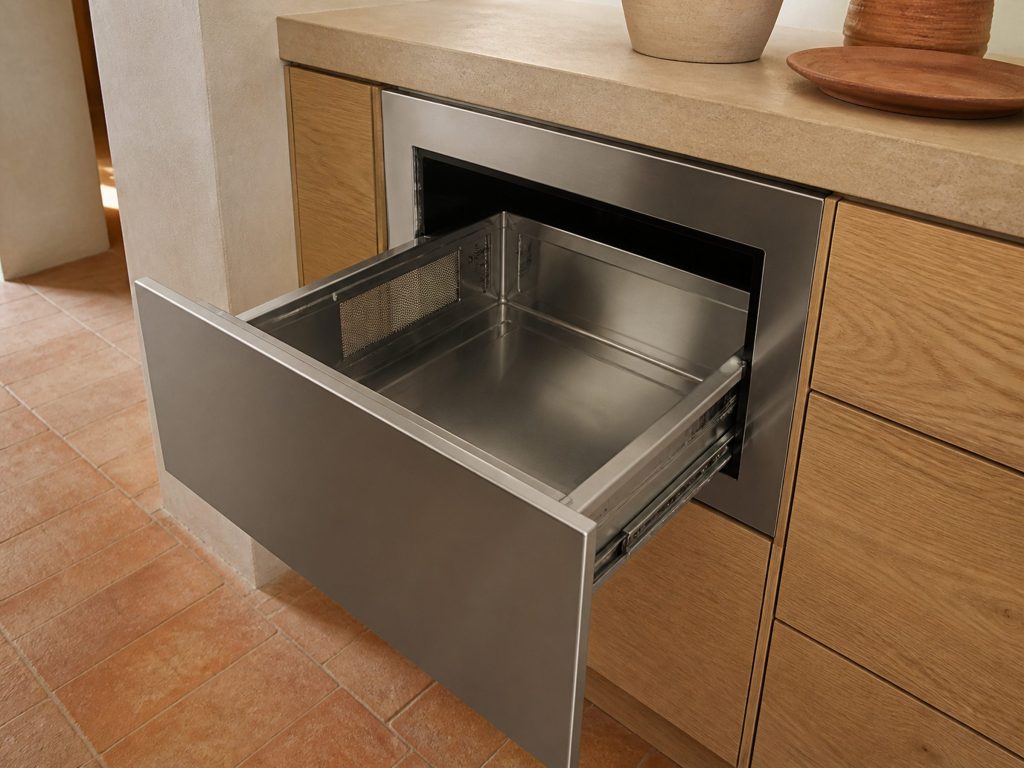
  • A stainless microwave drawer built into a run of oak cabinetry below a worktop, the drawer slid fully open to show an empty cavity, seen from slightly above.
    Over the range · Built-in · Microwave drawer · 24" · 30"

    Bertazzoni microwave repair in Miami

    Four microwaves and three of them are different machines: two over-the-range units that double as the hood, a 30-inch built-in, and a microwave drawer that opens downward from under the counter. The drawer is the one worth knowing about — it is a different mechanism from anything else on this site, and it fails in ways a door-and-hinge microwave never does.

    • A microwave that runs, lights and turns but no longer heats
    • A drawer that will not open, or opens and will not start
    • An over-the-range unit whose fan works and whose microwave does not
    Microwave repair
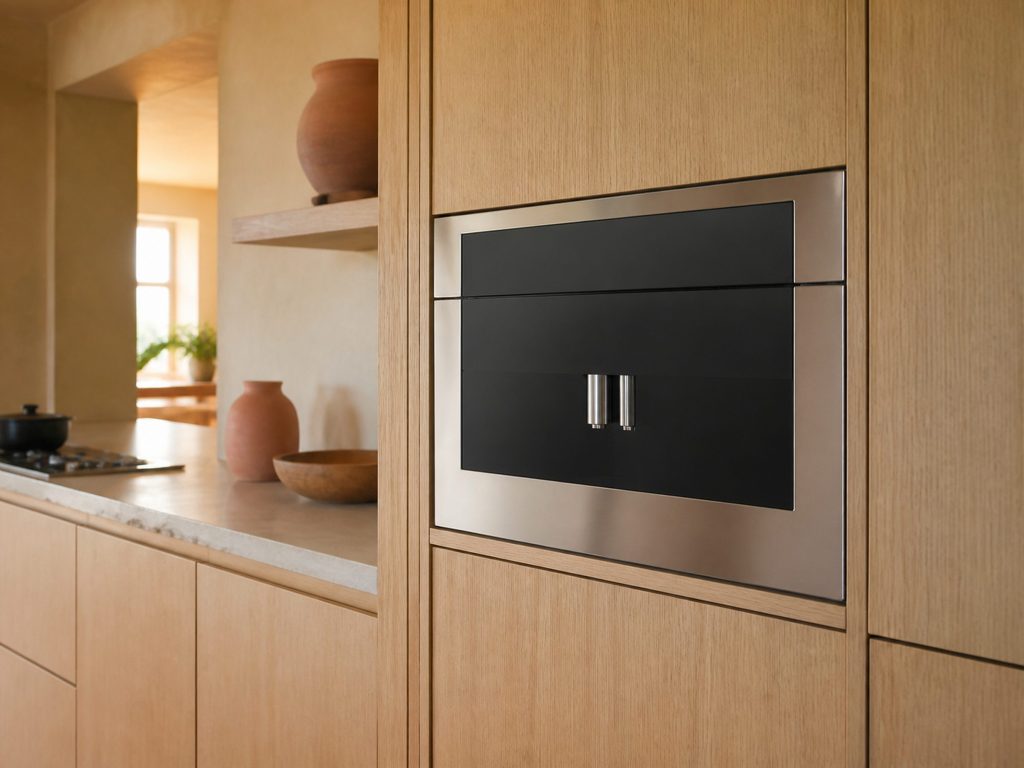
  • A stainless built-in coffee machine set into a run of pale oak cabinetry at eye height, its front closed, twin brew spouts visible below a plain dark fascia.
    One machine in the line · 24" · Built in · Plumbed or reservoir

    Bertazzoni coffee machine repair in Miami

    One built-in coffee maker, 24 inches, and it is the most mechanically busy appliance in the kitchen: a grinder, a brew group, a pump, a boiler, a milk path and a water path, all of them working several times a day. Almost every call we get about one of these is water, scale or the milk circuit — and in South Florida the first two are the same subject.

    • Coffee coming through slowly, weakly, or not at all
    • A machine asking to be descaled, or refusing to run until it is
    • A milk system that has stopped frothing properly
    Coffee machine repair

The one thing that decides most of these repairs

Gas or induction is a bigger difference than the badge.

Thirty-two of the cooking appliances in this line burn gas and twenty-eight induce, and the two fail in completely different ways. A gas problem is mechanical and cheap in parts: an ignitor, a burner cap sitting proud, a blocked port, a valve, a thermocouple. It is diagnosed by looking at a flame, and a large share of these calls end with a burner cleaned and seated properly rather than a part fitted.

An induction problem is electronic and thermal. A coil and a power board under every zone, a cooling path that has to breathe, and a machine that protects itself by shutting a zone down rather than by breaking. The commonest induction call in this city is not the appliance at all — it is a sealed island with nowhere for the heat to go.

Every job we do
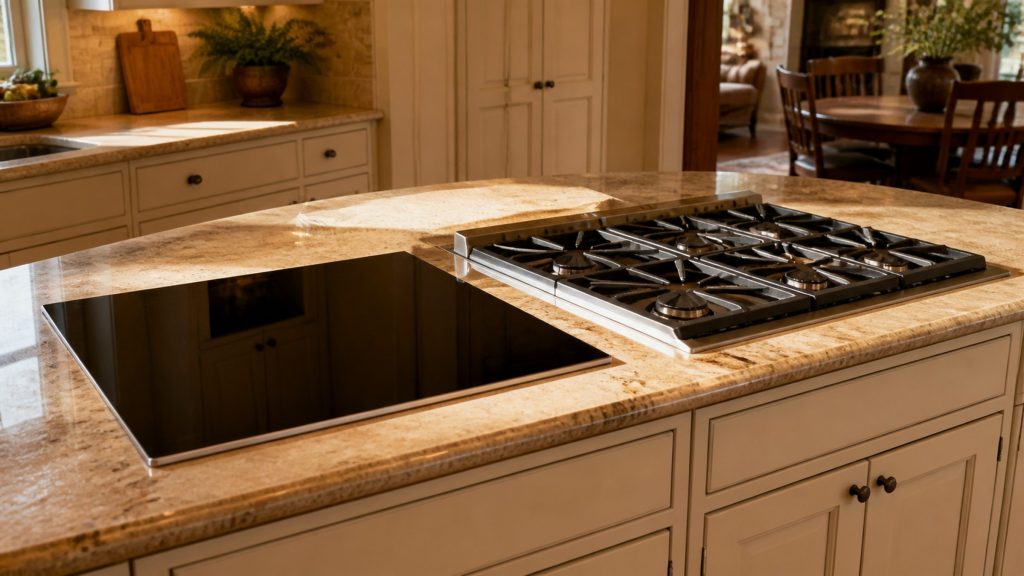
A wide view of a kitchen island where a black glass induction surface and a stainless gas range top sit in the same room, one dark and smooth, the other heavy with cast-iron grates.

Ventilation is a fifth of what this maker sells

Thirty-seven hoods, and almost none of it is the hood.

This maker expects a range and a hood to be bought together, which is why there are exactly as many hoods in the catalog as there are ranges. It also means we see a great many of them, and the pattern is consistent enough to say out loud: a hood that sounds strong and clears nothing is not broken.

The duct is the answer — a long run, three elbows where the rating assumed none, a crushed flexible section behind a cabinet, a wall cap whose flaps have seized with old grease, or a house tight enough that no replacement air can get back in. And when the appliance genuinely is the cause, it is usually a run capacitor or a grease-loaded blower wheel rather than the motor everybody arrives expecting to buy.

Range hoods and ventilation
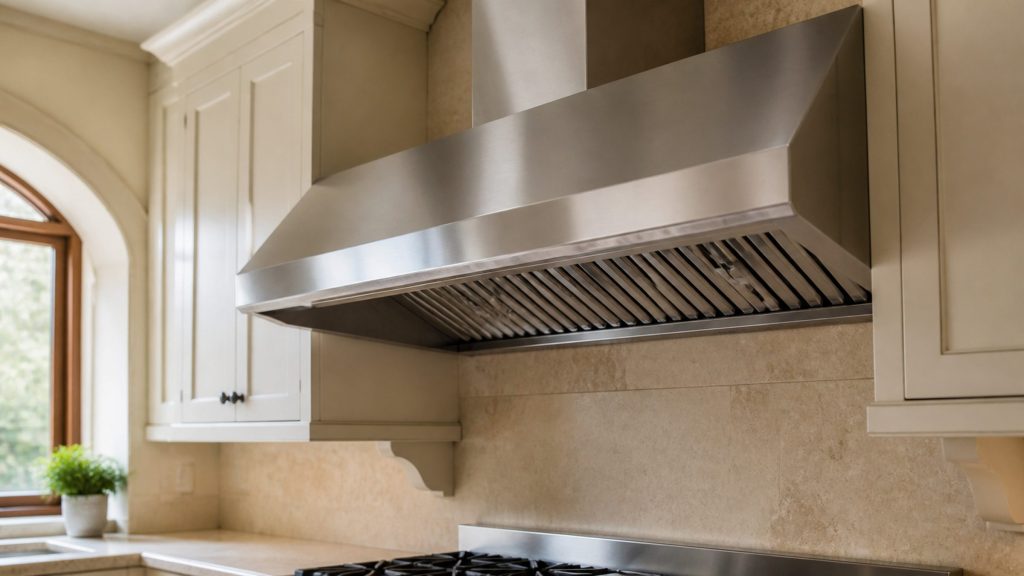
A stainless chimney hood seen from below and slightly to the side, mounted above a cooking range in a cream Italian kitchen, its baffle filters visible as clean angled steel.

Before you book any of them

Four things that make the visit shorter

None of these takes more than a couple of minutes, and between them they decide what travels on the van.

The model number, photographed

  • Behind the kick panel on a range; inside the door frame on a wall oven
  • Underneath on a cooktop; on the cabinet wall on refrigeration; behind the filters on a hood

What it does, and when it started

  • A machine that drifted over a month and one that stopped the night the power came back are rarely the same problem
  • Intermittent or every time — that one word changes the diagnosis

Any code, before you clear it

  • Only the dishwashers and part of the refrigeration publish one at all
  • Photograph it. On an intermittent problem it is the only evidence there is

What else is in the kitchen

  • These are usually matching suites, and a second appliance on the same visit costs far less than a second visit
  • Say so when you book rather than when we arrive

How this line is put together

What this maker builds, and what it does not

A hundred and eighty machines, ten of them worth their own page

The current US catalog runs to a hundred and eighty distinct model numbers. Ranges and hoods lead it with thirty-seven each — this maker expects the two to be bought together — then thirty-four cooktops and rangetops, thirty refrigerators, eighteen wall ovens, eight dishwashers, five freezer columns, four wine cellars, four microwaves and one built-in coffee maker.

There is almost nothing to look up

Most makes on this fleet publish a code table. This one very nearly does not. Its dishwashers print eleven conditions and part of its refrigeration prints eight more — and everything else, including the gas ranges the company is known for, the wall ovens, all thirty-seven hoods and the induction tops, says nothing at all when it stops. That shapes how this whole site is written: the cooking pages are about what you can see, hear and smell, because that is genuinely all there is to go on.

What is in the catalog and has no page here

Two warming drawers, 30 inches, one in each of two series. They are real products and we will still look at one — they simply do not have a row on the list of appliance types this site publishes, and we would rather leave a page unbuilt than build one to fill a gap.

Series, and why we mostly do not name them

The maker groups its machines into Professional, Master and Heritage. Seventy-four of the hundred and eighty numbers are published under more than one of those at once — the same model, the same number, listed in two or three series. Where the series is not one thing, we do not name one.
Or start from the job

If you already know what needs doing

Thirty repair jobs, each with a starting figure and what actually moves it. Three of them exist on this make and on no other site of ours: the brass burners, the cast-iron griddle circuit, and one built-in coffee machine.

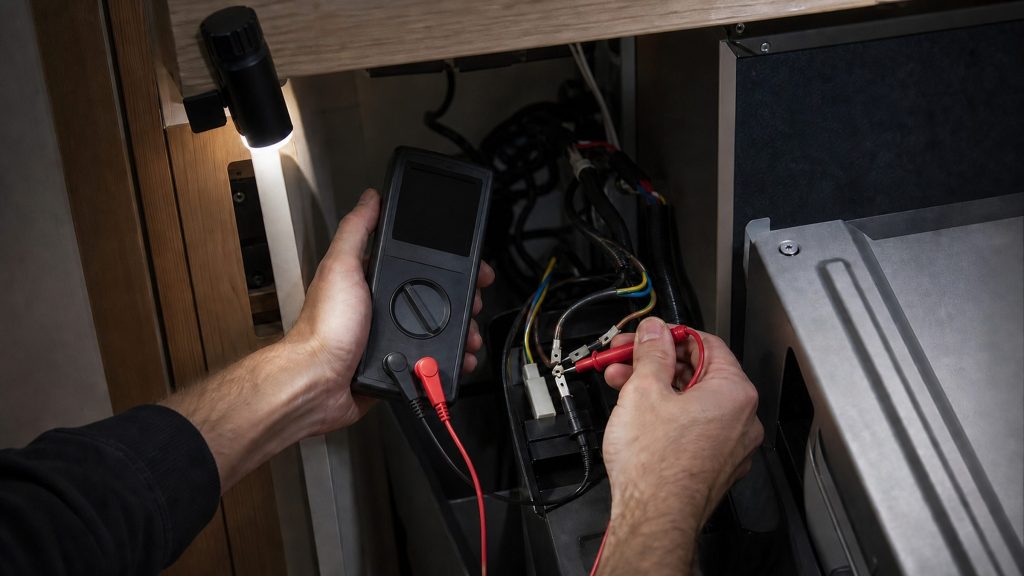
  • A technician kneeling behind a built-in appliance with a multimeter in one hand and its probes on a terminal, a work lamp clipped above
    from $95

    Diagnostic visit

    We work out what is actually wrong before anybody quotes a part. On this make that usually means measuring rather than reading, because most of these appliances report nothing at all when they stop. The fee is credited toward the work when you go ahead.

    • Measured rather than guessed — resistance, current, temperature, airflow
    • The free causes checked first, before any part is named
    • Credited toward the repair
    What this involves
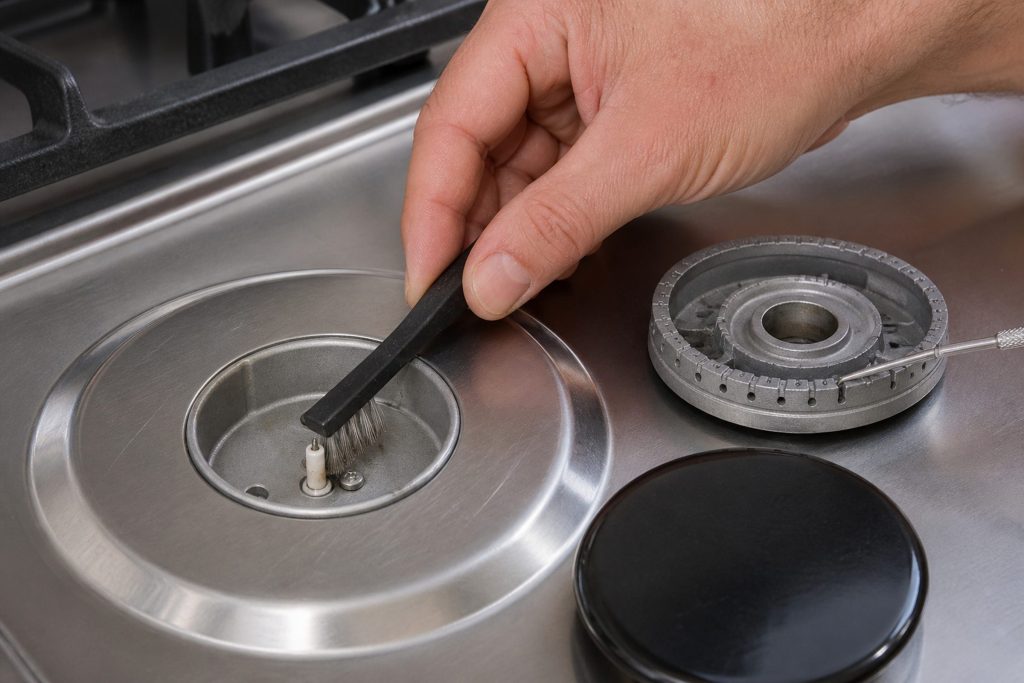
  • A hand brushing debris from the open base of a gas burner with the cap and crown lifted off beside it
    from $155

    Range burner & ignition repair

    The commonest call on this make by a distance. A burner that clicks and will not catch, catches and drops out, or will not hold a simmer. Twenty of the thirty-seven ranges here are gas or dual fuel and every one of them lights the same way, so this is one job across most of the line.

    • Spark, sensing and gas supply separated before any part is named
    • Caps and ports cleaned and seated — the two free causes
    • Every burner run and watched before we leave, not only the one you called about
    What this involves
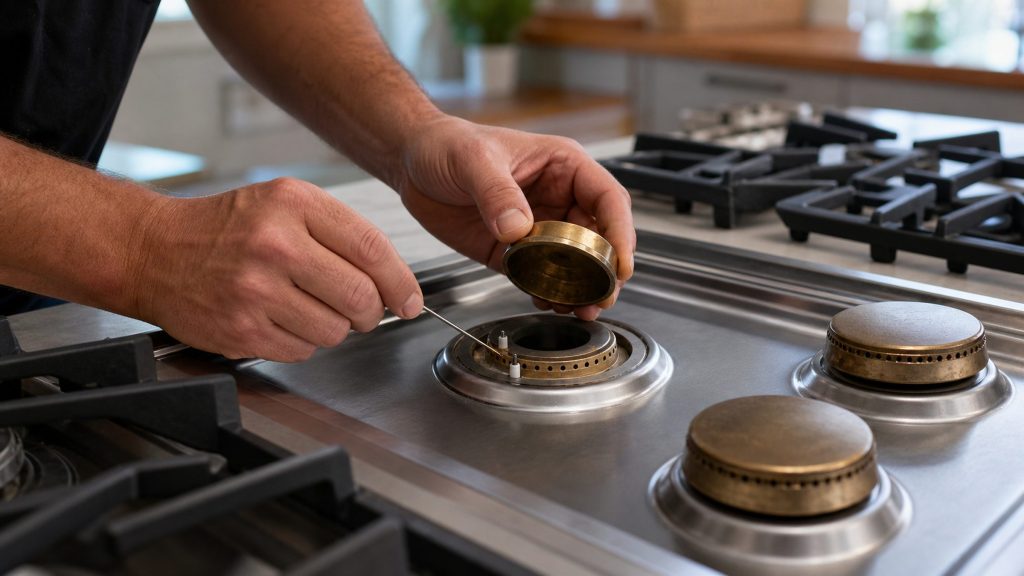
  • Two hands setting a cleaned brass burner cap back onto its crown on a stainless rangetop with three more brass burners beside it
    from $135

    Brass burner service & rebuild

    A service that exists here and on no sibling site, because ten of these ranges and ten of these cooktops use solid brass burners. Brass rewards being cleaned and punishes being scoured, and a burner most people would replace is usually a burner that wants an afternoon and a paper clip.

    • Caps, rings and ports cleaned by hand — never with an abrasive or a caustic
    • Ports gauged rather than eyeballed, so the flame comes back even
    • Replacement only for brass that is cracked or eroded, and we show you why
    What this involves
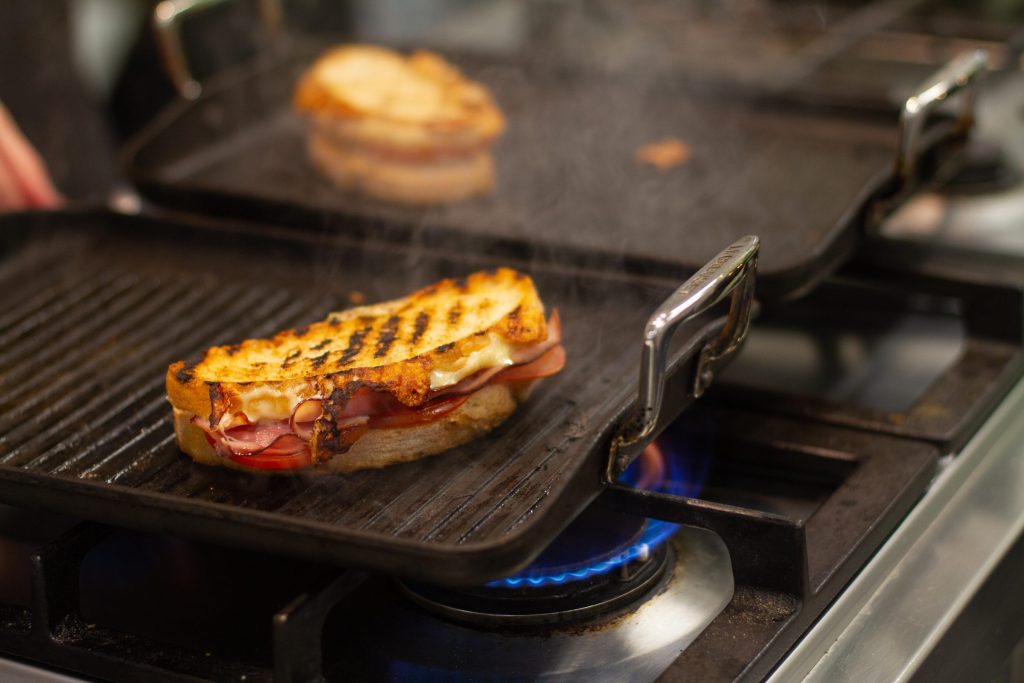
  • A heavy cast-iron griddle plate over a blue gas flame with food cooking on its ridged surface
    from $175

    Griddle & grill zone repair

    Sixteen of the thirty-seven ranges here carry a cast iron griddle across the middle of the cooktop, and it is its own heated zone with its own control. When it heats unevenly or stops heating, the rest of the range keeps working perfectly — which makes this one of the more contained repairs on the site.

    • The zone tested on its own, because it is its own circuit
    • Twenty minutes of warm-up before anything is called uneven
    • The burners either side left working while a part is on order
    What this involves
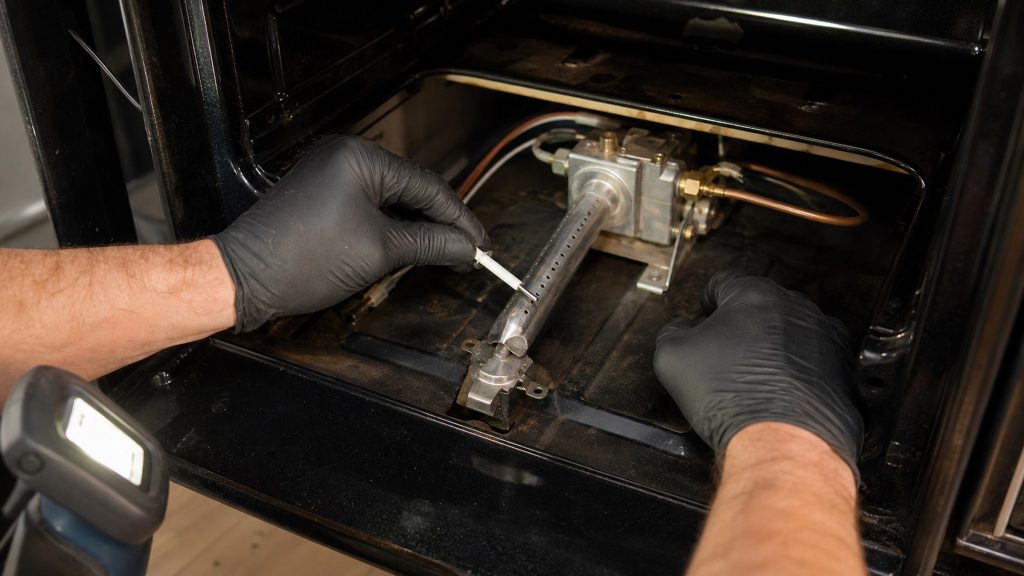
  • Two gloved hands working at the bottom of a gas oven cavity with the floor panel removed, holding a replacement ceramic igniter above the burner tube
    from $195

    Gas oven ignition & safety valve repair

    Eleven of these ranges are all gas, which means the oven is a burner too. A gas oven that will not heat is almost never the control and almost always the igniter and the safety valve working as a pair — and it is a repair that has to be done in the right order to be done safely.

    • Igniter current measured under load, not judged by whether it glows
    • The safety valve treated as half of the same circuit
    • A full cycle watched from cold before we leave
    What this involves
  • The control fascia of a stainless dual-fuel range, its row of metal knobs and the oven door handle below
    from $185

    Dual-fuel oven element & sensor repair

    Gas on top, electric underneath — nine of these ranges are built that way, and it is the arrangement most serious cooks ask for. When the oven half misbehaves it is almost always one of three parts, and the one that fails most is also the cheapest.

    • The sensor checked first, because it is the usual answer and the cheapest
    • Bake, broil and convection measured as three separate circuits
    • The door seal tested, because an oven cannot hold what it cannot keep in
    What this involves

Not sure which of these you have?

Describe it and we will work it out

On this make there is usually no code to read out, so the description does the work. Tell us the shape of the machine, roughly how old it is, and what it is doing that it did not use to do. If you can get a photograph of the model plate, that settles it in one message. We also look at the warming drawers, which are not listed above.

Before you book

The questions we are asked about this equipment

Do you work on every Bertazzoni appliance, or only these ten?

All of them. The ten types listed here are the ones with a page of their own because they are what people search for. We also look at the two warming drawers this maker lists, and at machines from lines it no longer sells — including the older Italian-built ranges that are in no current catalog at all.

Which appliance is most likely to need us?

Cooking, by a wide margin, and within that ignition of one kind or another. That is the shape of a gas company rather than a comment on quality — a gas burner has cheap, serviceable parts that eventually want attention, and a great many of those calls end without a part being fitted.

Where do I find the model number?

It is never anywhere convenient. Behind the kick panel at the floor on a range, inside the door frame on a wall oven, on the underside of a cooktop, on the interior wall of a refrigeration cabinet, and behind the filters on a hood. A photograph beats reading it out — these numbers mix letters and digits that sound alike on a telephone.

Does the series matter — Professional, Master, Heritage?

Much less than people expect. Seventy-four of this maker's hundred and eighty model numbers are published under two or three series at once, because the series is largely a design language rather than a different machine. The number on the plate tells us everything; the name on the showroom tag tells us very little.

My appliance shows no code at all. Can you still diagnose it?

Yes, and it is the normal case here rather than the exception. Only the dishwashers and part of the refrigeration publish codes. Everything else is diagnosed by measurement and by behavior — a flame that lifts, an oven that browns on one side, a hood that sounds right and clears nothing. That is a diagnosis, not a shrug.

Tell us the model and what it is doing.

You will have the scope and the price in writing before anything is opened.

This article is based on:

  • Official manufacturer documentation
  • Internal repair procedures
  • Technician repair history
  • Company quality standards
Call (305) 985-4136