Appliance
Bertazzoni range hoods and ventilation
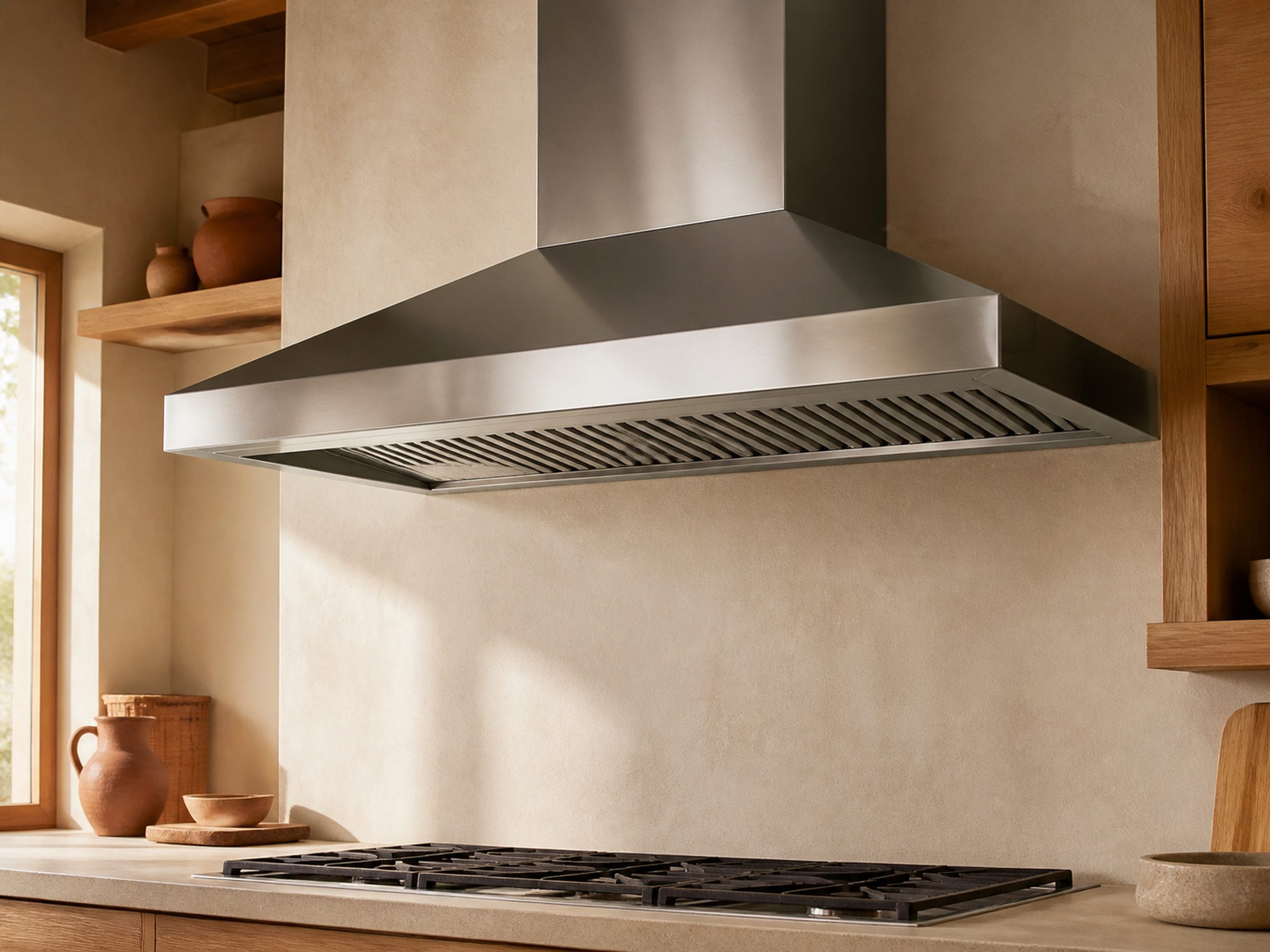
Thirty-seven hoods, which is as many as there are ranges — this maker expects the two to be bought together. Twenty-one are wall mounts, seven chimney hoods, five inserts built into a cabinet, three island hoods hanging over a counter. Nineteen move 600 cubic feet a minute. When one stops pulling, most of the diagnosis is not in the hood.
- 1 symptoms we are called out to
- From $95 diagnostic, credited to the repair
- 59 cities and neighborhoods covered
- OEM parts available on order
The short version
What this equipment is, for a repair
Configurations
Wall mount · Island · Chimney · Insert · 600 CFM and up · 24" to 48"
Access
Planned before the visit, not discovered on arrival
Parts
OEM, available on order
Diagnostic
From $95, credited to the repair
What goes wrong with it
Symptoms we are called out to on Bertazzoni range hoods and ventilation
Each one covers the likely causes in the order they are worth checking, and what to do in five minutes before booking anything.
-
Mostly not the hood Range hood not clearing the air
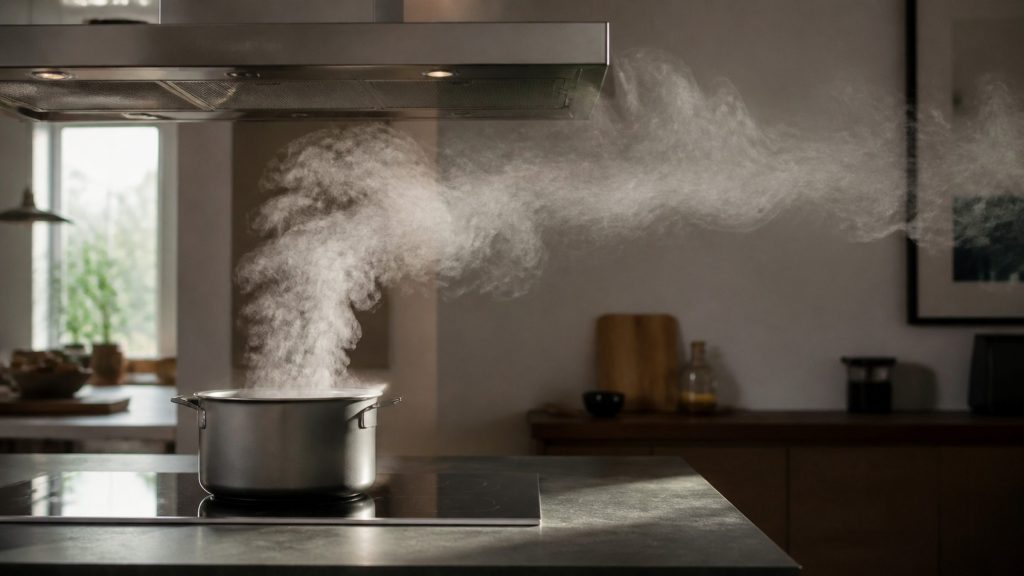
The hood runs, the kitchen still fills with steam, and nothing about the appliance is broken. This is the most under-diagnosed complaint in the kitchen: a hood is a blower, a filter and a path, and three of the four things that stop it working are not in the hood.
- Runs at full speed and clears nothing
- Got gradually worse over a year or two
- Has never really worked since it was installed
What we do on it
Repairs we carry out on Bertazzoni range hoods and ventilation
Starting figures for this equipment in South Florida. The exact cost is confirmed after an on-site diagnostic — and this is not the whole list of what can go wrong, so call if your problem is not here.
-
from $95 Diagnostic visit
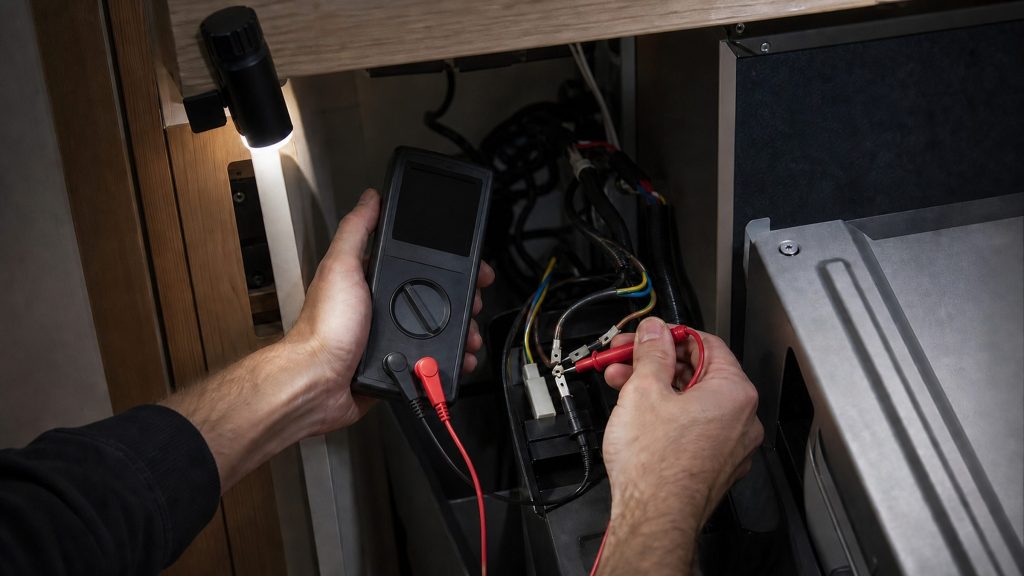
We work out what is actually wrong before anybody quotes a part. On this make that usually means measuring rather than reading, because most of these appliances report nothing at all when they stop. The fee is credited toward the work when you go ahead.
- Measured rather than guessed — resistance, current, temperature, airflow
- The free causes checked first, before any part is named
- Credited toward the repair
-
from $165 Range hood motor & blower repair
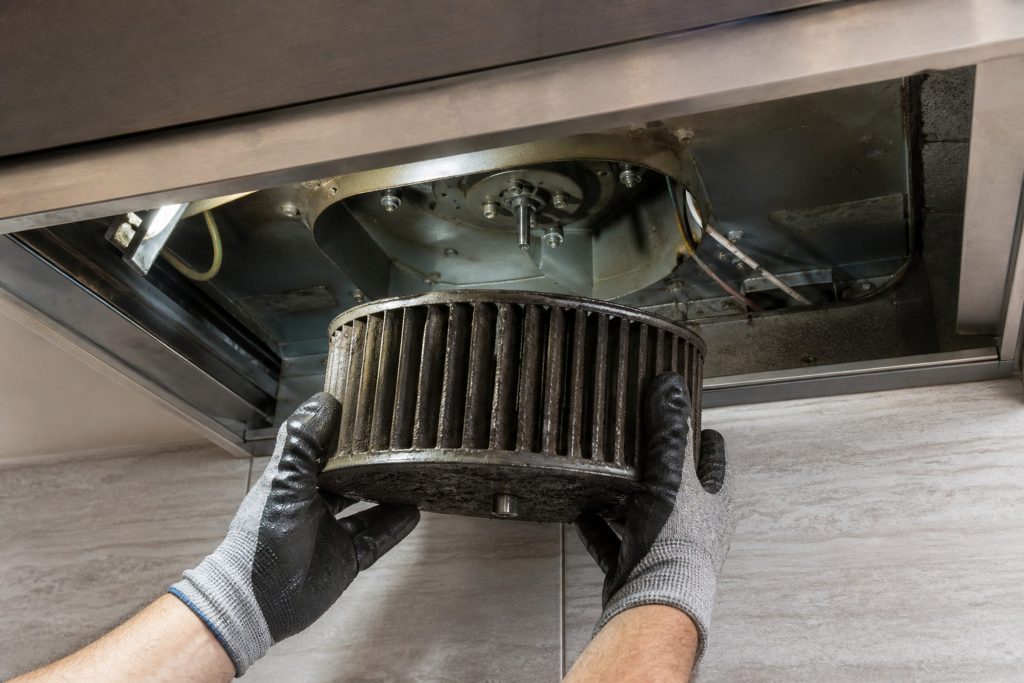
Thirty-seven hoods in this line — as many as there are ranges, because this maker expects the two to be bought together. When the motor stops, hums, or has become far louder than it was, the repair is contained and the parts are ordinary. When the lights work and the motor does not, that is useful information rather than bad news.
- Lights and motor treated as evidence, because they share a board
- Filters checked first — a loaded filter is a noise complaint
- Remote blowers found before the visit rather than during it
-
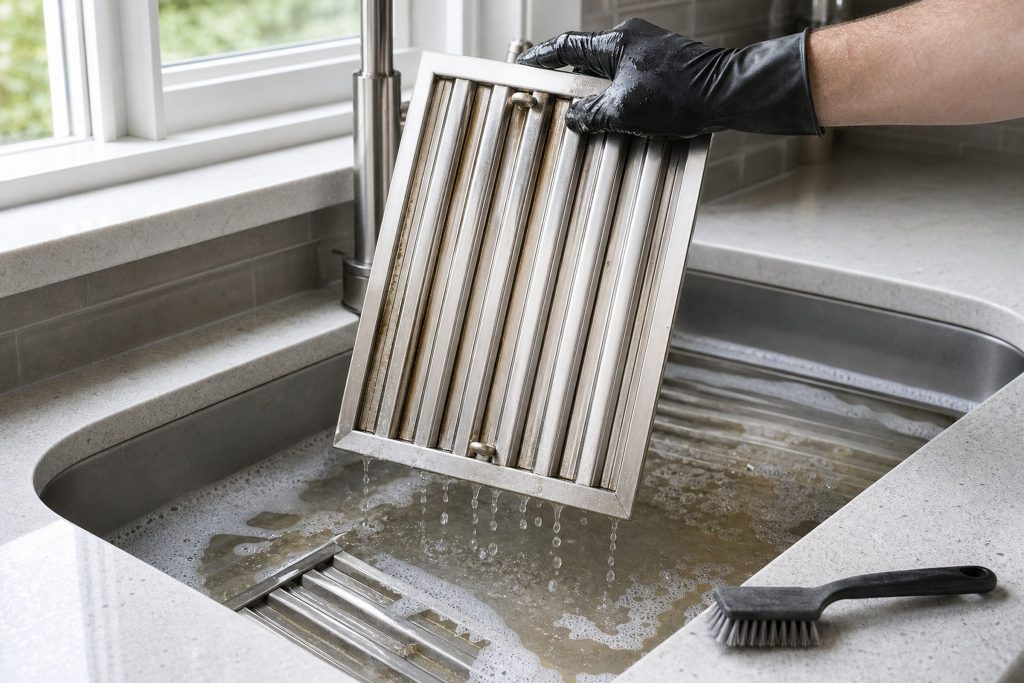
from $145 Range hood ducting & airflow service
The hood runs, the kitchen still fills with steam, and nothing about the appliance is broken. This is the most under-diagnosed job on the site: a hood is a blower, a filter and a path, and three of the four things that stop it working are not in the hood at all.
- The whole path checked — filter, duct, damper, cap
- Airflow measured rather than judged by how it sounds
- A straight answer where the installation, not the appliance, is the problem
-
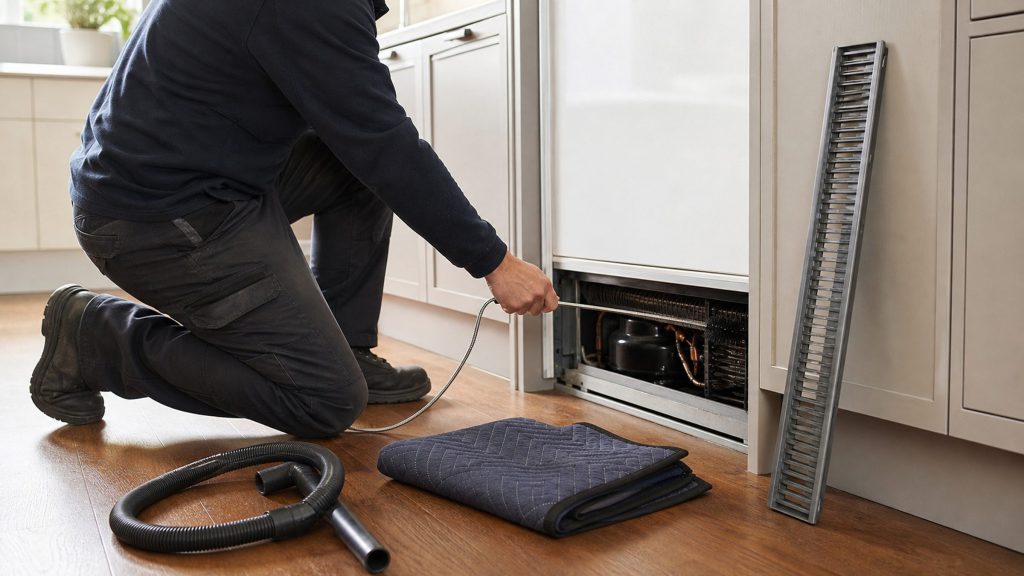
from $135 Appliance maintenance visit
A planned visit rather than an emergency one. On this make it earns its keep in three specific places: brass burners that want cleaning rather than replacing, hood filters and ducting nobody has looked at, and the scale that South Florida water puts into every dishwasher, steam oven and coffee machine in the house.
- Several appliances in one visit, which is where the saving is
- Burners, filters, condensers and scale — the four things that actually shorten a life
- A written note of what is starting to age, before it stops
-
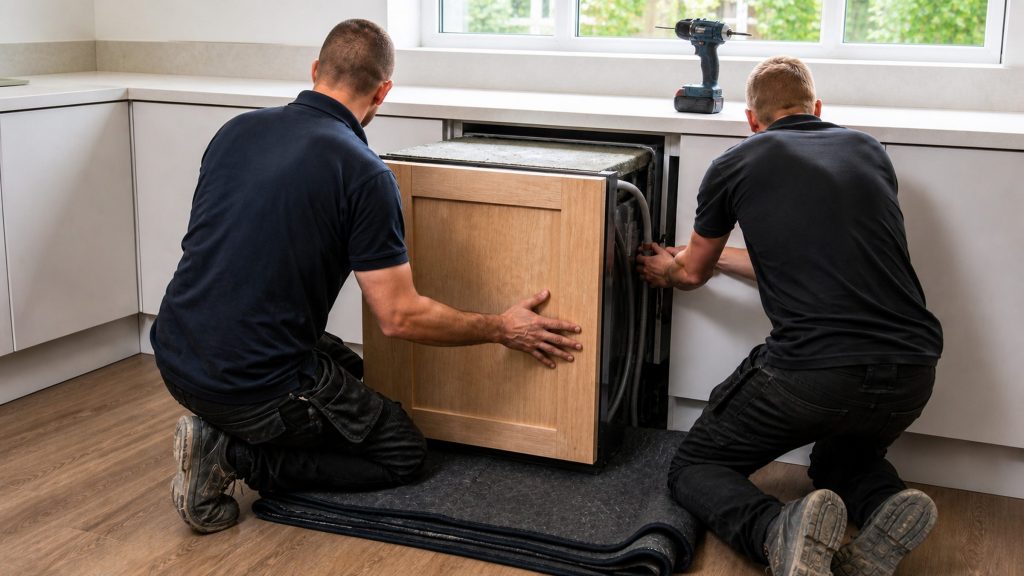
from $175 Appliance installation & refit
Setting a machine back into cabinetry it was taken out of, hanging a custom panel on a column, or putting right an installation that was never quite right. On this make it matters more than most: a great deal of the line is built in, and induction in a sealed island is the commonest self-inflicted failure we see.
- Clearances and ventilation checked against what the appliance actually needs
- Custom panels hung square and aligned to the neighboring cabinetry
- Anti-tip, gas connections and leveling treated as the safety items they are
In more detail
About Bertazzoni range hoods and ventilation
Four shapes, one job
- Wall mounts — twenty-one. The canopy over a range against a wall, ducted up and out.
- Chimney hoods — seven. The same idea with the duct enclosed in a visible stack.
- Inserts — five. The working part only, built into a cabinet or a custom canopy, so the repair starts by getting at it.
- Island hoods — three. Hanging over a counter with the duct run through the ceiling, and no wall behind to help.
Why most hood calls are not the hood
A hood is a blower, a filter and a path. When it stops clearing the air, the path is the first suspect and it is the part nobody looks at: filters that have gone tacky, a duct crushed behind a cabinet, a run that terminates into a soffit instead of outside, a roof cap blocked by everything a roof collects. We work along the path in that order because it is the order that finds the answer, and because three of the four cost nothing to put right.
Nineteen of them move 600 CFM
That number is the design airflow, not what your kitchen is getting. What it is actually getting depends on the duct diameter, the number of bends, the length of the run and how clean everything is — which is why two identical hoods in two houses can perform completely differently and neither is broken. If yours has never been good rather than having got worse, that is a conversation about the installation.
What to have ready when you call
The model number, which is usually under the hood behind the filters, whether it is ducted outside or recirculating, and whether the blower is in the hood or remote. If the lights and the motor behave differently from one another, say so — it narrows the repair before anyone arrives.
This article is based on:
- Official manufacturer documentation
- Internal repair procedures
- Technician repair history
- Company quality standards

Before you book
Questions about bertazzoni range hoods and ventilation
The hood runs but the kitchen still fills with steam.
Then the blower is turning and the air is not going anywhere, and most of the causes are outside the appliance. In order: the grease filters, which want washing far more often than people expect in a house that really cooks; the duct run, which can be crushed, disconnected, or terminated into a soffit rather than outside; the roof or wall cap at the far end, which is where lint, paint and nests all end up; and only then the blower itself. We check the path before we quote the hood.
How often do the filters actually need washing?
Far more often than the manual implies if you cook with oil. A baffle or mesh filter that has gone tacky is already restricting the airflow measurably, and a hood pulling through a blocked filter works harder, runs hotter and gets louder — which is why "it has got noisy" is so often a filter question rather than a motor one. Most of these go through a dishwasher on a hot cycle. It costs nothing and it is the single most effective thing an owner can do for a hood.
The lights work but the motor does nothing.
That is useful, because it tells us the hood has power and the control board is at least partly alive. What is left is the motor itself, its capacitor, the speed control, or the wiring between the control and the motor. On an insert or an island hood there is sometimes a remote blower in the attic or on the roof, in which case the motor is not in the kitchen at all — worth mentioning when you book, because it changes what we bring.
Is a recirculating hood worth repairing?
Yes, but the expectations are different. A recirculating hood filters the air and gives it back to the room rather than sending it outside, so it can never do what a ducted hood does with steam and humidity — it handles grease and odor and that is all. If yours has always disappointed you on steam and is otherwise working, that may be the installation rather than a defect. If it used to be better, it is almost always the charcoal filter, which is a consumable and has a life measured in months.
It has got much louder than it used to be.
Noise is a symptom worth taking seriously because it is usually cheap. In order of likelihood: loaded grease filters, which make the blower work against a restriction; a fan wheel with a build-up on one side, which throws it out of balance; loose ducting resonating; and, last, bearings on their way out. Three of those four are cleaning rather than parts.
Where we do it
Across Miami-Dade, Broward, and Palm Beach
Same terms everywhere we go: an on-site diagnostic first, the price agreed in writing, and the exact figure confirmed once we have seen the unit.
Neighborhoods people ask for by name