Safety & Risks
Oven Smells Like Burning Plastic: Which Smell Means Stop
Burning plastic and burning wire insulation are the two that mean stop. Both are the smell of an electrical connection or a component overheating, most often behind the control panel where the heat of the cavity meets the wiring, and the right response is to switch the appliance off at the breaker rather than at the control and leave it off. The others are not emergencies. A new oven smells of hot oil and metal for its first few uses while manufacturing residue burns off, and that is expected. A smell after a self-clean cycle is the residue of what was cleaned, and it clears. A smell of burning food is usually something that fell to the floor of the cavity or onto an element and is still there. And a sharp chemical smell shortly after any oven cleaner has been used is the cleaner, which should never have been near the cavity in the first place on a machine with a self-clean function. If you cannot place the smell, the safe order is: switch off at the breaker, let it cool completely, look at the floor of the cavity and behind the racks, and only then decide.
The full guide
Why does my oven smell like burning plastic? Because something electrical is too hot
Of all the smells an oven produces, plastic and wire insulation are the two that mean stop.
They are the smell of an overheating connection or component, and on a built-in oven the usual location is behind the control panel, where the heat coming off the cavity meets the wiring and the board.
Switch it off at the breaker, not at the control. Leave it off.
The five smells, sorted
Burning plastic — electrical. Stop.
Burning wire insulation, sharper and more acrid — electrical. Stop.
Hot oil and hot metal on a new appliance — manufacturing residue. Normal for the first few uses. Run it empty at a high temperature with the kitchen ventilated and it settles.
Burnt, smoky, greasy — something is in the cavity. Almost always food on the floor or on an element, and it gets stronger with the door open rather than weaker.
Sharp and chemical after cleaning — the cleaner. Which should not have been in there.
Where the smell is strongest tells you most
This is the single most useful observation and almost nobody makes it.
Stand at the front of the oven with the door shut and smell at the control panel and at the vent. Then open the door and smell the cavity.
If it is worse at the panel with the door shut, treat it as electrical.
If it is worse from the cavity with the door open, look inside — the floor, under the racks, the roof above the broil element.
Why after a self-clean cycle is a category of its own
A clean cycle is the hardest thing an oven does to itself. The cavity runs far hotter than any cooking temperature, and everything in it is reduced to ash.
That smells, and it is expected. Ventilate, cool, wipe the ash out, run it empty at a moderate temperature once.
What is not expected is a burning plastic smell after a clean cycle. That cycle is also the single most common trigger for thermal cut-outs, locks and control problems on any oven, precisely because it pushes everything to its limit. A plastic smell after cleaning is worth taking seriously.
What to do, in order, if you cannot place it
- Switch off at the breaker. Not at the control panel — the panel is one of the places it could be coming from.
- Let it cool completely. Hours rather than minutes.
- Look: the cavity floor, under and behind the racks, the roof, the door channel. Something dropped and forgotten explains most of these.
- Smell it cold. A cold appliance that still smells of hot plastic has a component that has been overheating for a while.
- If nothing explains it, leave it off and book it.
The one thing not to do
Do not run it again "just to see". A marginal electrical connection gets worse with every heat cycle, and the failure mode at the end of that road is not an inconvenience.
If it turns out to be a repair
What this leads to, and what it costs
Every job on this site is priced the same way: an on-site diagnostic first, the figure agreed in writing before anybody starts.
-
from $215 Oven control & display repair
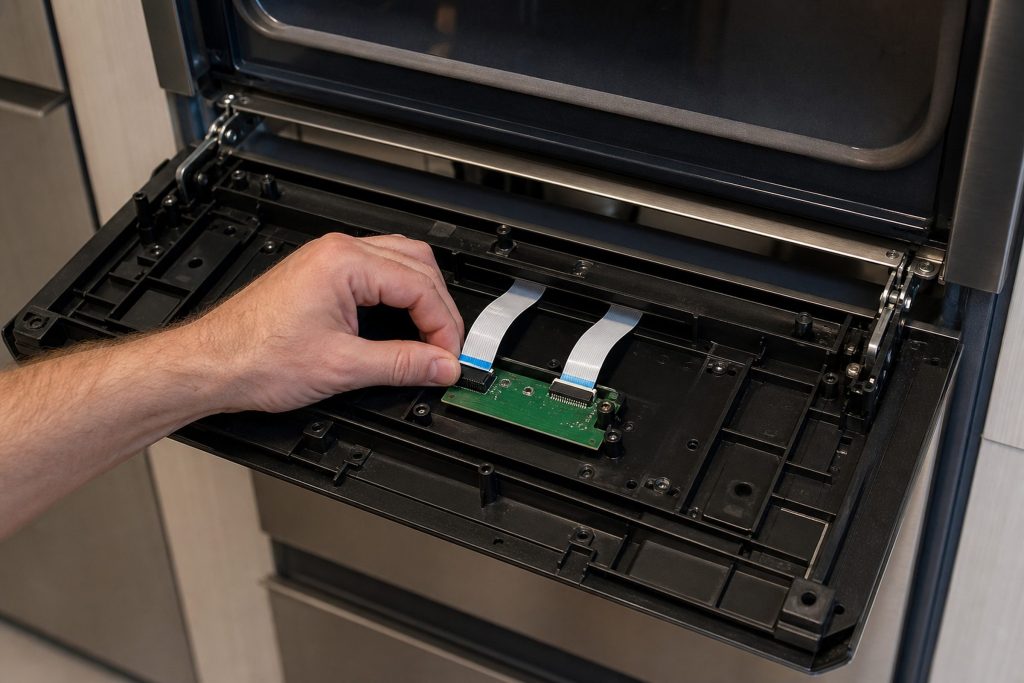
A display that has gone blank or half-lit, a touch panel that ignores half its pads, a clock that resets itself, an oven that will not accept a program. These are the electronics rather than the cooking, and the first job is to establish which of two boards it is — because they are different parts at different prices.
- The display board and the power board separated before anything is ordered
- Supply and connections checked first, because they mimic a failed board
- The oven programmed and run through a full cycle afterwards
-
from $95 Diagnostic visit
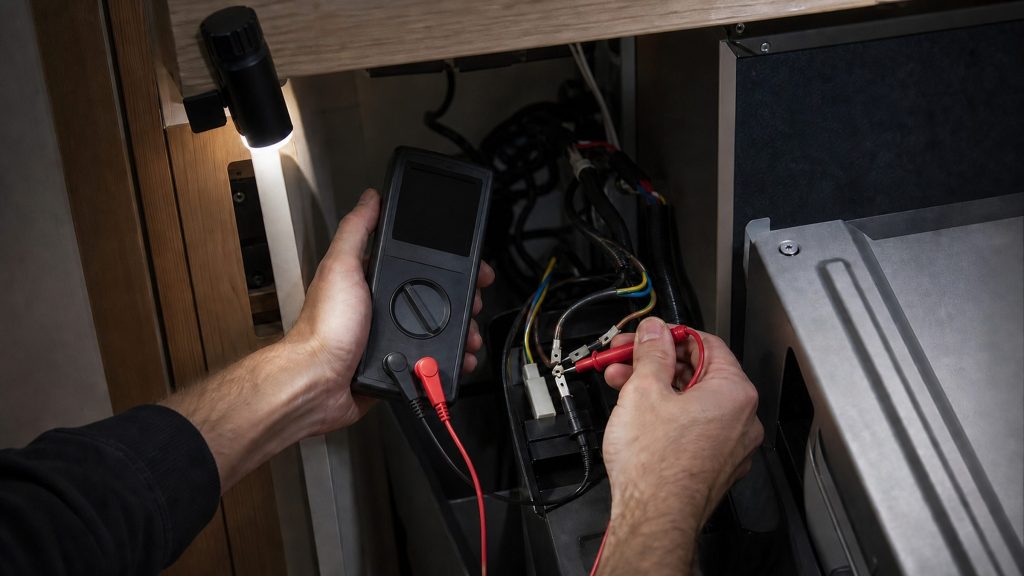
We work out what is actually wrong before anybody quotes a part. On this make that usually means measuring rather than reading, because most of these appliances report nothing at all when they stop. The fee is credited toward the work when you go ahead.
- Measured rather than guessed — resistance, current, temperature, airflow
- The free causes checked first, before any part is named
- Credited toward the repair
Questions people ask about this
How do I tell burning plastic from burning food?
Food is greasy and smoky and it gets stronger with the oven door open; plastic and wire insulation are sharp, chemical, slightly acrid, and they often smell strongest at the control panel rather than inside the cavity. If the smell is worst at the front of the appliance rather than from the oven cavity, treat it as electrical.
The smell only appears at high temperatures.
That fits an electrical problem, because a marginal connection heats with load and current. It also fits residue on an element that only carbonizes above a certain point. The distinguishing question is where the smell is strongest, and whether anything visible is on the element.
It smells of burning after I ran the self-clean cycle.
Expected. A clean cycle takes the cavity far hotter than cooking does and everything in it is reduced to ash, which smells. Ventilate the kitchen, let it cool, wipe the ash out, and run it empty at a moderate temperature once. If the smell is chemical rather than burnt, that is different.
My oven is brand new and smells strongly.
Normal for the first few uses. Manufacturing oils on the cavity and the elements burn off, and the smell is hot oil and metal rather than plastic. Run it empty at a high temperature for an hour with the kitchen ventilated and it will settle.
Should I use oven cleaner to get rid of a smell?
On these ovens, be careful. Aggressive cleaners attack the coatings, the door seal and anything anodised, and on a machine with a clean cycle they are unnecessary. If the smell is chemical and started after cleaning, the cleaner is the cause and more of it will not help.
It smells and there is no visible cause anywhere.
Then the sensible order is off at the breaker, cool completely, and book it. Behind the control panel is where the cavity's heat meets the wiring, and it is not an area to open up on a live appliance to satisfy curiosity.
Safety & Risks
More guides like this one
-
What Happens When Refrigerant Leaks From a Refrigerator
Answers the safety question honestly, and then answers the one you actually needed: a sealed system does not consume refrigerant, so topping it up is not a repair.
Read more -
A Grease Fire Inside the Oven: What to Do and What Not to Open
Specifically the oven rather than the cooktop, because the correct action is the opposite one. The cavity is already a sealed box. Short page, because somebody reading it has minutes.
Read more -
Mold on a Refrigerator Door Seal: Cleaning It Without Ruining the Seal
A humidity problem this city produces year-round, and the advice everywhere else uses bleach — which hardens the rubber and turns a cleaning job into a gasket.
Read more
Tell us the model number and what it is doing.
This article is based on:
- Official manufacturer documentation
- Internal repair procedures
- Technician repair history
- Company quality standards