Safety & Risks
Mold on a Refrigerator Door Seal: Cleaning It Without Ruining the Seal
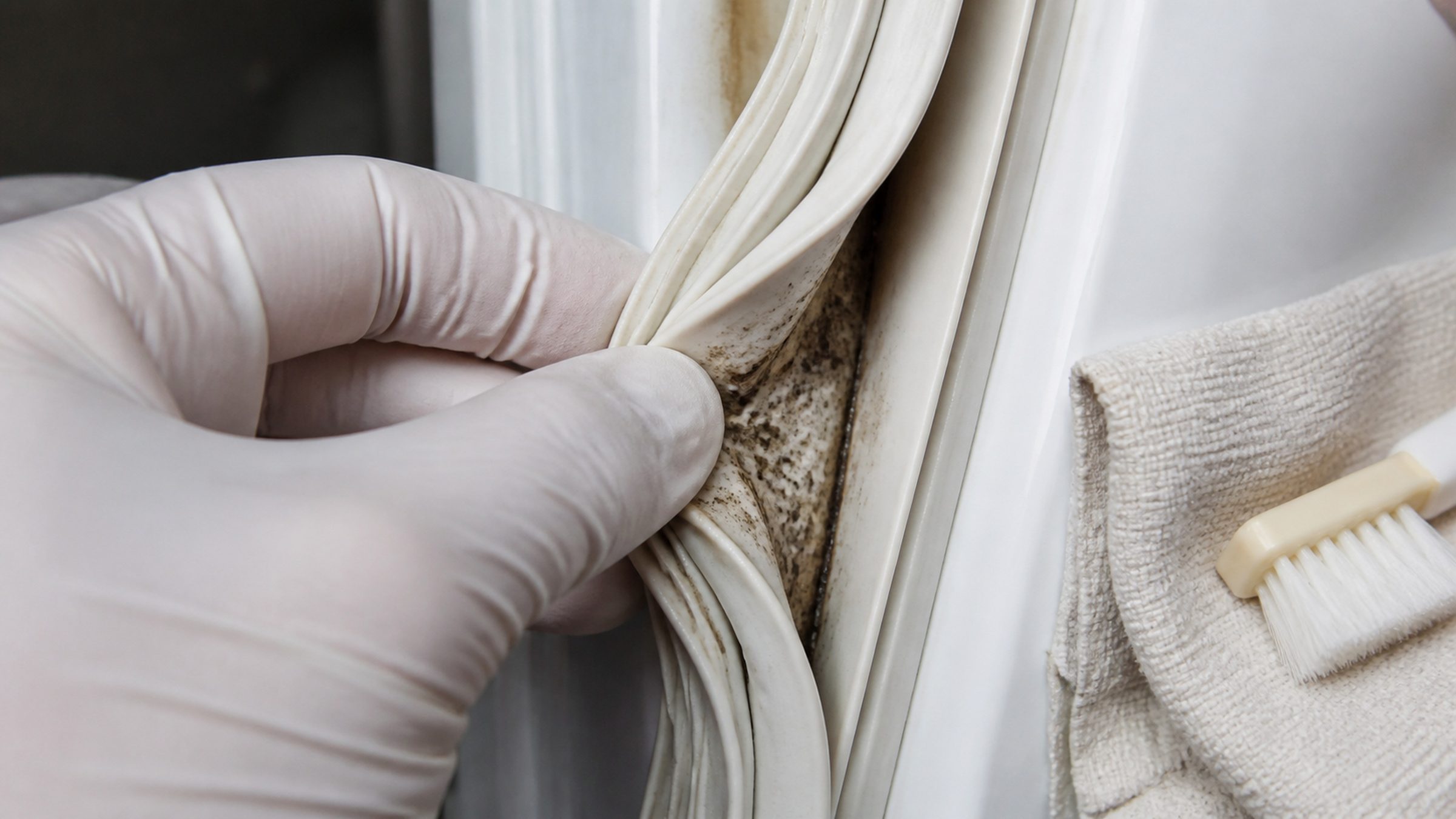
Warm water, a mild dish detergent and a soft brush, working into the folds rather than wiping across them. That is the method, and the reason it matters is what the alternatives do. Bleach and other chlorine cleaners kill the mold and harden the rubber at the same time, so a gasket cleaned that way a few times loses its flexibility, stops sealing at the corners and has to be replaced — which turns a fifteen-minute job into a part. Vinegar is a reasonable middle ground for surface growth, diluted and rinsed off, though it is milder than people expect against established mold. The part everybody misses is that the mold is not on the gasket, it is inside it: these seals are hollow with a magnet in a channel and a folded lip, and the growth lives in the fold where moisture collects and nothing ever wipes. Peel the lip back gently with a finger and clean inside it. Then dry it properly, because leaving it damp is how it comes back within a week. Finish with the paper test to see whether the seal is still doing its job.
The full guide
How to clean mold from refrigerator door gasket: warm water and a brush, not bleach
South Florida grows mold on refrigerator seals year-round. It is not a sign of a dirty kitchen; it is a cold surface, a warm humid room, and a fold that never dries.
The mistake almost every guide makes
Bleach.
It works, in the sense that it kills what is there. It also leaches the plasticizers out of the rubber. A gasket cleaned with chlorine a few times goes hard, stops conforming to the cabinet, and starts letting warm air in at the corners — which produces more condensation, which grows more mold, on a seal that now also costs you cold air every hour of every day.
You end up buying a gasket to solve a cleaning problem.
Where the mold actually is
Not on the face you can see. Inside the fold.
A refrigerator door seal is a hollow rubber extrusion with a magnet in a channel and a lip that folds against the cabinet. Moisture collects in that fold, nothing ever wipes it, and it stays at a temperature mold likes.
You have to peel the lip back with a finger to reach it. Gently — the rubber is flexible and it is not fragile, but it is attached along its whole length and it does not need to be pulled hard.
The method
- Warm water and a mild dish detergent. That is all.
- Peel the lip back a section at a time.
- A soft brush into the fold — an old toothbrush is exactly right. Work along it rather than across it.
- All four sides, corners included. Corners are where both the mold and the sealing failure start.
- Rinse, then dry properly. Both the face and inside the fold. This is the step people skip and it is why it comes back in a week.
Vinegar, diluted and rinsed, is a reasonable maintenance choice — every couple of months, on a seal that is already clean. It is milder than people expect against established growth.
Then check whether the seal still works
Cleaning a seal that has stopped sealing is treating a symptom.
The paper test. Close the door on a sheet of paper and pull it out. It should drag noticeably. Do it at four or five points on each of the four sides.
Anywhere it slides out freely, the gasket is not making contact — and warm, humid air is going in there continuously, which is both where the mold came from and where your electricity is going.
When cleaning will not hold
If the seal has taken a set — flat, hard, no spring in it — cleaning is not the answer. Some seals soften usefully with warm water and patient working; most that have genuinely hardened are replacements.
If the door itself is out of true, particularly on a panel-ready machine where your own cabinet front hangs on the appliance door and carries its own weight, then the seal is being asked to close a gap it was never meant to. That is an alignment job, and it is usually the panel hardware rather than the appliance hinge.
Either way, a machine that regrows mold within a week is telling you something beyond hygiene.
Keeping it away
Wipe and dry the seal every month or two. Keep the fold dry rather than the face clean. And in this climate, do not leave the door open while you decide what to cook — thirty seconds of Miami air is a surprising amount of water on a cold surface.
If it turns out to be a repair
What this leads to, and what it costs
Every job on this site is priced the same way: an on-site diagnostic first, the figure agreed in writing before anybody starts.
-
from $155 Column panel & door alignment
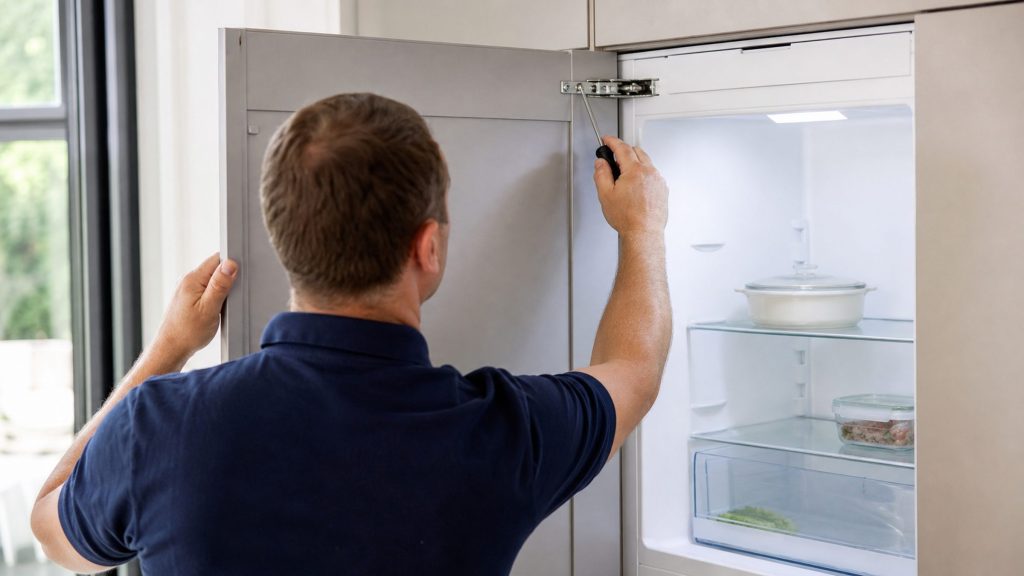
Fourteen of the machines in this line live behind your own cabinet fronts — five refrigerator columns, five freezer columns and four wine cellars. A custom door front is heavy, and when a column door drops a few millimeters it stops sealing along the top long before anything looks wrong.
- Doors set square against the cabinetry, not against the appliance alone
- Seals tested with the panel on, because that is how they live
- Hinges and closers adjusted as a set
-
Freestanding · Built-in · Columns · French door · Bottom mount · Panel ready Refrigerators
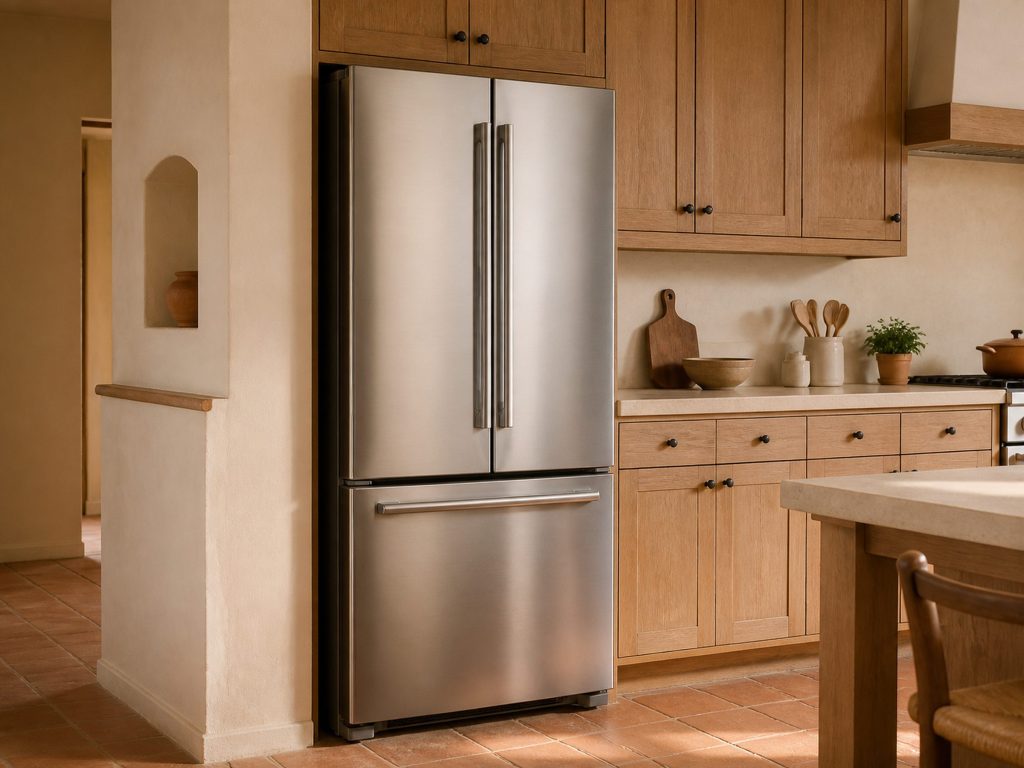
Thirty refrigerators, and they divide sharply: seventeen freestanding machines that can be pulled out into the room, eleven built-in, and five columns that live behind your own cabinet fronts. Twelve are French door, thirteen bottom mount. Which of those you have decides almost everything about how the visit goes — a column comes apart before it can be diagnosed, and a freestanding bottom mount does not.
- A refrigerator that is not holding temperature while the freezer is fine
- Water on the floor of the fresh food compartment
- An ice maker that has stopped, or fills and will not release
Questions people ask about this
Why not bleach? It kills mold.
It does, and it also attacks the rubber. Chlorine cleaners leach the plasticizers out of a gasket, and a seal that has been bleached several times goes hard, stops conforming to the cabinet and starts letting warm air in at the corners. The mold comes back and now the seal does not work either.
Does vinegar work?
For surface growth and for keeping it away, reasonably well, diluted and rinsed off afterwards. Against established mold in a fold it is milder than people expect. It is a good maintenance choice and a mediocre rescue one.
It keeps coming back within a week.
Then it is being fed. Either the gasket is not being dried after cleaning, or the door is not sealing and warm humid air is condensing there constantly. The paper test settles which — if the seal is failing, cleaning it will never hold.
What is the paper test?
Close the door on a sheet of paper and pull it out. It should drag noticeably. Do that at several points around all four sides. Anywhere it slides out freely, the seal is not making contact there — and corners are where it goes first.
The gasket has gone hard and flat in places.
Then it has taken a set, and cleaning will not bring it back. Some seals soften usefully with warm water and careful working; most that have gone genuinely hard are replacements. It is one of the cheaper refrigeration repairs and it pays for itself in what the machine stops wasting.
Is the mold a health problem?
Treat it as one worth dealing with promptly rather than as an emergency. It is on a surface that touches the inside of a cold cabinet where food is stored, and in this climate it will keep growing. The bigger practical issue is usually that it indicates a damp seal, which indicates a door that is not closing properly.
Safety & Risks
More guides like this one
-
Oven Smells Like Burning Plastic: Which Smell Means Stop
Five different smells, five different causes, and only two of them mean switch it off at the breaker. A page that treats them all the same is no use to anybody.
Read more -
What Happens When Refrigerant Leaks From a Refrigerator
Answers the safety question honestly, and then answers the one you actually needed: a sealed system does not consume refrigerant, so topping it up is not a repair.
Read more -
A Grease Fire Inside the Oven: What to Do and What Not to Open
Specifically the oven rather than the cooktop, because the correct action is the opposite one. The cavity is already a sealed box. Short page, because somebody reading it has minutes.
Read more
Tell us the model number and what it is doing.
This article is based on:
- Official manufacturer documentation
- Internal repair procedures
- Technician repair history
- Company quality standards