Maintenance & Prevention
Cleaning a Bertazzoni Oven Without Costing Yourself a Repair
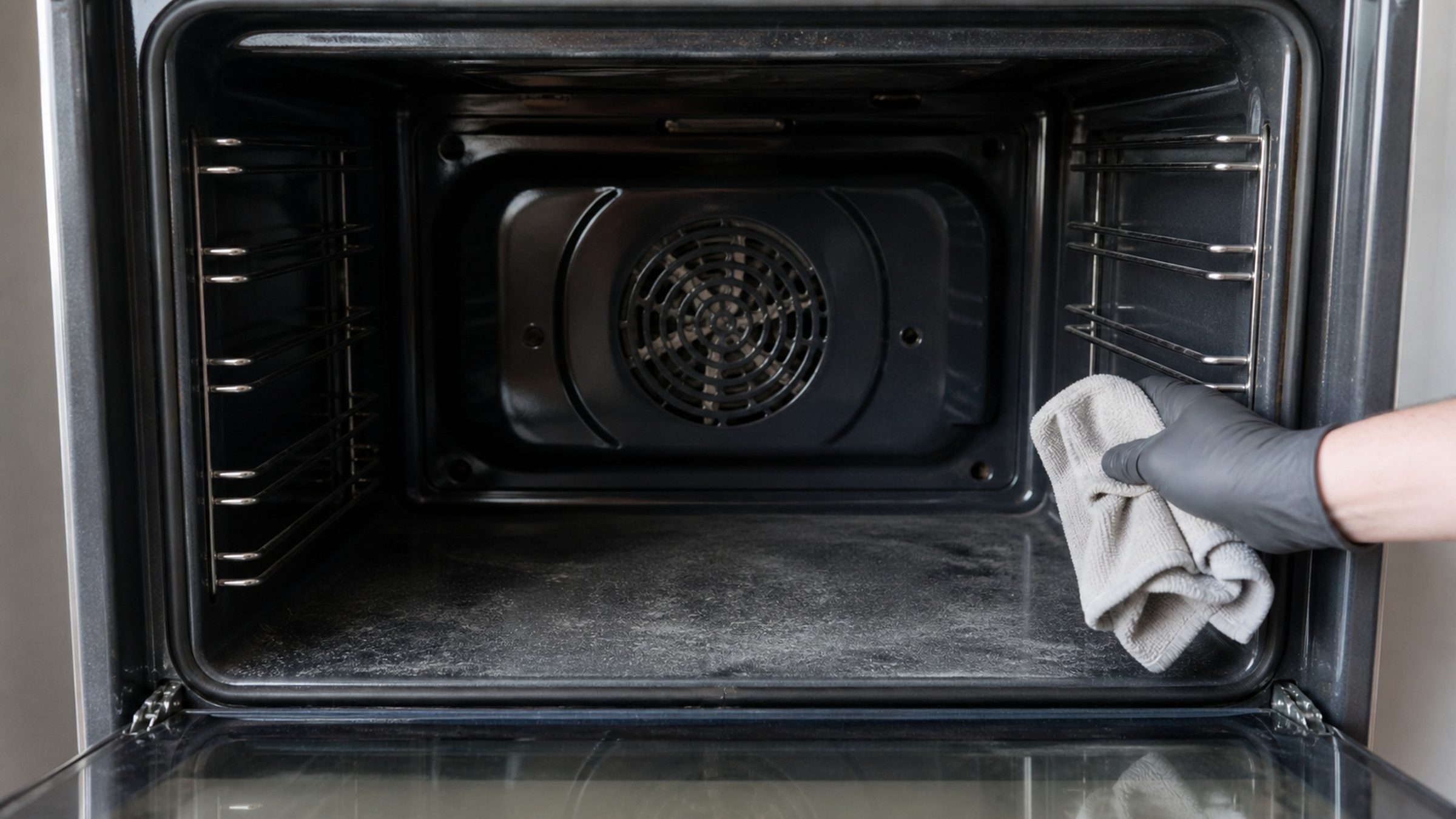
Hot water, a mild detergent and patience will do almost all of it, and the sooner after a spill the better. What matters more is the list of things to keep away: aggressive oven cleaners attack the cavity coating, the door seal and anything anodized, and on brass burners they take the finish off permanently. Abrasive pads scratch, and a scratched cavity holds soil worse than a clean one. Steel wool leaves particles that rust. If your oven has a self-clean cycle, use it — but use it knowing what it is: the hardest thing the appliance ever does to itself, several hours at a temperature far above any cooking setting. Locks, thermal cut-outs and control boards fail during or just after a clean cycle more than at any other time, so run it when you have a day without guests coming, not the morning of. Take everything out first, including racks unless the manual says they are cycle-safe, and expect a smell. Three places get left alone entirely: the temperature sensor probe, the ignitor or element, and the door channel where the gasket sits.
The full guide
How to clean Bertazzoni oven: hot water, time, and a short list of things to keep away
Most of an oven comes clean with hot water, a mild detergent and patience. The rest of this page is about not causing a repair while you do it.
What to keep away from the cavity
Caustic oven cleaners. They attack the cavity coating, they attack the door seal, and anything anodized or brass they reach is permanently changed. On a machine that has a self-clean cycle they are also unnecessary.
Abrasive pads and creams. A scratched cavity holds soil worse than a smooth one, so the second clean is harder than the first, forever.
Steel wool. It leaves particles behind, and they rust.
Anything sharp on the glass. The inner pane has a coating on it, and that is the subject of its own page.
The three places to leave alone entirely
The temperature sensor probe — the small rod reaching in near the top of the back wall. It is a measuring instrument. Wipe around it, do not scrub it, and do not bend it.
The ignitor or the heating element. Brittle, expensive, and it burns off its own soil the next time the oven runs.
The channel where the door gasket sits. Cleaner in there does more harm to the seal than the soil ever did, and a seal is what keeps the oven's temperature honest.
The self-clean cycle: use it, knowing what it is
It works. It is also, without exaggeration, the hardest thing the appliance ever does to itself — several hours at a temperature far above any cooking setting, reducing everything in the cavity to ash.
Which is why locks, thermal cut-outs and control boards fail during or just after a clean cycle more than at any other time in an oven's life. Not because the cycle is defective, but because it takes everything to its design limit at once.
Practical consequences:
- Run it on a day when the oven being unavailable would not matter. Not the morning of a dinner.
- Empty the cavity completely. Racks come out unless your manual says they are cycle-safe.
- Ventilate. It smells, and that is normal.
- Expect the door to stay locked until the cavity is genuinely cool — hours, not minutes. Forcing it is how an inexpensive problem becomes a door.
- If the oven stops working right after a cycle, say so when you book. It points straight at the cut-out or the lock and saves the whole first half of the diagnosis.
The brass burners, if you have them
Twenty machines in this line have them, and they are cleaned rather than replaced.
Caps and crowns off. Hot water and detergent. A soft brush. Ports cleared with something that will not enlarge them — a forced port permanently changes the flame and turns a service into a burner. Everything bone dry before it goes back, and the cap seated flat.
No abrasives. No oven cleaner. Brass darkens with heat; that is the material behaving normally, not damage, and nothing brings a stripped finish back.
The habit that saves the most work
Deal with spills while the oven is still warm — warm enough to soften them, not hot enough to burn you.
Soil that has been baked on ten more times is several times the work of soil dealt with the same evening, and it is also the fuel for the grease fire on another page of this site.
And do not line the oven floor with foil. It traps grease, it changes how heat moves through the cavity, and on several ovens it blocks airflow the burner depends on. Put a tray on the rack below instead.
If it turns out to be a repair
What this leads to, and what it costs
Every job on this site is priced the same way: an on-site diagnostic first, the figure agreed in writing before anybody starts.
-
from $165 Oven door & self-clean lock repair
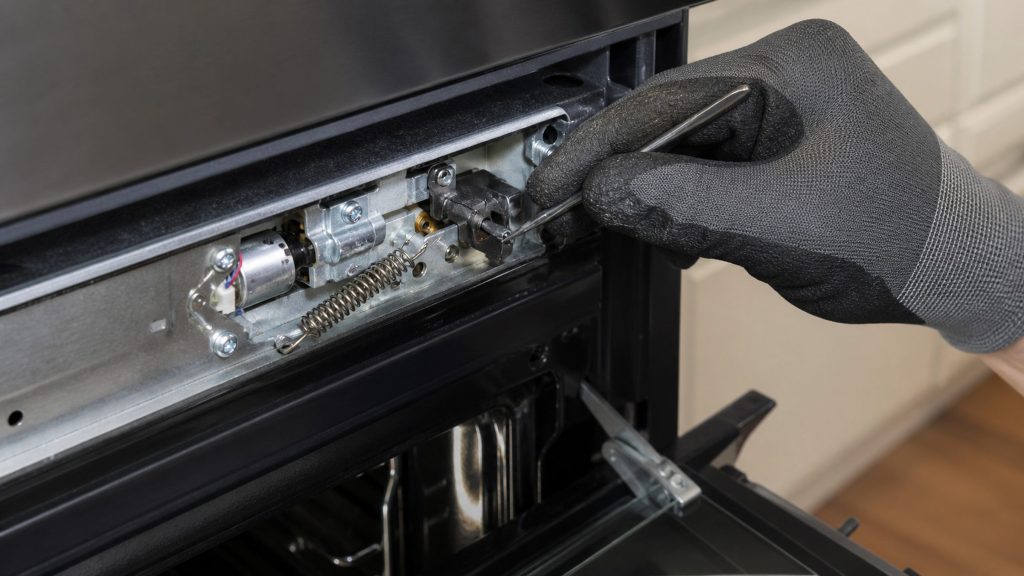
A door that will not close square, hinges that have given up under a heavy door, or a lock that engaged for a clean cycle and never let go. Eight of these ovens self-clean, and the post-clean lock is the single most common reason people call about an oven door.
- Give a locked door time to cool before anything is forced
- Hinges and springs replaced in pairs, because they wear together
- The seal checked at the same time — it is the reason the door matters
-
from $135 Brass burner service & rebuild
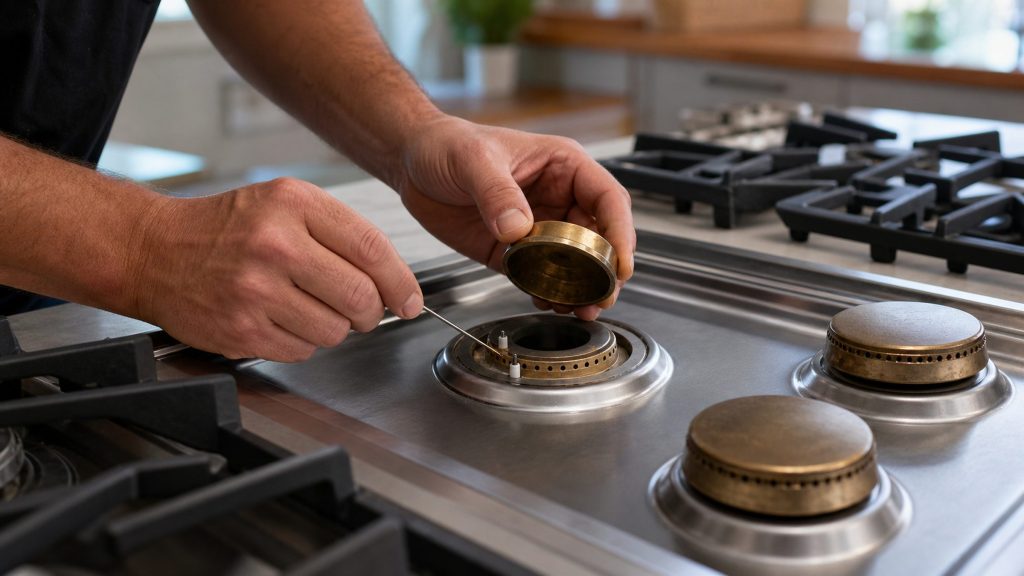
A service that exists here and on no sibling site, because ten of these ranges and ten of these cooktops use solid brass burners. Brass rewards being cleaned and punishes being scoured, and a burner most people would replace is usually a burner that wants an afternoon and a paper clip.
- Caps, rings and ports cleaned by hand — never with an abrasive or a caustic
- Ports gauged rather than eyeballed, so the flame comes back even
- Replacement only for brass that is cracked or eroded, and we show you why
-
from $135 Appliance maintenance visit cost
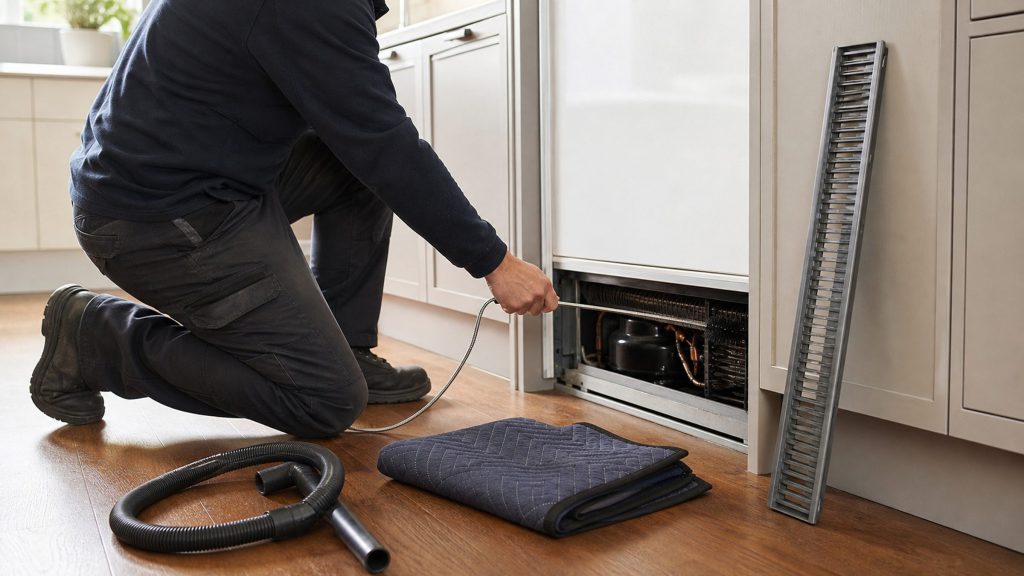
The cheapest visit on the site and the one that prevents the expensive ones. Priced per visit rather than per appliance, which on a matching suite makes it cheaper per machine the more of them we see.
- Condensers, filters, seals, burners, hood ducting, descale
- Priced per visit — cheaper per machine on a full kitchen
- Most of what appears elsewhere on this site starts here
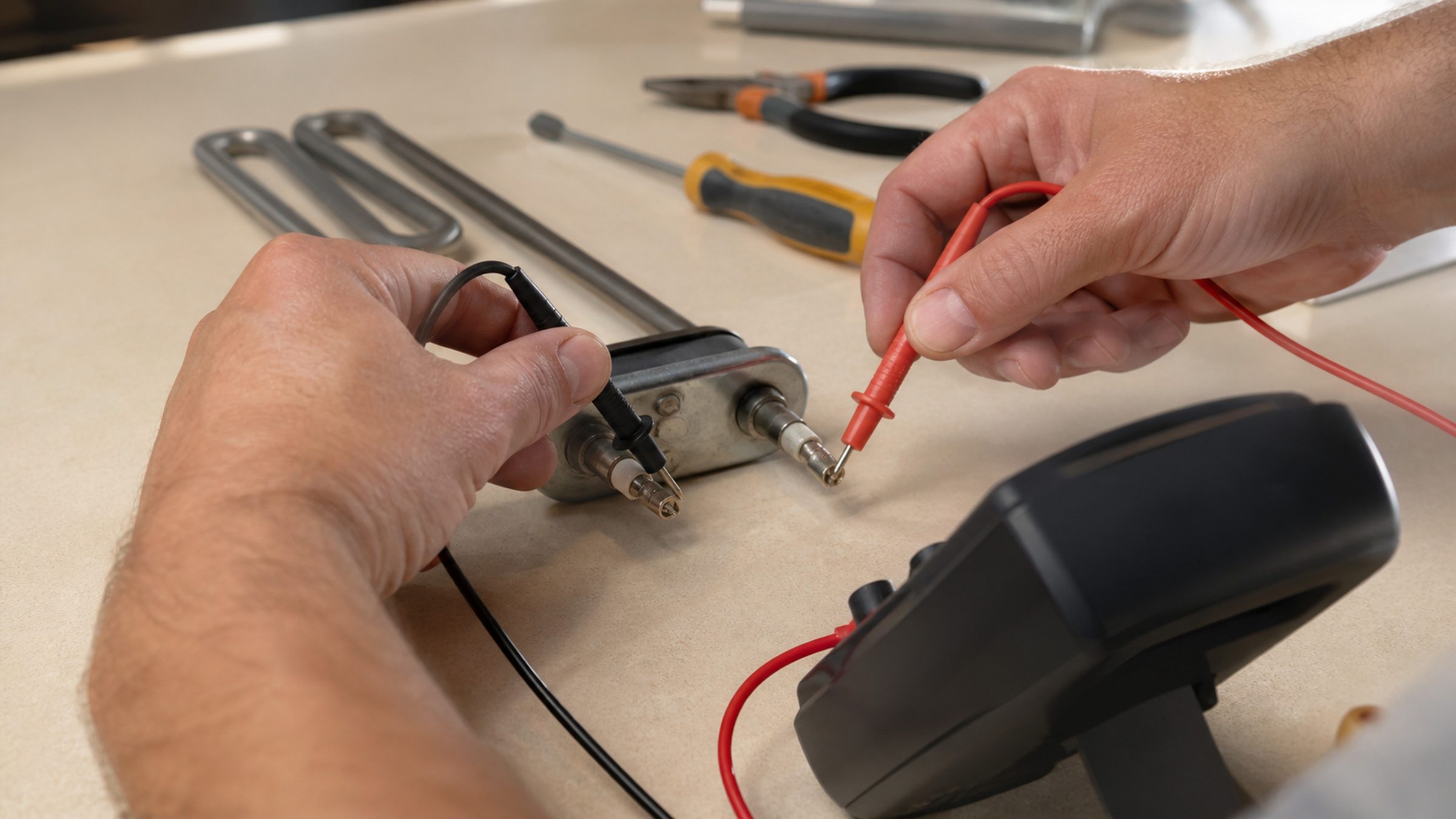
Questions people ask about this
Can I use oven cleaner?
On these ovens we would not. Caustic cleaners attack the cavity coating, the door seal and any anodized or brass part they reach, and on a machine with a self-clean function they are solving a problem the appliance can solve itself. If something has to be soaked, hot water and a mild detergent overnight does more than people expect.
Is the self-clean cycle bad for the oven?
It is not bad for it, but it is the hardest thing it ever does. Everything in the cavity reaches a temperature no cooking setting comes near, and locks, thermal cut-outs and controls fail during or just after a cycle more than at any other time. Use it, and use it on a day when the oven being out of action would not matter.
Do the racks go in during a clean cycle?
Only if the manual for your model says they are cycle-safe. Many are not: the cycle discolors them permanently and can affect how smoothly they run. Racks come out and get cleaned in the sink.
What are the three places to leave alone?
The temperature sensor probe, which is a measuring instrument and does not want scrubbing or bending. The ignitor or heating element, which is brittle and expensive. And the channel where the door gasket sits, where a cleaner will do more harm to the seal than the soil ever did.
How do I clean brass burners?
Caps and crowns off, hot water and detergent, a soft brush, ports cleared with something that will not enlarge them, and everything bone dry before it goes back. Never abrasives and never oven cleaner — brass darkens with heat, which is the material behaving normally, and nothing brings a stripped finish back.
Can I line the oven floor with foil to catch spills?
No. It traps grease, it changes how heat moves in the cavity, and on several ovens it blocks airflow the burner or element depends on. Use a tray on a rack beneath whatever might overflow instead.
Maintenance & Prevention
More guides like this one
-
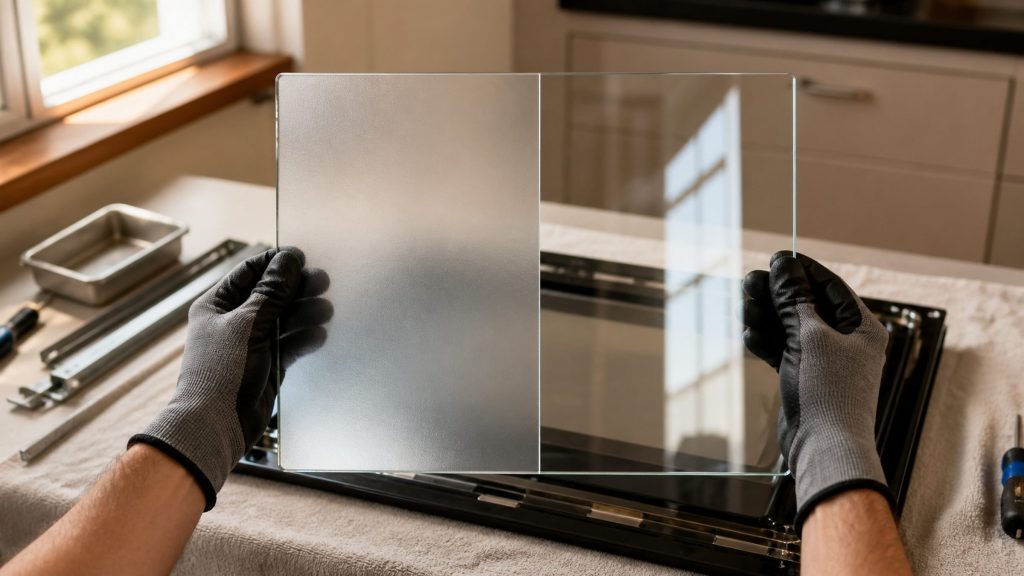
Cleaning Bertazzoni Oven Door Glass — and the Way Round It Goes Back
The maker publishes a warning almost no owner has read: the inner pane is heat-treated on one side and must go back shiny side out, or it absorbs heat and shatters.
Read more -

Clearing a Refrigerator Drain Hole Before It Becomes a Puddle
Water inside the cabinet and water on the floor are the same problem seen from two places, and the fix is ten minutes with warm water rather than a service call.
Read more -
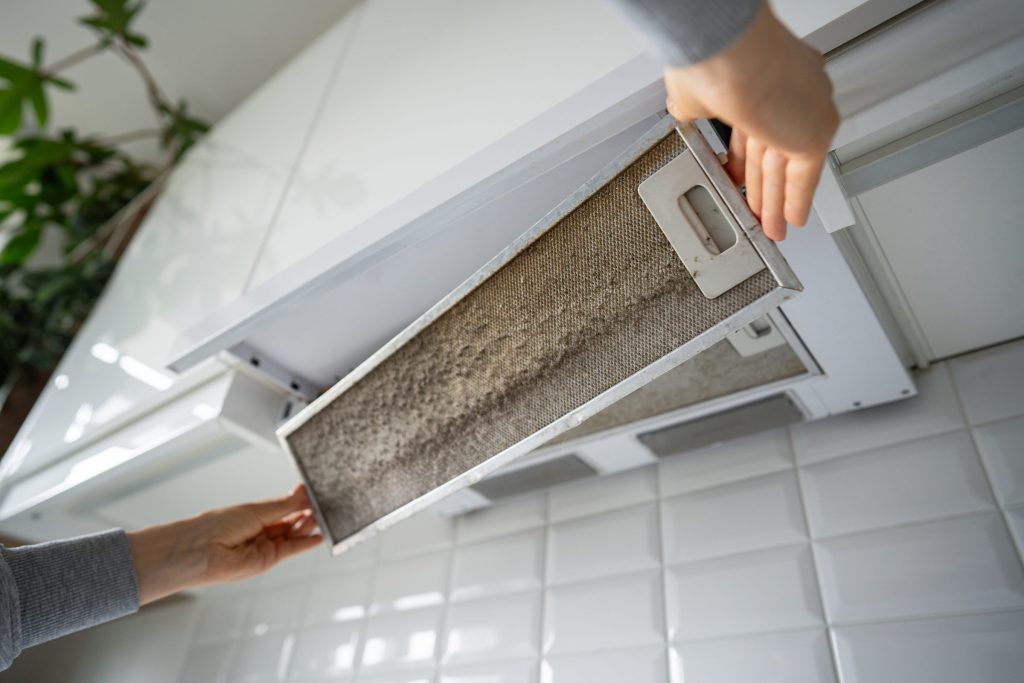
How Often to Clean a Range Hood Filter, and How the Hood Tells You
This maker signals filter saturation three different ways across three hood families, and on one of them the flash rate is what distinguishes grease from charcoal. Nobody else can write this page.
Read more
Tell us the model number and what it is doing.
This article is based on:
- Official manufacturer documentation
- Internal repair procedures
- Technician repair history
- Company quality standards