Cost Expectations
Gas Oven Thermostat Replacement Cost, and the Part It Is Usually Confused With
Three different parts get called a thermostat and they are not interchangeable. On an older-style gas oven the thermostat is a mechanical gas valve with a capillary bulb in the cavity — turning the knob physically meters gas, and when it drifts the oven runs hot or cold across the whole range. On a modern gas or dual-fuel oven the sensing is an electronic temperature sensor, a small probe that is simply a known resistance at a known temperature, and the actual switching is done by the control board; that sensor is the cheapest of the three and the commonest genuine calibration problem. The third is the safety valve, which is not a thermostat at all but gets blamed as one because when it fails the oven does not heat. Our oven work starts at from $185 for heating and sensor repair and from $195 for gas ignition and valve work. But before any of them: on a gas cavity that will not heat, the ignitor is the answer far more often than the thermostat, and it goes on glowing brightly while failing.
The full guide
Gas oven thermostat replacement cost: first, which thermostat?
Three parts share the name. They cost different amounts, they fail differently, and quoting one against another is the commonest way to be overcharged on an oven.
One: the electronic temperature sensor
On any oven with a display, this is what people mean when they say thermostat.
It is a small probe reaching into the cavity, usually near the top of the back wall, and it does nothing clever: it is a known resistance at a known temperature. The control board reads it and decides when to heat.
It is the cheapest of the three and it is the commonest genuine calibration problem, because resistance drifts with age.
It is also the easiest to prove. A meter, a reading, a published table. Anybody proposing to change one without measuring it first is guessing — and on this make there is no code to justify a guess.
Our oven heating and sensor work starts at from $185.
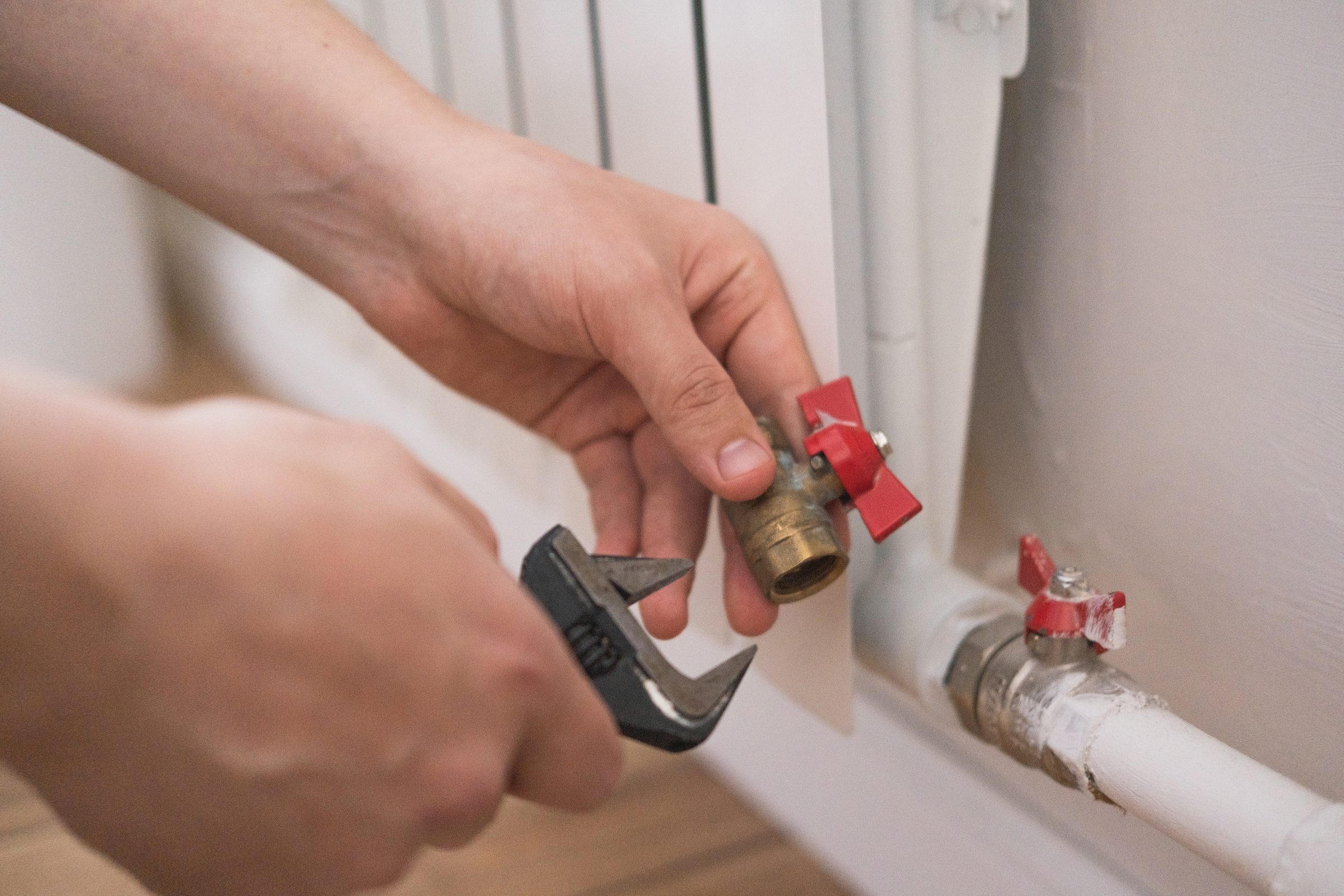
Two: the mechanical gas thermostat
Older-style gas ovens, and it is a genuinely different object: a gas valve with a capillary bulb in the cavity. The bulb expands with heat, the valve meters gas accordingly, and the knob is physically connected to the whole arrangement.
When it drifts, the error is usually proportional — twenty degrees out at 300, forty at 450 — rather than a fixed offset. That pattern is worth reporting, because it identifies the part.
It is the dearest of the three, because it is a control and a gas valve at once and because the gas side of the appliance has to be opened, remade and leak-tested. Gas oven ignition and valve work starts at from $195.
Three: the safety valve, which is not a thermostat
It gets blamed as one because when it fails the oven does not heat, which is what people mean when they say "the thermostat has gone".
It is the electrically operated valve that lets gas to the burner, and it opens only when the safety circuit says it is safe. Which brings us to the part everybody skips.
The ignitor, which is the actual answer most of the time
A glowing ignitor is not a working ignitor.
On a gas oven the ignitor is not only a heat source. It is the current-sensing element in the safety circuit: the valve opens only when enough current passes through it, which is the design's proof that the ignitor is hot enough to light the gas the moment it arrives.
Ignitors age by rising in resistance. Current falls. Below the valve's threshold the gas simply never comes — and the ignitor goes on glowing a bright, entirely convincing orange while that happens.
So the oven looks alive. The light is on. Something is clearly getting hot. And no heat arrives.
This is why people spend money on thermostats and control boards on ovens whose actual problem costs a fraction of either. It is a current measurement, and it takes minutes.
The order a proper diagnosis runs in
- Confirm what the oven is really doing, with an independent thermometer in the middle of the cavity;
- check the offset adjustment — a thirty to forty degree drift is a setting, not a part;
- on a gas cavity that will not heat: measure the ignitor current;
- measure the sensor against its published resistance;
- only then discuss a valve or a board.
What to have ready
The model number from behind the kick panel or inside the door frame. Whether the oven never heats or heats wrongly — those are different branches from the first question. An independent thermometer reading if you have one. And whether the error is the same at every temperature or grows with the setting.
If it turns out to be a repair
What this leads to, and what it costs
Every job on this site is priced the same way: an on-site diagnostic first, the figure agreed in writing before anybody starts.
-
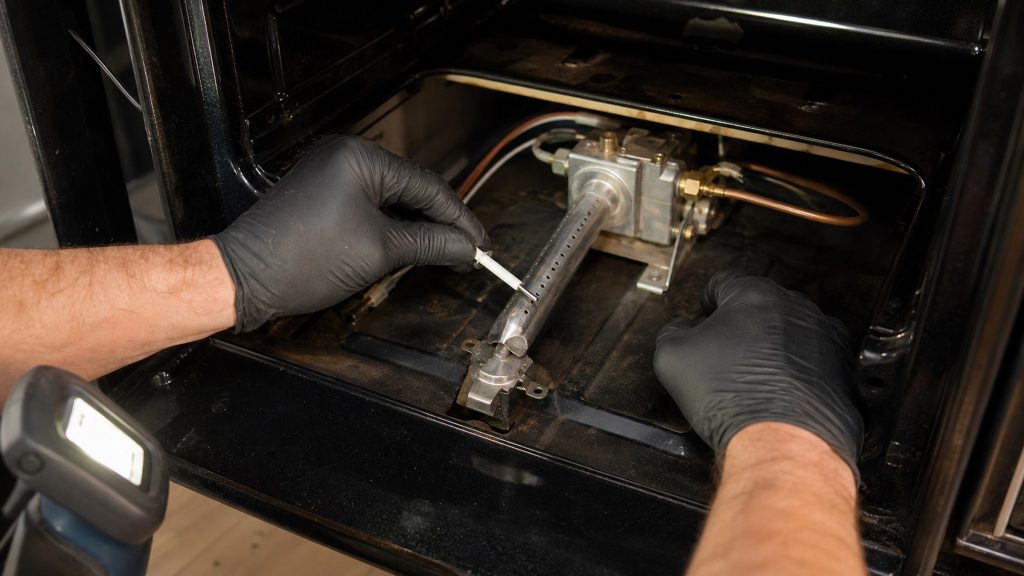
from $195 Gas oven ignition & valve repair cost
A gas oven that will not heat is nearly always an ignitor that still glows and no longer pulls enough current to open the safety valve. The part is inexpensive; reaching it, and doing the gas connection properly, is the figure.
- Bake or broil ignitor, safety valve, thermocouple
- A glowing ignitor is not a working ignitor
- Any connection opened is remade and leak-tested
-
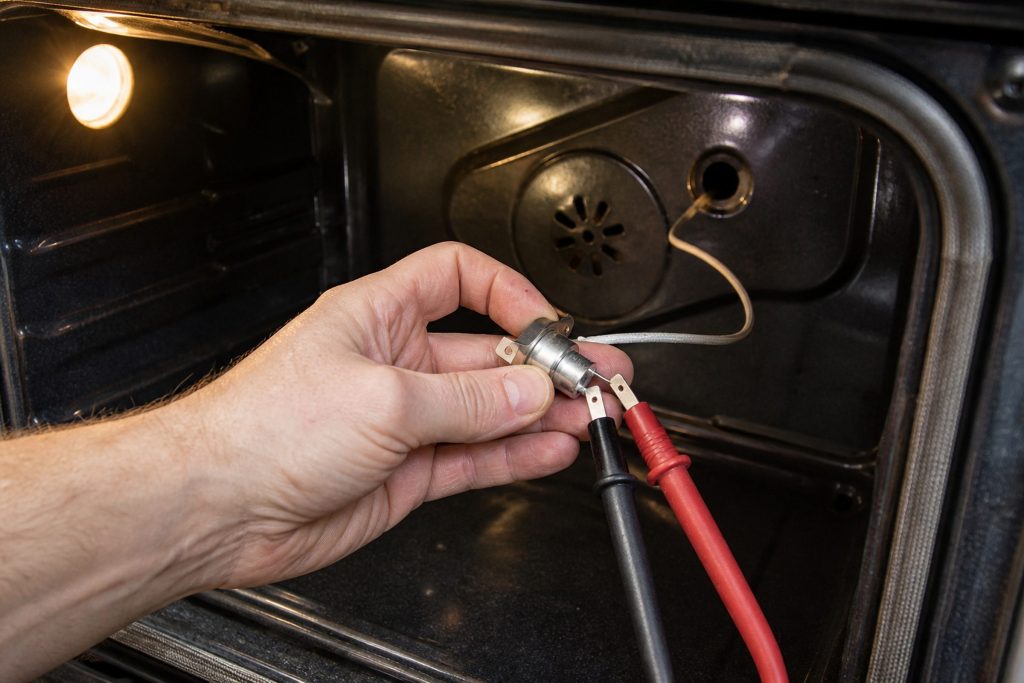
from $185 Oven heating & sensor repair cost
The electric side: an element, a temperature sensor or a relay, on a wall oven that has to come forward out of a tall housing. The part is ordinary; the diagnosis is real work on a machine that publishes no code.
- Element, temperature sensor or relay
- Cold and merely wrong are different problems
- Access on a built-in is planned time
-
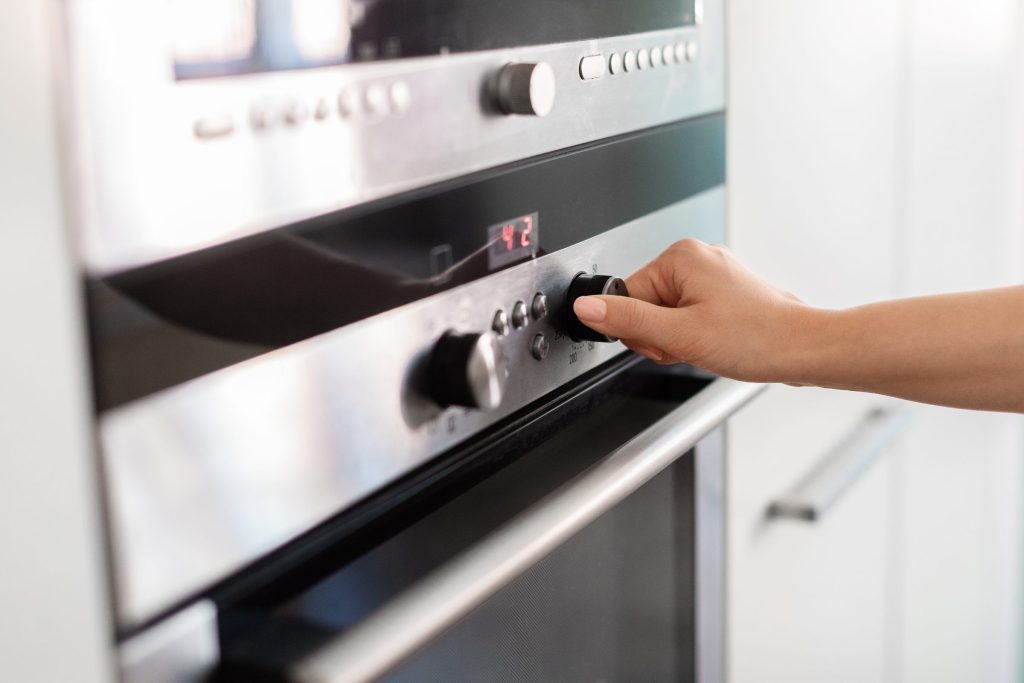
Obedient, and aiming at the wrong number Oven running hot, cold or uneven
An oven that heats perfectly to a temperature that is not the one you set, or that browns on one side and undercooks on the other. Almost always a measurement problem rather than a heating one — and on this make it is measured with a thermometer, because there is nothing to read.
- Everything browning too fast or too slowly
- One side or one shelf consistently darker
- Baking that changed without anything else changing
Questions people ask about this
How do I know which one my oven has?
Roughly: if the oven has a digital display and you set a temperature with buttons or a rotary encoder, it has an electronic sensor and a control board. If it has a knob that clicks through temperatures and no display, it is far more likely to be a mechanical gas thermostat. Dual-fuel cavities are always electronic.
My oven runs fifty degrees cold. Is that the thermostat?
It is the likeliest candidate once you have confirmed it with an independent thermometer hung in the middle of the cavity. But check the offset adjustment first — these ovens have one, and a thirty to forty degree drift is exactly what it exists for. A setting is cheaper than a part.
Why do you keep mentioning the ignitor?
Because it is the commonest genuine cause of a gas oven that will not heat, and the hardest to believe. The ignitor is the current-sensing element in the safety circuit: as it ages its resistance rises, the current drops below what the valve needs to open, and it glows a perfectly convincing orange while no gas arrives. People replace thermostats over this constantly.
Can a sensor be tested rather than replaced on suspicion?
Yes, and it should be. An electronic sensor has a published resistance at a given temperature, so it is a two-minute measurement with a meter. Anybody proposing to change one without measuring it is guessing, and on this make there is no code to justify the guess.
Is the mechanical thermostat expensive?
It is the dearest of the three, because it is a gas valve as well as a control and because it means opening the gas side of the appliance. It is also the least common on the current line, and the diagnosis is distinctive: the error is proportional across the range rather than fixed.
The oven heats but overshoots badly.
That points at sensing rather than at heating, and it is worth reporting exactly that way. An oven that reaches 400 when set to 350 and then holds is behaving differently from one that never arrives, and the two lead to different parts.
Cost Expectations
More guides like this one
-

What Replacing the Glass on an Induction or Radiant Cooktop Costs
A parts-led repair on a site where almost everything else is labor-led, and the only page here that starts by telling you to stop using the appliance.
Read more -
Range Hood Motor Replacement Cost — and Why It Is Usually Not the Motor
Written to stop people buying motors they do not need. A capacitor, a speed control or a grease-loaded blower wheel produce the same complaint for far less, and the duct produces it for nothing at all.
Read more -
Labor Cost to Replace a Range Hood, Line by Line
Four separate jobs get quoted as one number. Here they are apart, so you can read a quote rather than accept one.
Read more
Tell us the model number and what it is doing.
This article is based on:
- Official manufacturer documentation
- Internal repair procedures
- Technician repair history
- Company quality standards