
Cost Expectations
Labor Cost to Replace a Range Hood, Line by Line
Installation and re-fit work on this equipment starts at from $175, and the honest way to read any hood quote is to separate the four jobs inside it. Taking the old unit down is the smallest of them on a wall hood and a genuine two-person task on an island hood, where the unit hangs from the ceiling with nothing to rest it on. The duct is where the money actually goes: if the new hood's outlet is a different diameter or in a different position, a transition has to be made, and a transition made badly costs more airflow than the new appliance gained. The electrical is usually the simplest part and stops being simple when there is no junction box where the new unit needs one. And hanging and levelling the new hood, at the width and clearance the maker specifies, is what decides whether it works — the width has to match the cooking surface below it, and the clearance is 25 and a half to 31 and a half inches for a conventional hood or 17 to 20 for an over-the-range microwave hood.
The full guide
Labor cost to replace range hood: from $175, and four jobs inside it
A hood quote is usually one number. It is four pieces of work, and knowing which is which is how you tell a fair quote from a hopeful one.
Job one: removal
Wall hood — filters out, panel off, disconnect, unhook. The smallest part of the day.
Island hood — two people, without exception. It hangs from the ceiling, there is nothing underneath to rest it on, and a glass canopy or a chimney section is heavier than it looks. Anyone quoting an island hood as a one-person job has not seen it.
Job two: the duct, which is where the money goes
This is the part nobody can price accurately from a photograph, and the part that decides whether the new hood is any good.
If the outlet size or position differs, a transition has to be made. A transition made badly — a sharp step, a squashed oval, a length of flexible duct standing in for a bend — costs more airflow than the new appliance gained.
If the run itself is the problem — undersized, too long, crushed behind a cabinet, terminating at a wall cap whose flaps have seized — you have a decision to make, and it should be presented as a decision with a figure rather than discovered afterwards.
This is the single most common reason a new hood disappoints its owner. The appliance was never the limit.
Job three: the electrical
Usually the simplest part: an existing circuit, a junction box, a like-for-like connection.
It stops being simple when there is no box where the new unit needs one, when the new hood draws significantly more than the old, or when the original installation was never quite right. None of that is common; all of it is worth knowing before the day rather than during it.
Job four: hanging it where it belongs
Two numbers, neither of them negotiable.
Width must match the cooking surface. The maker states it as a safety, efficiency and regulatory requirement. A hood narrower than the surface below it cannot capture what happens at the edges, which is the entire point of having one.
Clearance above the surface: 25½ to 31½ inches for a conventional hood, and 17 to 20 inches for an over-the-range microwave hood. Check the specific model's installation manual — the exact figure inside those bands varies by hood.
Then levelling it, which on a chimney hood means levelling the canopy and the chimney sections independently so the finished thing reads straight from the room.
Two things worth adding while it is open
Clean the duct. A decade of hood service leaves a real quantity of grease in a run, and this is the only moment it is cheap to deal with. It is a fire consideration as well as an airflow one.
Decide ducted or recirculating properly. If the hood is recirculating, it needs the right charcoal filter accessory — the maker publishes which hood takes which. A recirculating hood removes grease and odor but not heat or moisture, and it is better to know that now than to be disappointed later.
What is included
The old unit down and away, the duct transition made properly and the run inspected, the electrical connection, the new hood hung level at the specified clearance, filters fitted, and the hood run on every speed with the airflow checked before the appointment ends.
Exact cost is confirmed after an on-site diagnostic and agreed in writing before anything is opened.
If it turns out to be a repair
What this leads to, and what it costs
Every job on this site is priced the same way: an on-site diagnostic first, the figure agreed in writing before anybody starts.
-
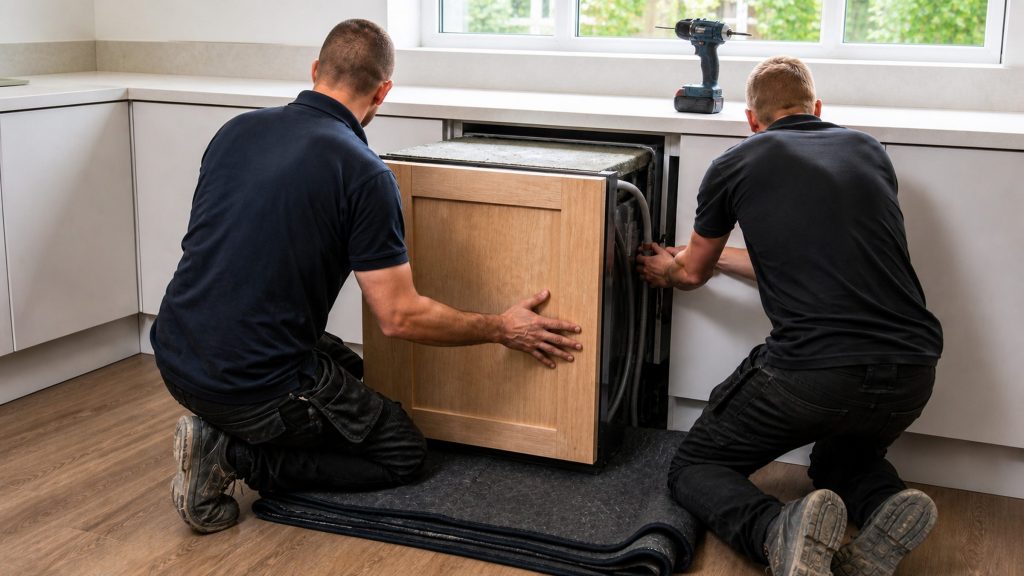
from $175 Appliance installation & refit
Setting a machine back into cabinetry it was taken out of, hanging a custom panel on a column, or putting right an installation that was never quite right. On this make it matters more than most: a great deal of the line is built in, and induction in a sealed island is the commonest self-inflicted failure we see.
- Clearances and ventilation checked against what the appliance actually needs
- Custom panels hung square and aligned to the neighboring cabinetry
- Anti-tip, gas connections and leveling treated as the safety items they are
-
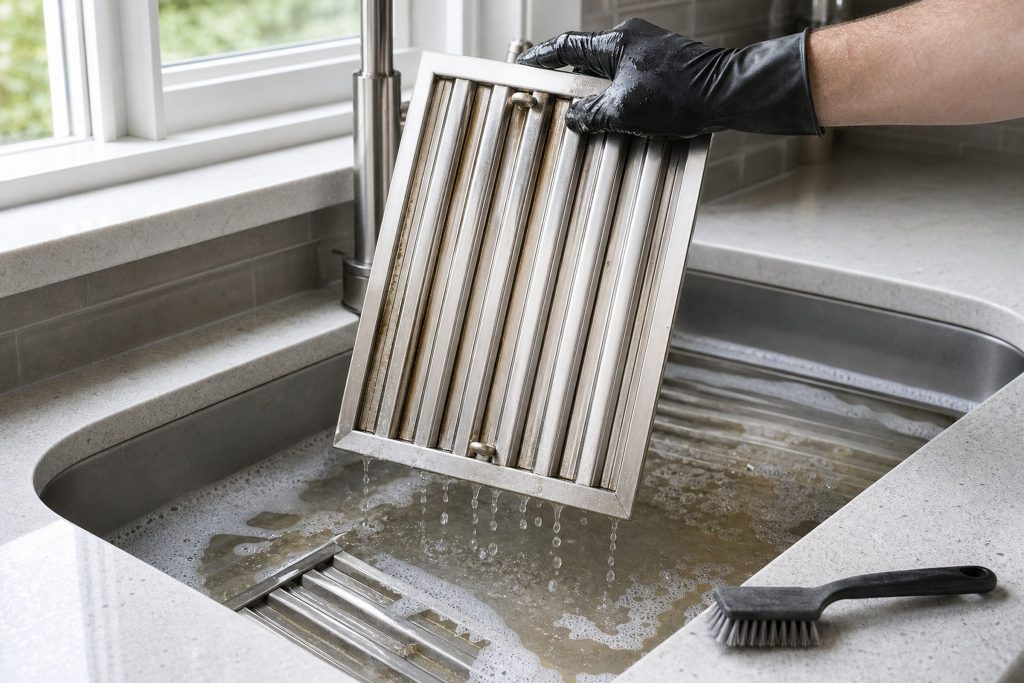
from $145 Range hood ducting & airflow service cost
One of the two cheapest rows on the site, and the one that ends most hood complaints. A real share of these visits finish with nothing fitted at all, because the appliance was never the problem.
- Duct run, transitions, damper, make-up air, filters
- A large share end with no part fitted
- The cheapest honest answer to "it does not clear steam"
-
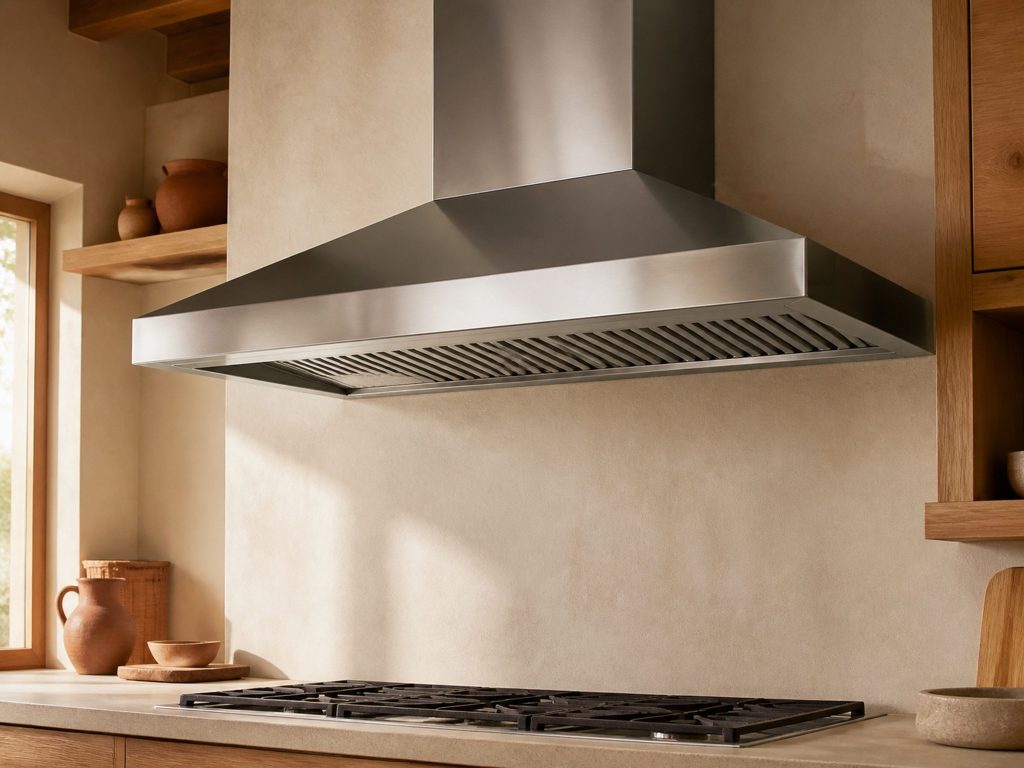
Wall mount · Island · Chimney · Insert · 600 CFM and up · 24" to 48" Range hoods and ventilation
Thirty-seven hoods, which is as many as there are ranges — this maker expects the two to be bought together. Twenty-one are wall mounts, seven chimney hoods, five inserts built into a cabinet, three island hoods hanging over a counter. Nineteen move 600 cubic feet a minute. When one stops pulling, most of the diagnosis is not in the hood.
- A hood that runs but no longer clears the steam
- Lights working, motor silent, or the reverse
- Controls that respond to some presses and not others

Questions people ask about this
Why is the duct the expensive part?
Because it is the part nobody can see until the old hood is off. A different outlet size or position means a transition, and where the run itself is undersized, crushed or too long, the choice is between doing it properly and installing a hood that will never perform. That decision belongs to you, with a figure attached, before anything is opened.
Can I supply the hood and just pay for fitting?
Yes, and it is worth checking the width and the outlet position against what you have before you buy. Most disappointing hood installs are decided at the point of purchase rather than on the day.
Is an island hood really that much more?
The labor is, yes. It hangs from the ceiling, it needs two people to hold and level, and the duct runs up through a ceiling void rather than out through a wall behind it. None of that is a surcharge; it is the job being genuinely bigger.
What if the existing wiring is not where the new hood needs it?
Then it is an electrical job as well as an appliance one, and you will be told before anything is committed. It is not common but it happens on older kitchens and on conversions from a recirculating hood.
Do I have to match the width exactly?
The maker requires the hood to match the width of the cooking surface, and gives it as a safety, efficiency and regulatory requirement rather than a preference. A narrower hood cannot capture what happens at the edges of the surface, which is the whole reason to have one.
Should the old ducting be cleaned while it is open?
It is the only sensible moment. A duct that has served a hood for a decade holds a considerable amount of grease, and it is both a fire consideration and an airflow one. It is far cheaper as part of an install than as its own visit.
Cost Expectations
More guides like this one
-

What Replacing the Glass on an Induction or Radiant Cooktop Costs
A parts-led repair on a site where almost everything else is labor-led, and the only page here that starts by telling you to stop using the appliance.
Read more -
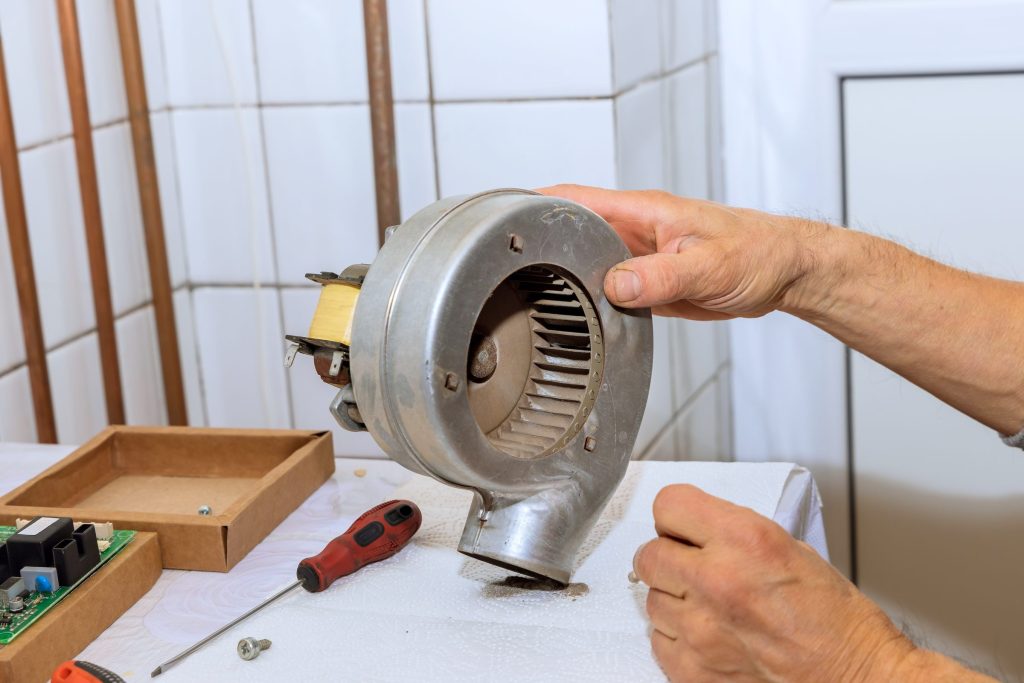
Range Hood Motor Replacement Cost — and Why It Is Usually Not the Motor
Written to stop people buying motors they do not need. A capacitor, a speed control or a grease-loaded blower wheel produce the same complaint for far less, and the duct produces it for nothing at all.
Read more -

What a Bertazzoni Range Costs to Own, Not to Buy
Everybody publishes the purchase price. Nobody publishes the other half — what the thing costs to keep running for fifteen years. Here is that number, from this site's own figures.
Read more
Tell us the model number and what it is doing.
This article is based on:
- Official manufacturer documentation
- Internal repair procedures
- Technician repair history
- Company quality standards