Maintenance & Prevention
How Often to Clean a Range Hood Filter, and How the Hood Tells You
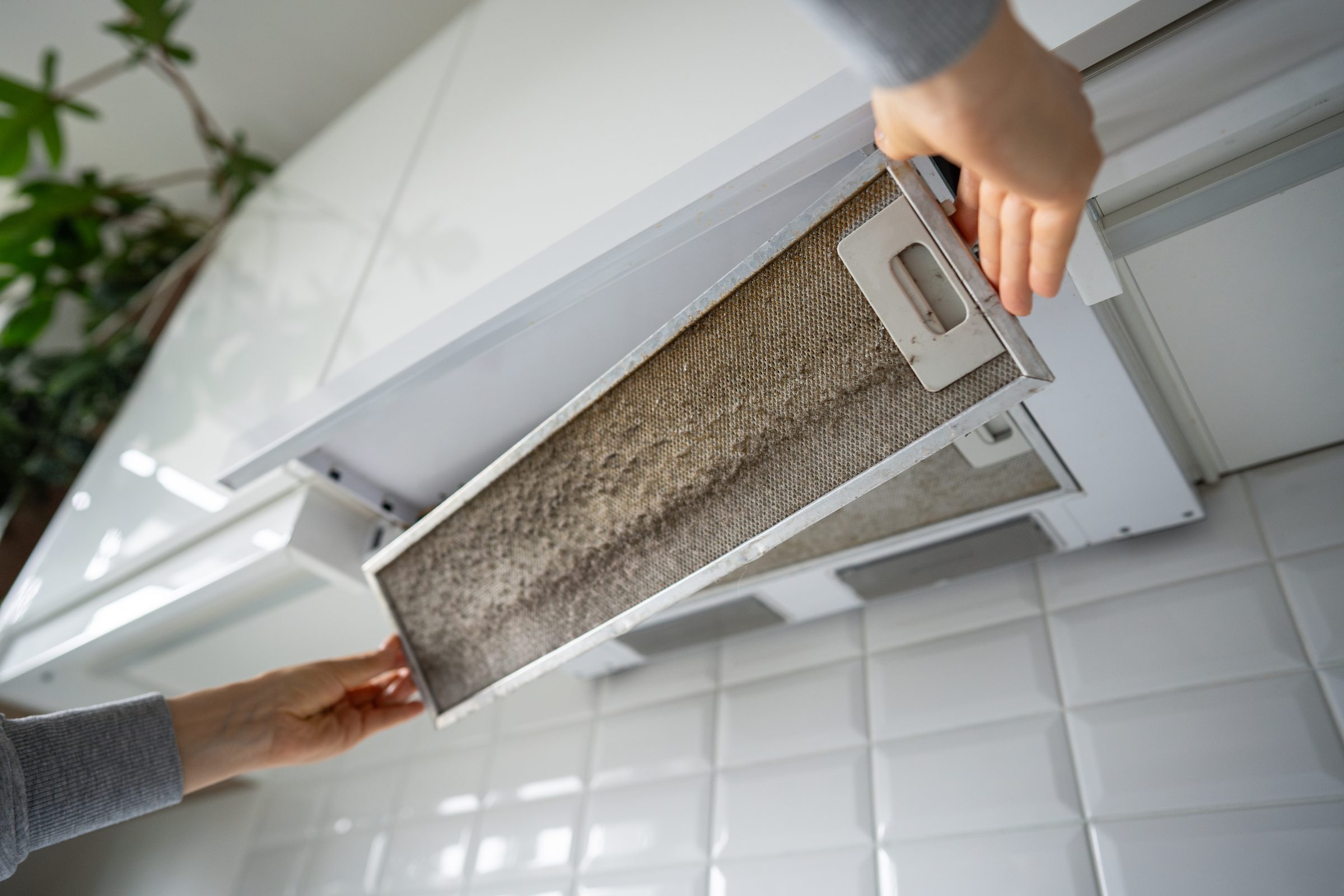
Every month for a kitchen that cooks most days, and the hood will tell you as well. This maker builds the interval into the appliance: on the KG hoods the alarm arrives after forty hours of use for the mesh grease filters and after a hundred and twenty hours for the charcoal ones, and on the others it is the same idea expressed differently. What matters is that three hood families here signal it three different ways. On a KG hood the display item C flashes, alternating with F for grease and with C and F for charcoal. On a KPH hood a single key flashes and the rate is the message — about every two seconds means wash the grease filters, about every half second means replace the carbon ones. On a KMC hood the saturation alarm is cleared from the speed-three key held for two seconds with the motor and lights off, and the indicator flashes three times to confirm. Grease filters are metal and go in the dishwasher. Charcoal filters cannot be washed or regenerated and only exist on hoods that recirculate.
The full guide
How often should you clean range hood filter? Monthly — and the hood counts for you
Ventilation is a fifth of this maker's catalog: thirty-seven hoods. It also builds the interval into the appliance, which most makers do not.
The maker's own numbers
On the KG hoods, published plainly:
- After 40 hours of use, the hood enters alarm mode and the first-speed light flashes. That means wash the mesh grease filters.
- After 120 hours, the second-speed light flashes. That means replace the charcoal filters, if the hood is running in recirculation.
Both are reset with button combinations pressed together while the motor is off, and the two alarms use different combinations.
Forty hours is about a month in a kitchen that cooks most days. The alarm and the habit agree.
Three hood families, three different signals
This is the part that is genuinely specific to this make, and it is why a generic hood article is no help to you.
KG hoods — the display item flashes, and *what it alternates with* is the message. Alternating with F: the grease filters. Alternating with C and F: the charcoal filters.
KPH hoods — a single key flashes, and the rate is the message. About every two seconds: wash the grease filters. About every half second: replace the active carbon filters. Reset by holding that key for around five seconds until it stops.
KMC hoods — the filter saturation alarm is cleared from the speed-three key, held for about two seconds with the motor and lights both off. The indicator flashes three times to confirm. The charcoal alarm on these is a separate thing that has to be switched on for a hood converted to recirculation, by holding the intensive key.
Check the manual for your own model for the exact keys. What is worth carrying away is that a flashing hood is almost never a problem — it is the appliance asking for maintenance.
Grease filters: wash them
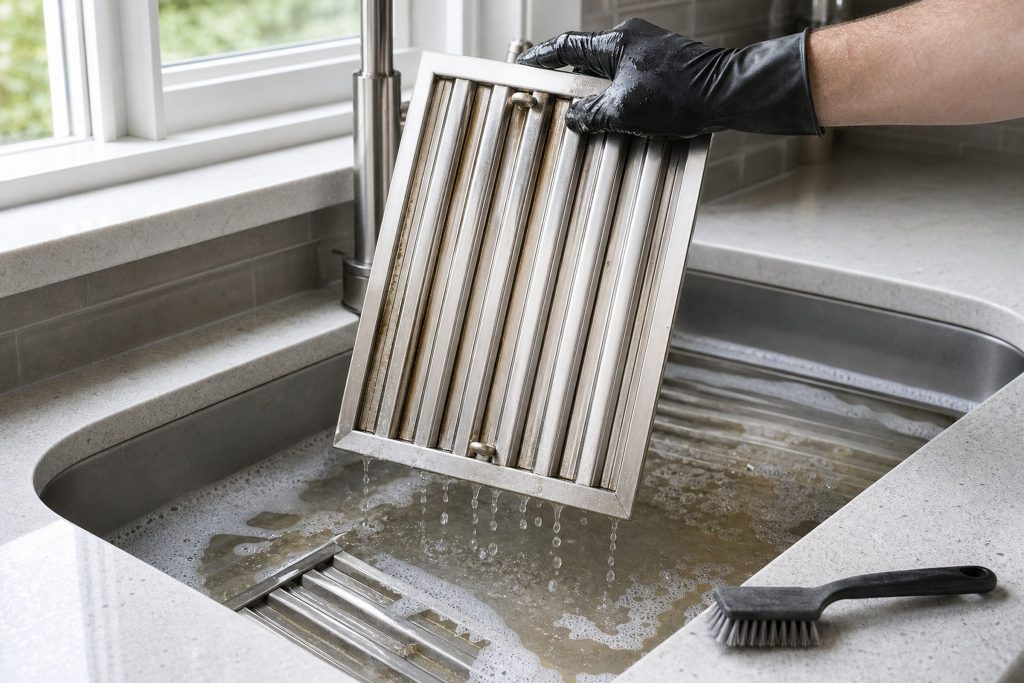
Metal mesh or baffle, designed to be washed, and the dishwasher does it well — hot cycle, on their own, dried completely before they go back.
By hand: hot water and a degreaser, and time in the water rather than effort with a brush.
Note which way round baffle filters came out. They have an orientation and it matters to how they perform.
Charcoal filters: replace them
The maker is explicit: active carbon cannot be cleaned or regenerated. The carbon is consumed by adsorbing what passes through it, and washing it does nothing at all.
Roughly every four months, though how much frying you do changes that considerably.
And they only exist on hoods that recirculate. If yours ducts outside, you have no charcoal filters and the charcoal alarm should be switched off — otherwise it will spend years asking you to replace something that is not there.
Reset it afterwards, or none of this counts
The alarm is a timer, not a sensor. It counts hours of operation. It has no way of knowing you washed anything.
A hood flashing at a set of spotless filters is the commonest "my hood is broken" call this site gets, and it is a two-second button press.
What clean filters will not fix
If the hood sounds strong and clears nothing, the filters were never the problem. That is the duct, the damper or the make-up air — a long run, three elbows, a crushed flexible section, or a wall cap whose flaps have seized shut with old grease.
Clean the filters anyway; then read the ducting page rather than buying a motor.
If it turns out to be a repair
What this leads to, and what it costs
Every job on this site is priced the same way: an on-site diagnostic first, the figure agreed in writing before anybody starts.
-
Wall mount · Island · Chimney · Insert · 600 CFM and up · 24" to 48" Range hoods and ventilation
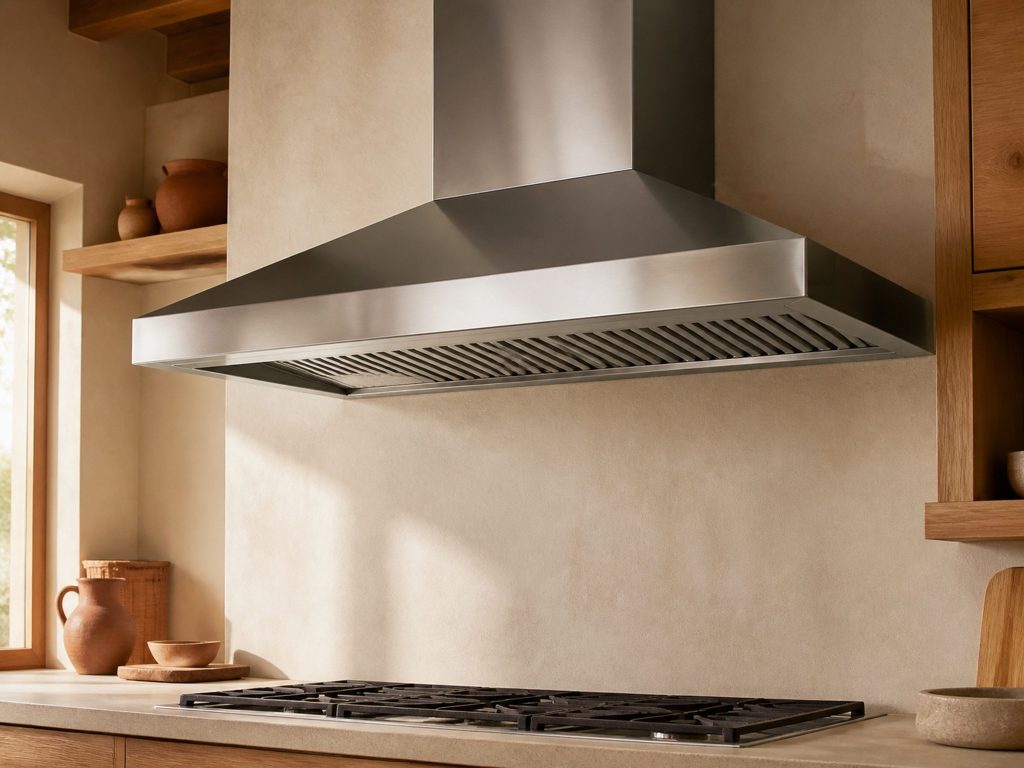
Thirty-seven hoods, which is as many as there are ranges — this maker expects the two to be bought together. Twenty-one are wall mounts, seven chimney hoods, five inserts built into a cabinet, three island hoods hanging over a counter. Nineteen move 600 cubic feet a minute. When one stops pulling, most of the diagnosis is not in the hood.
- A hood that runs but no longer clears the steam
- Lights working, motor silent, or the reverse
- Controls that respond to some presses and not others
-
Mostly not the hood Range hood not clearing the air
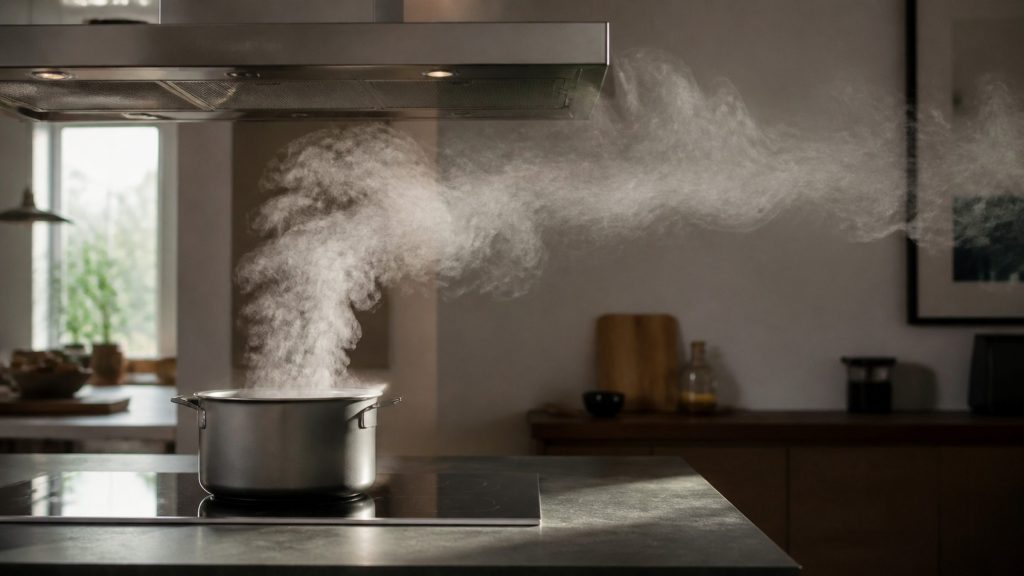
The hood runs, the kitchen still fills with steam, and nothing about the appliance is broken. This is the most under-diagnosed complaint in the kitchen: a hood is a blower, a filter and a path, and three of the four things that stop it working are not in the hood.
- Runs at full speed and clears nothing
- Got gradually worse over a year or two
- Has never really worked since it was installed
-
from $145 Range hood ducting & airflow service cost
One of the two cheapest rows on the site, and the one that ends most hood complaints. A real share of these visits finish with nothing fitted at all, because the appliance was never the problem.
- Duct run, transitions, damper, make-up air, filters
- A large share end with no part fitted
- The cheapest honest answer to "it does not clear steam"
Questions people ask about this
Can I put the grease filters in the dishwasher?
Yes. Metal mesh and baffle filters are designed to be washed and the dishwasher does it well. Run them on a hot cycle on their own, and let them dry completely before they go back. Aluminum mesh may dull over time in a dishwasher; that is cosmetic.
How do I know which alarm I am looking at?
It depends on your hood family, and the difference is real. KG hoods flash a display item, alternating with F for grease and with C and F for charcoal. KPH hoods flash a single key, and the rate is the message — roughly every two seconds for grease, every half second for carbon. KMC hoods use a saturation indicator cleared from the speed-three key.
How do I reset it?
On a KG hood the maker gives button combinations pressed together with the motor off, and they differ for the two alarms. On a KPH hood, hold the flashing key for about five seconds until it stops. On a KMC hood, with motor and lights off, hold the speed-three key about two seconds — the indicator flashes three times to confirm. Check your model's manual for the exact keys.
My hood ducts outside. Do I need charcoal filters?
No, and if the charcoal alarm is switched on it will keep asking you to replace filters that are not fitted. On the KMC hoods that alarm is separately enabled precisely because it should be off on a ducted installation.
Can charcoal filters be washed?
No. The maker is explicit that active carbon cannot be cleaned or regenerated — the carbon is consumed by adsorbing what passes through it. Roughly every four months of normal use, though it depends heavily on how much frying happens.
The lights are flashing and I have just cleaned the filters.
Then the alarm has not been reset. It is a timer, not a sensor — it counts hours of use and has no way of knowing you washed anything. Reset it and it will start counting again.
Maintenance & Prevention
More guides like this one
-
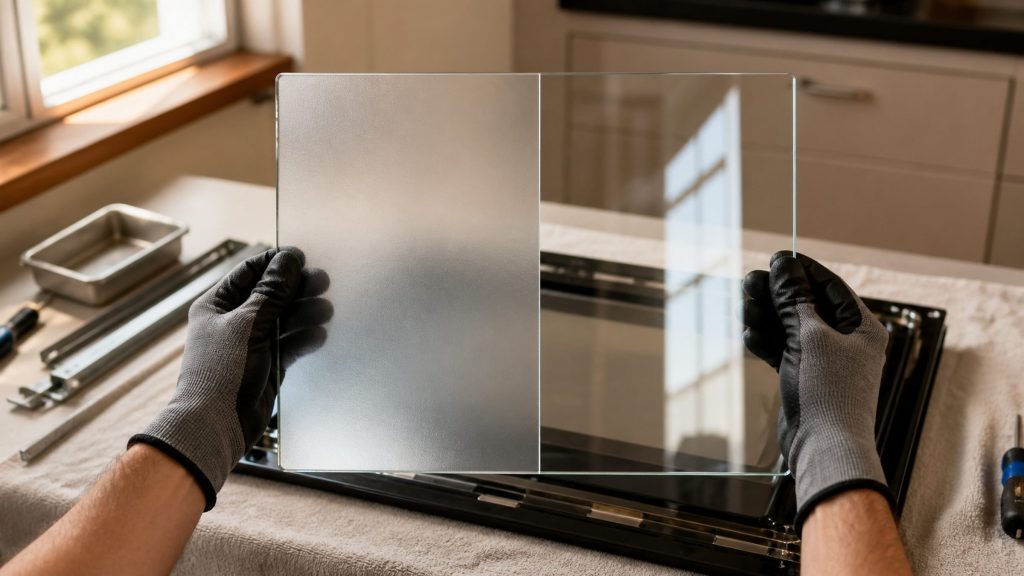
Cleaning Bertazzoni Oven Door Glass — and the Way Round It Goes Back
The maker publishes a warning almost no owner has read: the inner pane is heat-treated on one side and must go back shiny side out, or it absorbs heat and shatters.
Read more -
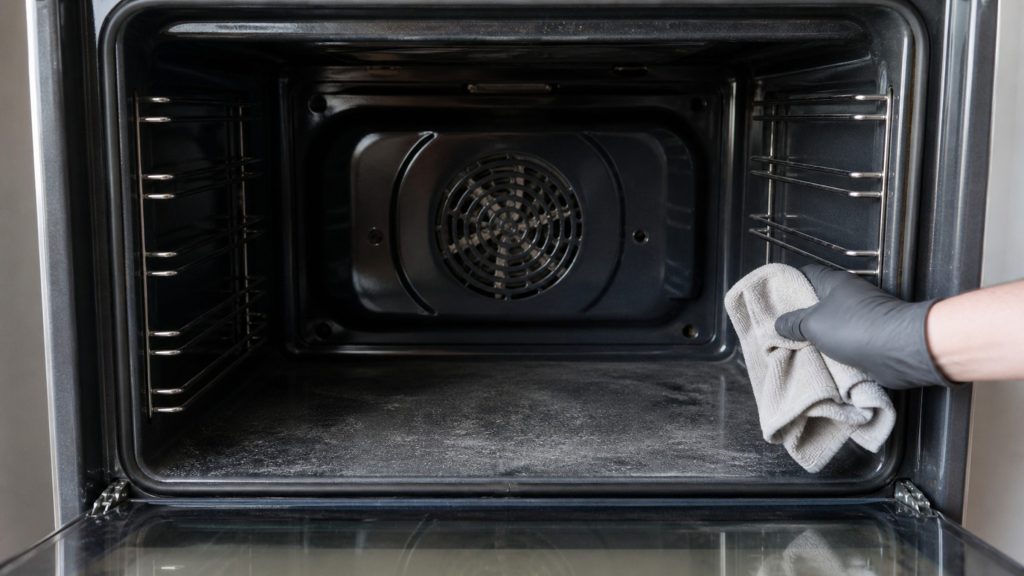
Cleaning a Bertazzoni Oven Without Costing Yourself a Repair
Cleaning products and the self-clean cycle are the two commonest owner-caused failures on this equipment. Here is what to use, what to keep away, and what a clean cycle does to the rest of the appliance.
Read more -
Clearing a Refrigerator Drain Hole Before It Becomes a Puddle
Water inside the cabinet and water on the floor are the same problem seen from two places, and the fix is ten minutes with warm water rather than a service call.
Read more
Tell us the model number and what it is doing.
This article is based on:
- Official manufacturer documentation
- Internal repair procedures
- Technician repair history
- Company quality standards