Safety & Risks
Can an Appliance That Is Switched Off Start a Fire?
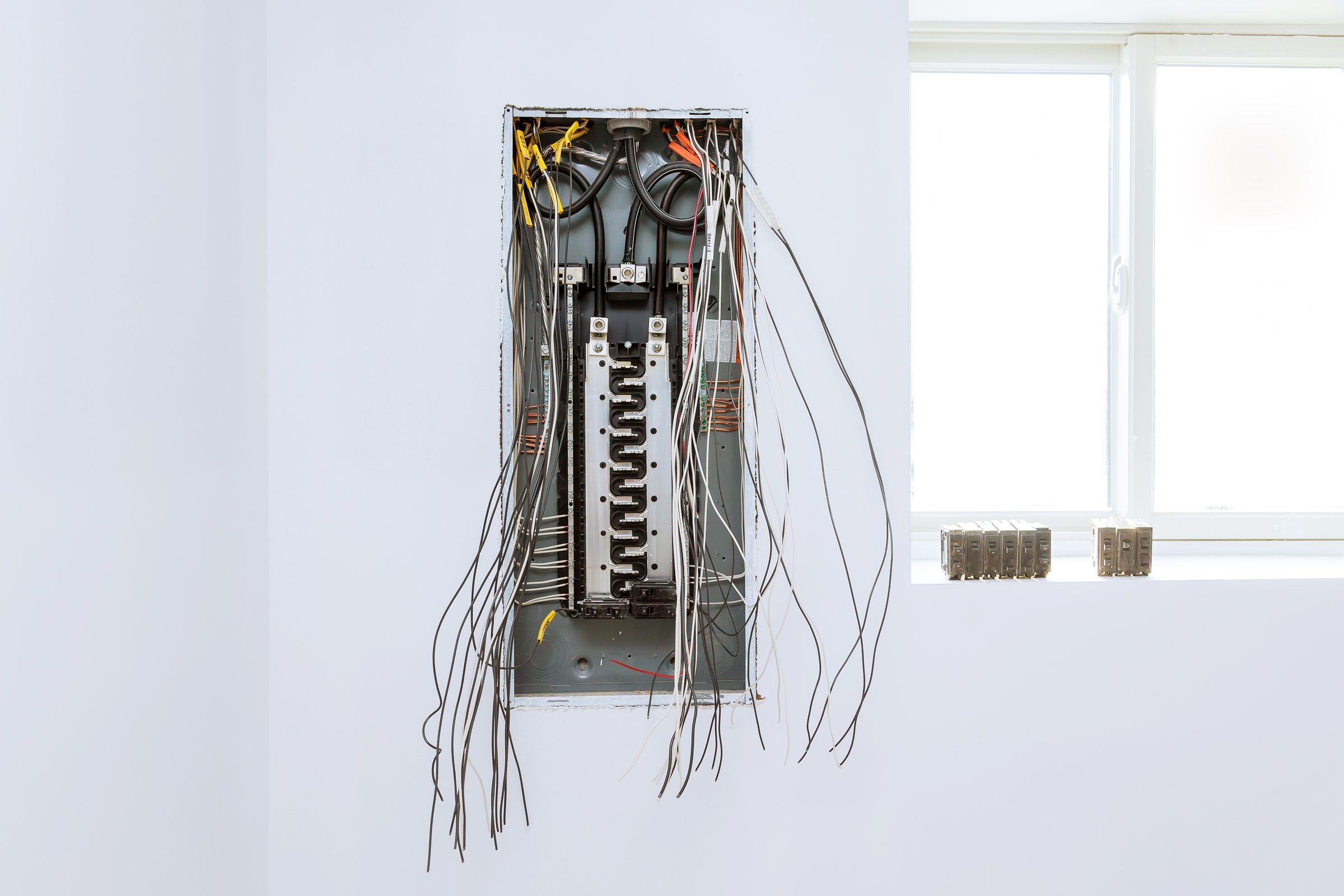
Yes, because switched off and disconnected are not the same thing. Almost everything built into a modern kitchen stays energized when it is off: a control board waiting for a button, a clock, an ice maker, a hood transformer, a refrigerator that never switches off at all. The risk is rarely the appliance's own heating parts, which only run when you ask them to. It is the connections — a terminal that was never quite tight, a junction box behind a cabinet, a flexible cord trapped when the machine was pushed back into its opening — and those are working whenever the circuit is live, which is all the time. This is why the warning signs are what they are: a smell of hot plastic, a socket or a plug that is warm to the touch, discoloration around a connection, or a breaker that has begun tripping. Any of those means switching that circuit off at the panel today rather than at the appliance. A truly unplugged appliance cannot start a fire. A built-in one is almost never truly unplugged.
The full guide
Can a switched off appliance start a fire? Yes — because off is not disconnected
Press the button and the display goes dark. That is the appliance deciding to stop doing things.
The electricity is still there. At the terminal block, in the junction box, along the cord, at every connection between the breaker panel and the machine.
What stays live in a kitchen that looks switched off
Almost all of it.
- A control board waiting for a button press. Every built-in oven, dishwasher and hood with electronics.
- A clock or a display, which by definition never sleeps.
- An ice maker, which runs on its own schedule regardless of anything else.
- A hood transformer for low-voltage lighting.
- A refrigerator, which is not switched off at all, ever, for fifteen years.
Where the risk actually sits
Not usually in the parts that make heat. Those only run when you ask them to, and they are designed with cut-outs.
It sits in the connections:
A terminal that was never quite tight. Resistance at a loose connection produces heat, heat oxidizes the metal, oxidation increases the resistance. It is a slow, self-reinforcing process that takes years and then does not.
A junction box behind a cabinet that nobody has seen since the kitchen was built.
A flexible cord trapped when the appliance was pushed back into its opening — during a repair, a clean, a floor replacement.
A socket in a hot cabinet, aged by twenty years of thermal cycling.
All of those are working whenever the circuit is live, which is always.
The four signs that mean today
A smell of hot plastic or wire insulation. The most under-reacted-to smell in a kitchen.
A plug or socket that is warm to the touch. Slightly warm under a heavy load can be normal. Uncomfortable to hold is not.
Discoloration or scorching around a socket, a plug or a terminal.
A breaker that has started tripping when it did not before.
Any one of those: switch that circuit off at the panel — not at the appliance's own control — and get it looked at. The breaker is the switch that means something here.
And do not replace a tripping breaker to stop it tripping. That is removing the alarm.
What genuinely reduces the risk
Keep the hood filters and duct clean. Grease in a duct above a cooking surface is a fire consideration and not a hygiene one, and it is the single most neglected thing in most kitchens.
Keep the refrigerator condenser clean. A machine working against a blocked condenser runs hotter for longer, for years.
Do not defeat safety devices. If a thermal cut-out is tripping, it is reporting something. It is the one repair we will refuse to bypass.
Have the connections looked at when an appliance is out anyway. Any time a built-in machine comes forward for a repair, that is the free moment to check what is behind it — and it is part of what a maintenance visit covers.
The honest summary
A genuinely unplugged appliance cannot start a fire. A built-in appliance is almost never genuinely unplugged, and the parts of it that carry current when it is "off" are the parts nobody ever looks at.
That is not a reason to be frightened of your kitchen. It is a reason to take a warm plug seriously the first time rather than the fifth.
If it turns out to be a repair
What this leads to, and what it costs
Every job on this site is priced the same way: an on-site diagnostic first, the figure agreed in writing before anybody starts.
-
from $135 Appliance maintenance visit
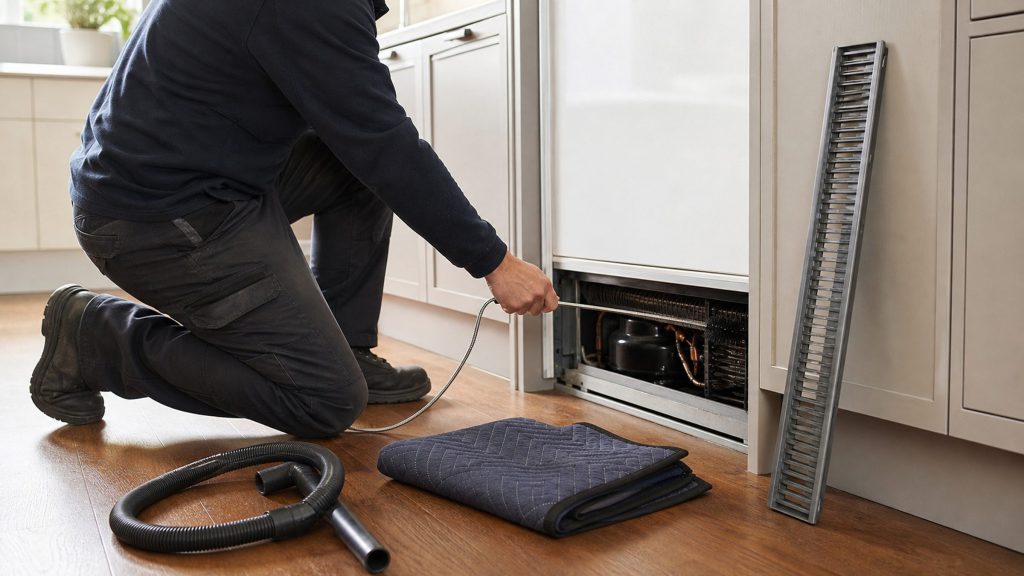
A planned visit rather than an emergency one. On this make it earns its keep in three specific places: brass burners that want cleaning rather than replacing, hood filters and ducting nobody has looked at, and the scale that South Florida water puts into every dishwasher, steam oven and coffee machine in the house.
- Several appliances in one visit, which is where the saving is
- Burners, filters, condensers and scale — the four things that actually shorten a life
- A written note of what is starting to age, before it stops
-
from $95 Diagnostic visit
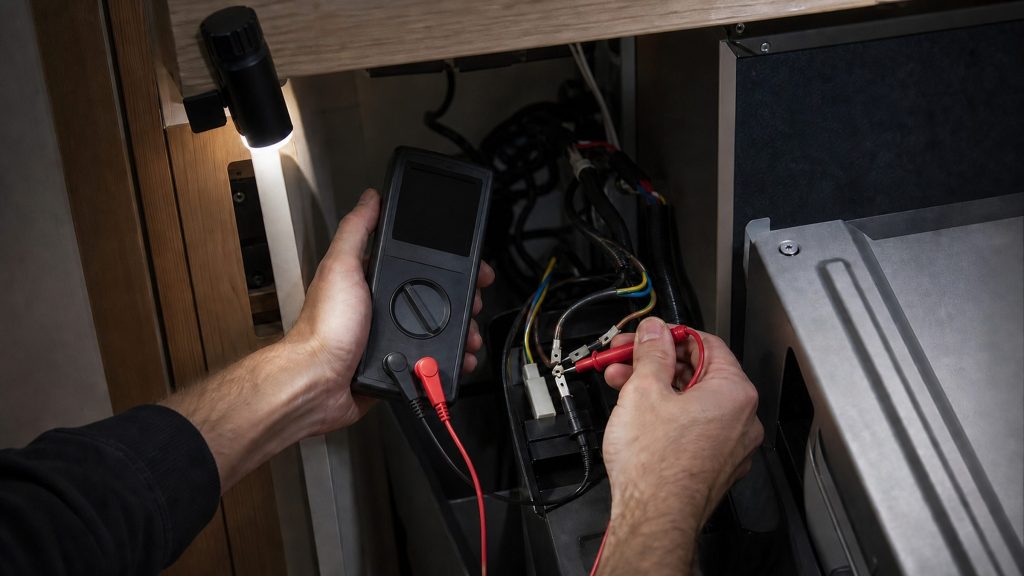
We work out what is actually wrong before anybody quotes a part. On this make that usually means measuring rather than reading, because most of these appliances report nothing at all when they stop. The fee is credited toward the work when you go ahead.
- Measured rather than guessed — resistance, current, temperature, airflow
- The free causes checked first, before any part is named
- Credited toward the repair
Questions people ask about this
So should I unplug things?
Where you can, and where it is not disruptive, it does remove the risk entirely. The practical problem is that most of a built-in kitchen cannot be unplugged without pulling the appliance out of its opening, which is why the breaker is the switch that matters in this conversation.
What about a refrigerator? It never switches off.
Correct, and it is the appliance that runs continuously for fifteen years without anybody looking at its connection. That is not a reason for alarm; it is a reason to keep its condenser clean and to take a warm plug or a burning smell seriously when it happens rather than living with it.
My plug is warm. Is that normal?
A plug carrying a heavy load can be slightly warm. A plug that is uncomfortable to hold is not, and it means resistance where there should be none — a loose terminal, a worn socket, or a damaged cord. Switch that circuit off and have it looked at rather than watching it.
The breaker trips occasionally. Is that the breaker being oversensitive?
Almost never. A breaker that trips is doing its job, and a breaker that has started tripping when it did not use to is reporting a change. Replacing the breaker to stop it tripping is removing the alarm rather than the fire.
Does this apply to hoods?
Hoods are worth a mention because they combine a live transformer, lighting, a motor and an environment full of grease. A hood whose lights flicker, or which smells hot, deserves attention sooner than most things — and clean filters and duct are a genuine fire measure, not housekeeping.
Is an older appliance more of a risk?
The appliance itself, not particularly. What ages is everything around it: terminals that have heat-cycled for twenty years, a cord that has been trapped and released a dozen times, a socket that has been in a hot cabinet since the kitchen was built. Age matters at the connections.
Safety & Risks
More guides like this one
-
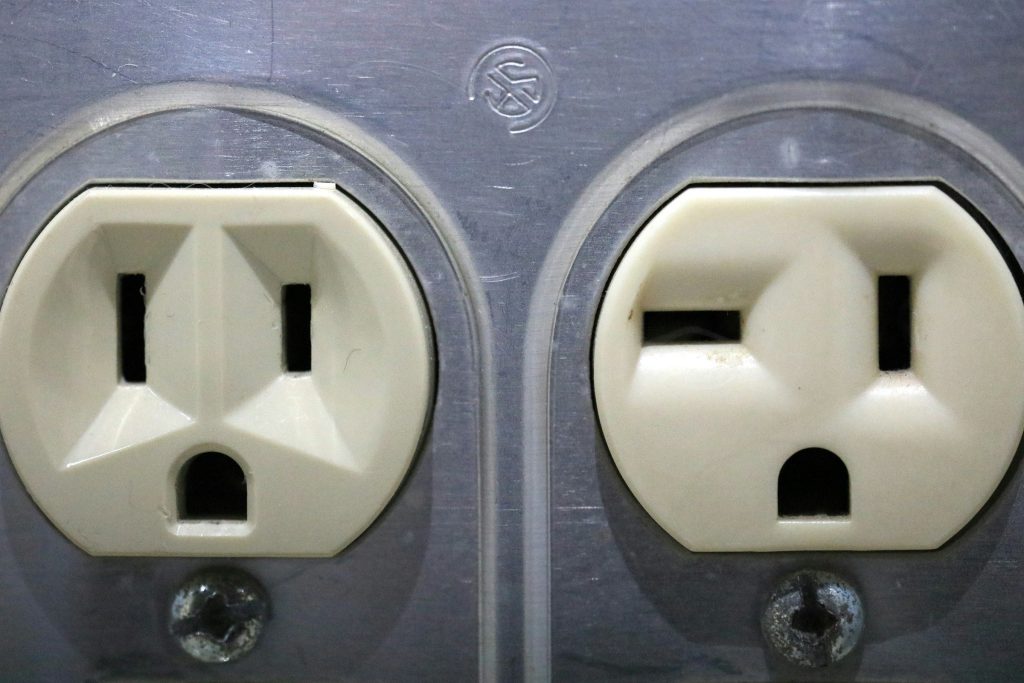
Oven Smells Like Burning Plastic: Which Smell Means Stop
Five different smells, five different causes, and only two of them mean switch it off at the breaker. A page that treats them all the same is no use to anybody.
Read more -
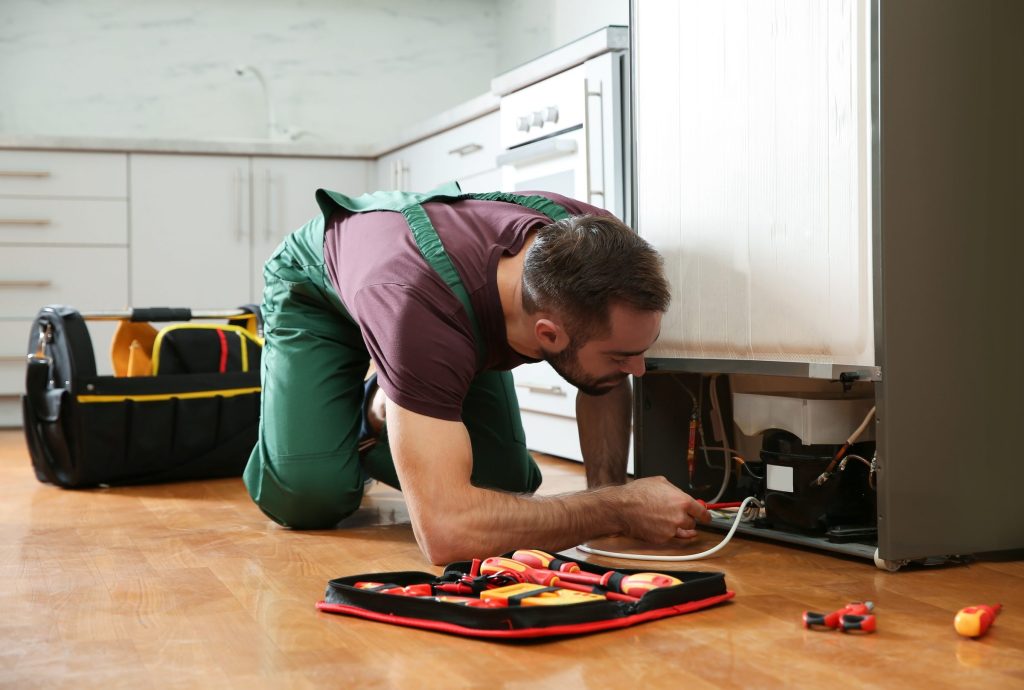
What Happens When Refrigerant Leaks From a Refrigerator
Answers the safety question honestly, and then answers the one you actually needed: a sealed system does not consume refrigerant, so topping it up is not a repair.
Read more -
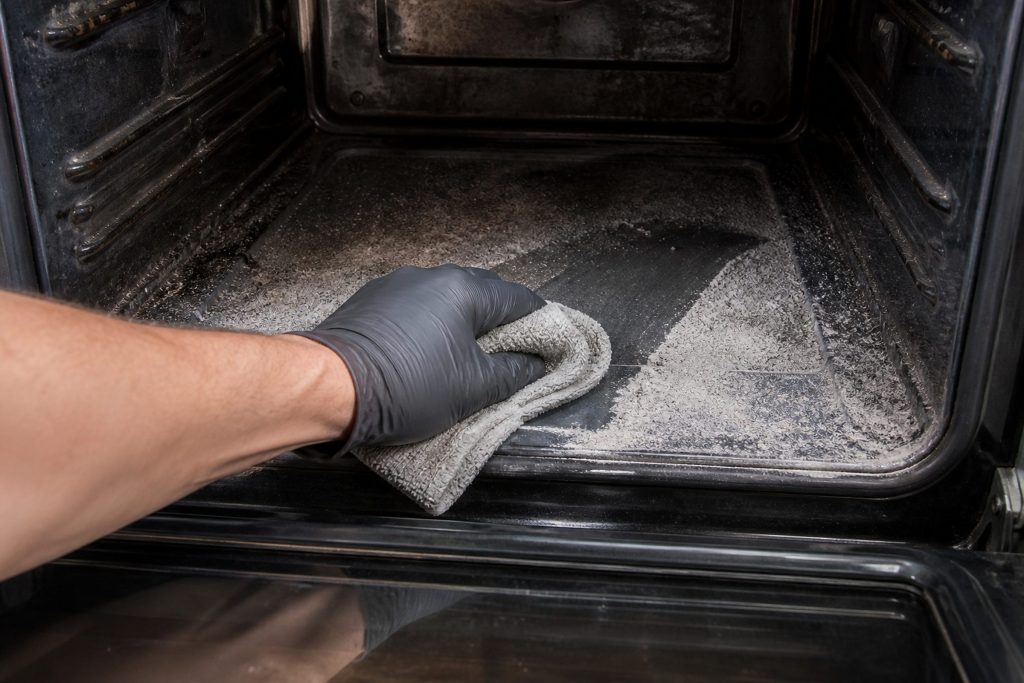
A Grease Fire Inside the Oven: What to Do and What Not to Open
Specifically the oven rather than the cooktop, because the correct action is the opposite one. The cavity is already a sealed box. Short page, because somebody reading it has minutes.
Read more
Tell us the model number and what it is doing.
This article is based on:
- Official manufacturer documentation
- Internal repair procedures
- Technician repair history
- Company quality standards