Maintenance & Prevention
Changing the Water Filter on a Bertazzoni Refrigerator, and Resetting the Counter
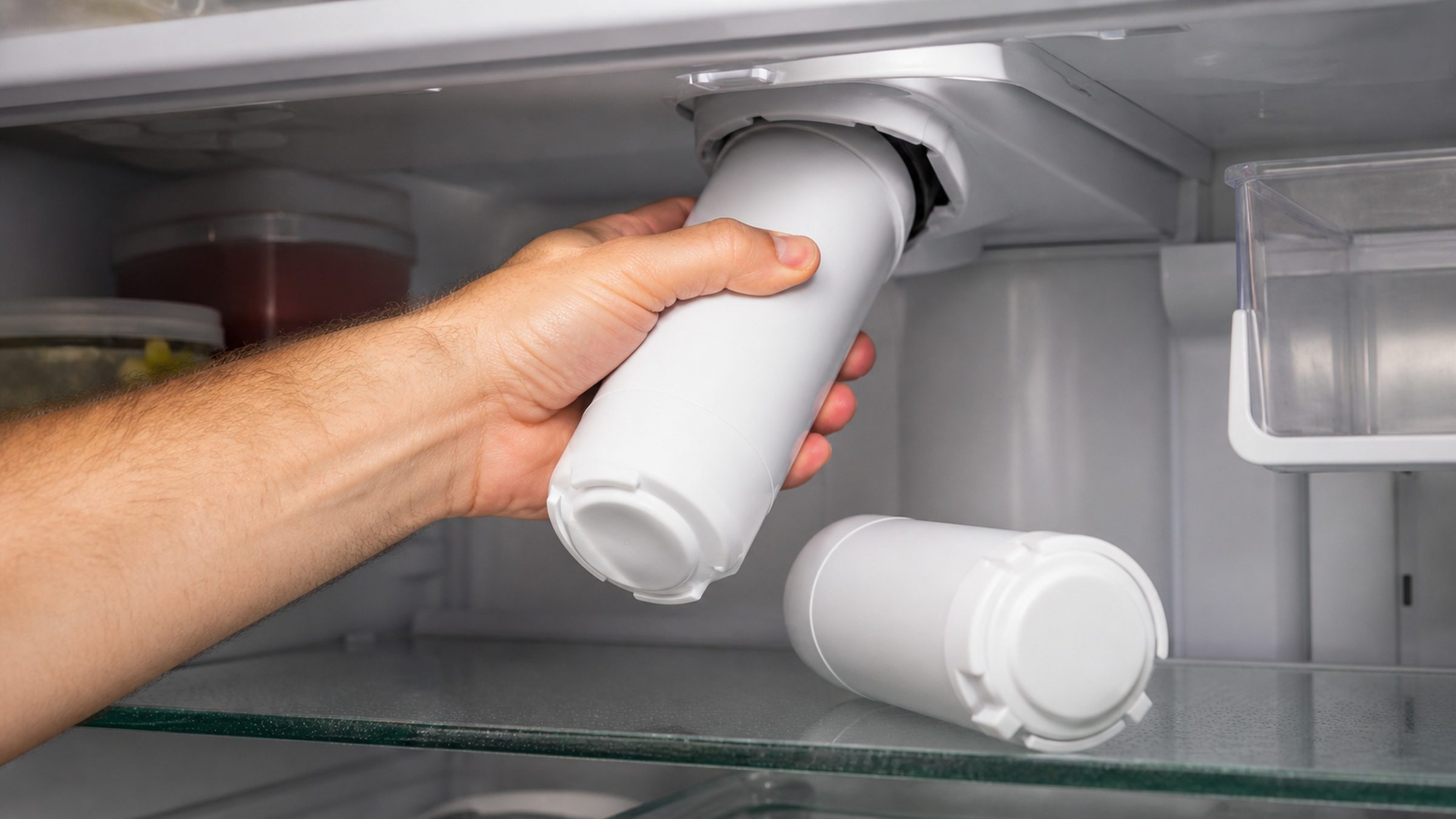
Every six months, and the machine will remind you — but the reminder is counting days rather than measuring anything, so it has to be reset by hand after every change or the appliance goes on believing the old cartridge is fitted. On the built-in columns the filter symbol flashes and beeps at 180 days and the counter is cleared with a five-second hold of the select control; on the French-door machines the icon lights at 330 days, starts flashing at 360, and is reset with a three-second hold of the filter control. Check your own manual for the exact button. The change itself is straightforward on all of them: shut off the water supply, remove the old cartridge, fit the new one, turn the water back on and check carefully for leaks, then flush several minutes of water through before drinking any of it or making ice from it. The part people miss is what a tired filter does first. Flow drops long before taste changes, and the first thing to suffer is ice — small, hollow, slow cubes on a machine whose ice maker is perfectly healthy.
The full guide
Bertazzoni refrigerator water filter replacement: six months, and reset the counter
The maker's interval is six months. On South Florida water it is not a generous one.
The reminder is a timer, not a measurement
This is the part that catches people.
Nothing in the machine measures the filter. It counts days, and the numbers differ between families:
- Built-in columns: the filter symbol flashes and beeps at 180 days. Cleared with a five-second hold of the select control.
- French-door machines: the filter icon lights at 330 days and starts flashing at 360. Cleared with a three-second hold of the filter control.
Check your own model's manual for the exact button, because the control layout varies.
Reset it, or none of it counts. The appliance has no way of knowing you changed anything. Unless you clear the counter it goes on from where it was — and on some machines continues to behave as though a restricted filter is fitted.
The symptom that arrives first, and nobody connects
Not taste. Ice.
A filter works by pushing water through a carbon block. As it loads up, flow drops before taste changes — and the ice maker is the part of the appliance that cares most about flow, because its fill is timed rather than measured. Less water per fill means:
- small cubes;
- hollow cubes;
- slow production;
on an ice maker that is in perfect health.
So the sequence in a real kitchen is: the ice gets worse, somebody concludes the ice maker is failing, and the water does not taste different for another two months.
If your cubes have changed, check the filter date before you book anybody.
Doing the change
- Shut off the water supply — at the valve behind or under the machine, or under the sink.
- Remove the old cartridge. Usually a quarter turn and out. There will be a little water; have a cloth ready.
- Fit the new one, seated fully and turned home.
- Turn the water on and check for leaks — at the housing and at the connection, and again ten minutes later.
- Flush several minutes through before drinking any of it.
- Reset the counter.
What is normal straight afterwards
Cloudy water for the first few glasses. New carbon sheds fine particles and there is air in the housing.
Two poor batches of ice. Small, cloudy or hollow. That is air in the line, not a failure, and it clears by the third.
Judge the machine on day two, not on the first glass.
Use the right cartridge
The part number is on your model's own product page and in its manual. It is worth using rather than a lookalike: a cartridge that does not seat identically either leaks at the housing or restricts flow — which recreates the exact problem you were solving.
If you have no water connected
Machines designed for a supply that has not been connected carry a plug in place of the cartridge. There is nothing to change and no counter to worry about.
If you are connecting water for the first time, that plug comes out and a real filter goes in — and the counter starts from that day.
If it turns out to be a repair
What this leads to, and what it costs
Every job on this site is priced the same way: an on-site diagnostic first, the figure agreed in writing before anybody starts.
-
Fill, freeze, release Not making ice
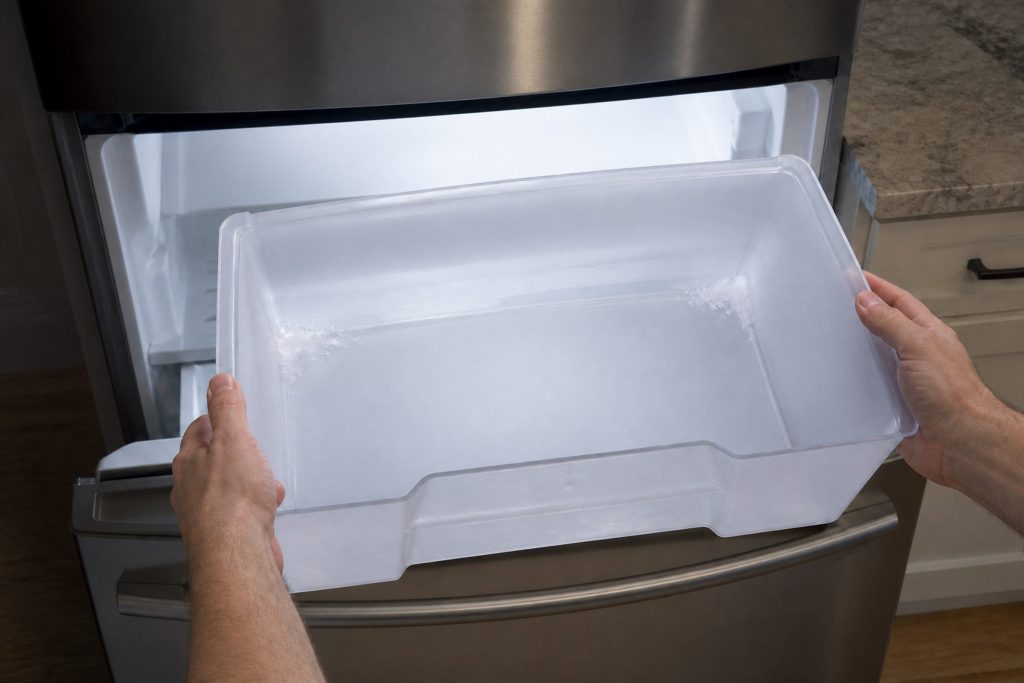
The ice maker has stopped, or makes cubes that are small and hollow, or fills and never releases. Three questions split every one of these calls, and any owner can answer all three by watching.
- Stopped completely with everything else fine
- Cubes small, hollow or misshapen
- Fills and will not release
-
from $165 Ice maker repair
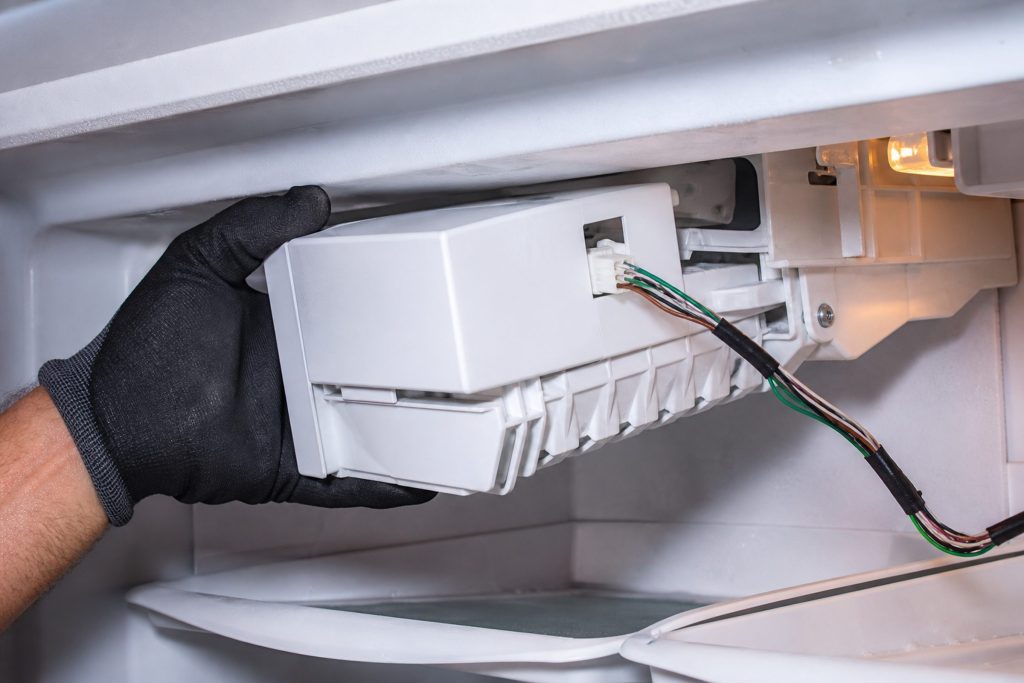
An ice maker that has stopped, fills and will not release, or makes ice that is hollow and small. Two of the five freezer columns here have one and so do most of the refrigerators, and the diagnosis splits cleanly in three: does it fill, does it freeze, does it release.
- Fill, freeze and release separated before any part is named
- Freezer temperature checked, because a warm freezer stops the cycle
- The fill tube checked for the ice plug that causes most of these

Questions people ask about this
How often should the water filter be changed?
Every six months. On South Florida water that is not a generous interval, and the machine's reminder is generous in a different way — it counts days rather than gallons, so a household that gets through a great deal of water is due sooner than the alarm says.
Why do I have to reset the counter?
Because it is a timer, not a sensor. Nothing in the machine can tell that a cartridge was changed, so unless you clear it, the appliance goes on counting from wherever it was — and on some models continues to report a restricted filter that is now brand new.
My ice has gone small and hollow. Is the ice maker failing?
Almost never. Small cubes are about how much water arrived, not how it froze — the fill is timed rather than measured, so less flow means less water per fill. A filter at the end of its life is the commonest cause, and it shows up here long before anything tastes different.
Do I have to flush the new filter?
Yes, several minutes' worth. New carbon sheds fine particles and there is air in the housing, so the first water through is cloudy and the first two batches of ice are usually small or hollow. That is normal and it clears.
Where is the filter on my machine?
It varies by model — inside the compartment on some, behind a grille at the base on others. Your model's product page and manual name the part number as well as the location, and using the right cartridge matters: a generic that does not seat identically leaks or restricts.
What if I do not have a water supply connected?
Then there is a plug fitted in place of the cartridge on machines designed for it, and there is nothing to change. If you are connecting water for the first time, that plug comes out and a real filter goes in.
Maintenance & Prevention
More guides like this one
-
Cleaning Bertazzoni Oven Door Glass — and the Way Round It Goes Back
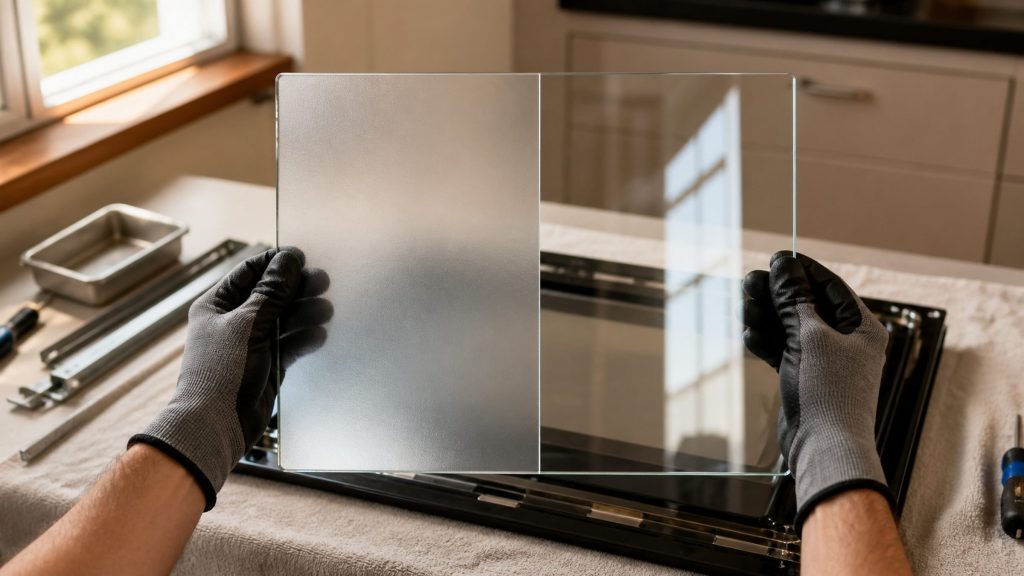
The maker publishes a warning almost no owner has read: the inner pane is heat-treated on one side and must go back shiny side out, or it absorbs heat and shatters.
Read more -
Cleaning a Bertazzoni Oven Without Costing Yourself a Repair
Cleaning products and the self-clean cycle are the two commonest owner-caused failures on this equipment. Here is what to use, what to keep away, and what a clean cycle does to the rest of the appliance.
Read more -
Clearing a Refrigerator Drain Hole Before It Becomes a Puddle
Water inside the cabinet and water on the floor are the same problem seen from two places, and the fix is ten minutes with warm water rather than a service call.
Read more
Tell us the model number and what it is doing.
This article is based on:
- Official manufacturer documentation
- Internal repair procedures
- Technician repair history
- Company quality standards