Common Problems
Oven Broils but Will Not Bake: What That Split Tells a Technician
Because bake and broil are two separate systems that happen to share a cavity. On a gas oven each has its own burner and its own ignitor; on an electric or dual-fuel cavity each has its own element, and on both the two are switched independently by the control. So a machine that broils perfectly and will not bake has already told you a great deal: the power supply is fine, the control has power, the thermostat knob works, the door and the safety interlocks are fine, and the problem is inside the bake half only. On a gas cavity the bake ignitor is the answer far more often than anything else, and the reason people miss it is that it goes on glowing brightly while failing — it is the current-sensing element in the safety circuit, and an aged one draws too little current to open the valve while still looking perfectly healthy. On an electric cavity it is usually the bake element itself, which normally shows a visible break or a blister, or the relay that switches it.
The full guide
Why does my oven broil but not bake? Because they are two different circuits
They share a cavity and nothing else.
On a gas oven, bake has its own burner and its own ignitor under the oven floor, and broil has its own at the roof. On an electric or dual-fuel cavity, each has its own element. In both cases the control switches them independently.
That is why the split is worth so much: half the appliance has just been eliminated.
What the split rules out for free
If broil works, then all of this is already proven healthy:
- the electrical supply to the appliance;
- the control board's power and its ability to switch a load;
- the door and its interlocks;
- the temperature sensing shared between modes;
- on a gas machine, the gas supply to the appliance.
None of that needs testing. A technician arriving with that information starts at the bake circuit rather than at the wall.
On a gas cavity: the ignitor, still glowing
Here is the cause that costs people the most money on gas ovens, and it costs them because it looks fine.
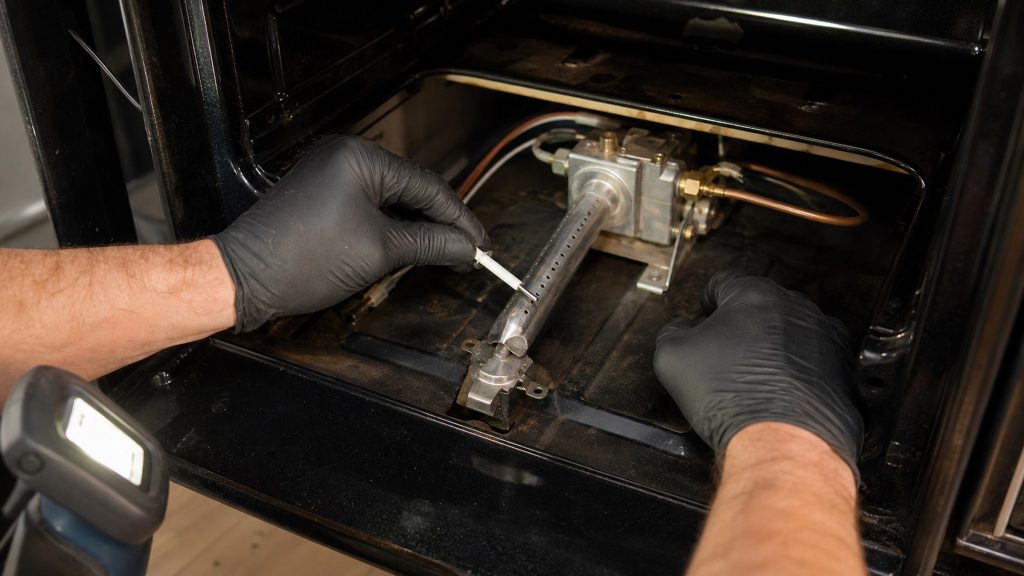
The bake ignitor is not just a heat source. It is the current-sensing element in the safety circuit. The gas valve is designed to open only when a certain current passes through the ignitor — proof that the ignitor is hot enough to light the gas the instant it arrives.
As an ignitor ages, its resistance rises. The current through it falls. Below the valve's threshold, the gas never comes — and the ignitor goes on glowing a bright, convincing orange the whole time.
People replace thermostats and control boards over this. Some replace the whole oven.
The test is a current measurement and it takes minutes.
On an electric cavity: the element or the relay
Eleven machines in this line are dual-fuel, and the wall ovens are electric throughout.
A bake element that has failed usually shows it: a blister, a bright spot, or a visible break, most often near one of the ends where it passes through the rear wall. Where the element looks perfect and still does nothing, the relay on the control board that switches it is the next suspect, and that is a measurement rather than an inspection.
What to have ready
The model number from the plate — behind the kick panel on a range, inside the door frame on a wall oven. Whether it is gas, electric or dual-fuel. And the split, established cleanly: fifteen minutes on bake alone, then a few minutes on broil alone, and what happened in each.
If it turns out to be a repair
What this leads to, and what it costs
Every job on this site is priced the same way: an on-site diagnostic first, the figure agreed in writing before anybody starts.
-
Which mode fails tells you the part Oven not heating
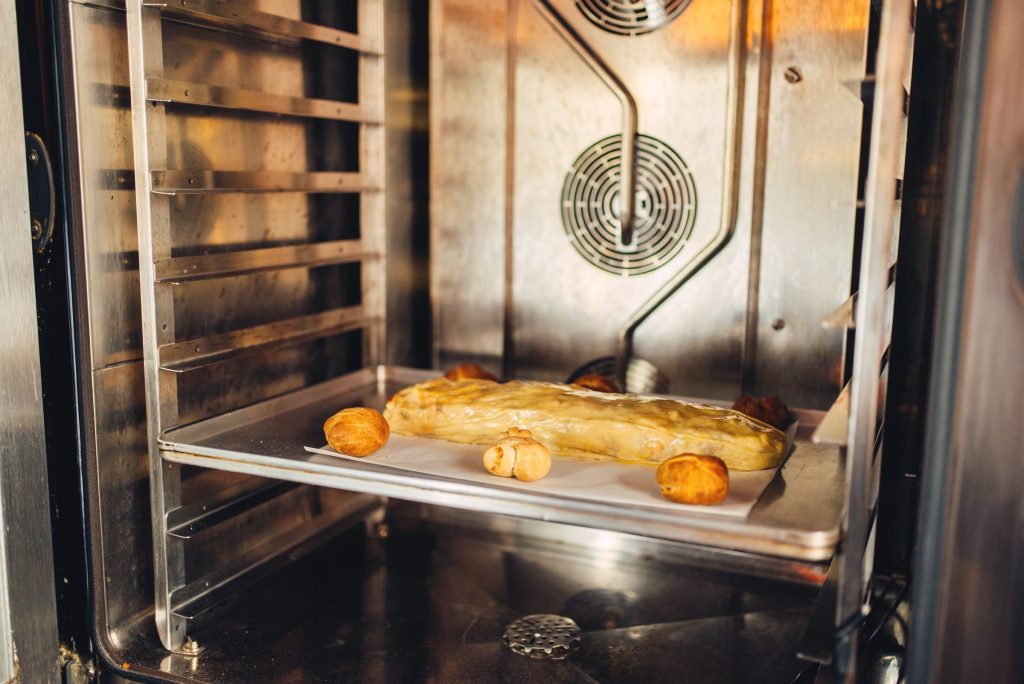
An oven that sets a temperature and stays cold, or heats on one mode and not another. There is no code to read on this make, and there does not need to be: trying each mode before you call halves the diagnosis for nothing.
- Sets a temperature and stays cold
- Broils but will not bake
- A gas oven that glows and never lights
-
from $195 Gas oven ignition & safety valve repair
Eleven of these ranges are all gas, which means the oven is a burner too. A gas oven that will not heat is almost never the control and almost always the igniter and the safety valve working as a pair — and it is a repair that has to be done in the right order to be done safely.
- Igniter current measured under load, not judged by whether it glows
- The safety valve treated as half of the same circuit
- A full cycle watched from cold before we leave
-
from $185 Oven heating & sensor repair
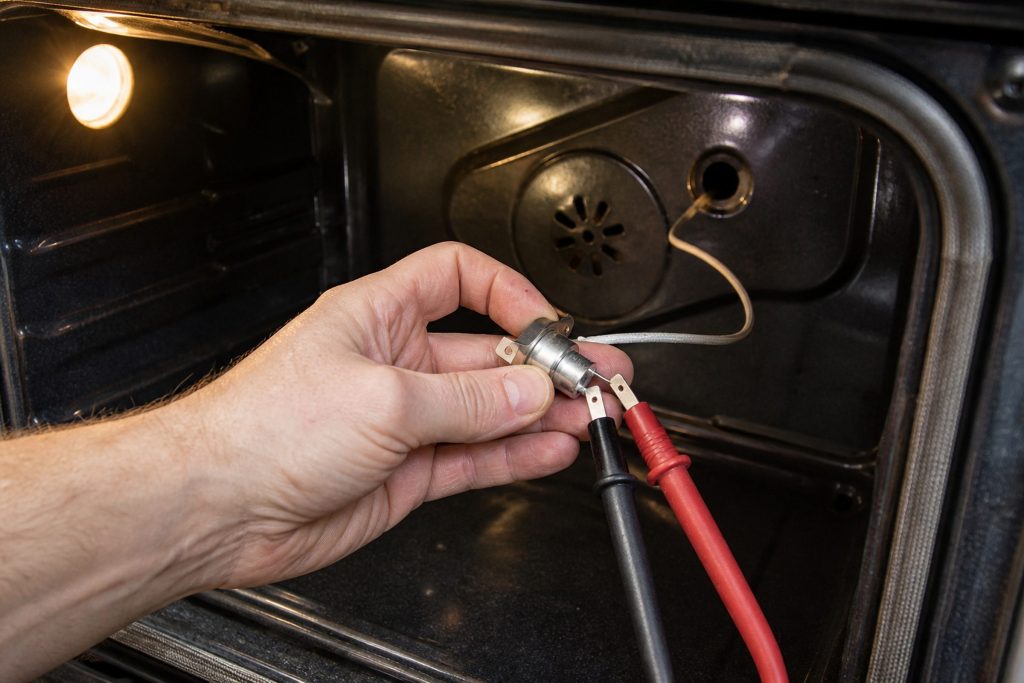
An oven that will not reach temperature, overshoots it, or takes twice as long as it used to. Three parts account for almost all of it, and the one that fails most often is also the cheapest — which is why nothing here is ordered before the sensor has been measured.
- The sensor measured cold, in a minute, before anything is opened
- Bake, broil and convection tested as three separate circuits
- The door seal checked, because an oven cannot hold what it leaks
Questions people ask about this
The ignitor glows orange. Doesn't that prove it works?
No, and this is the single most counter-intuitive problem in a gas oven. The ignitor is also the current sensor: the safety valve only opens when enough current passes through it. As the ignitor ages its resistance rises, current falls below the valve's threshold, and it goes on glowing a completely convincing orange while no gas ever arrives. It is measured with a meter, not judged by eye.
Bake works and broil does not. Same page?
Same logic, mirrored. The broil ignitor or element is at the roof of the cavity rather than under the floor, so the access is different and usually easier. Everything the split rules out is identical.
Could it be the thermostat?
Rarely, when broil still works. A thermostat or temperature sensor feeds the control for both modes, so a problem there tends to affect the whole oven rather than one half. A clean split points at the half rather than at anything shared.
How can I tell which half is which on my machine?
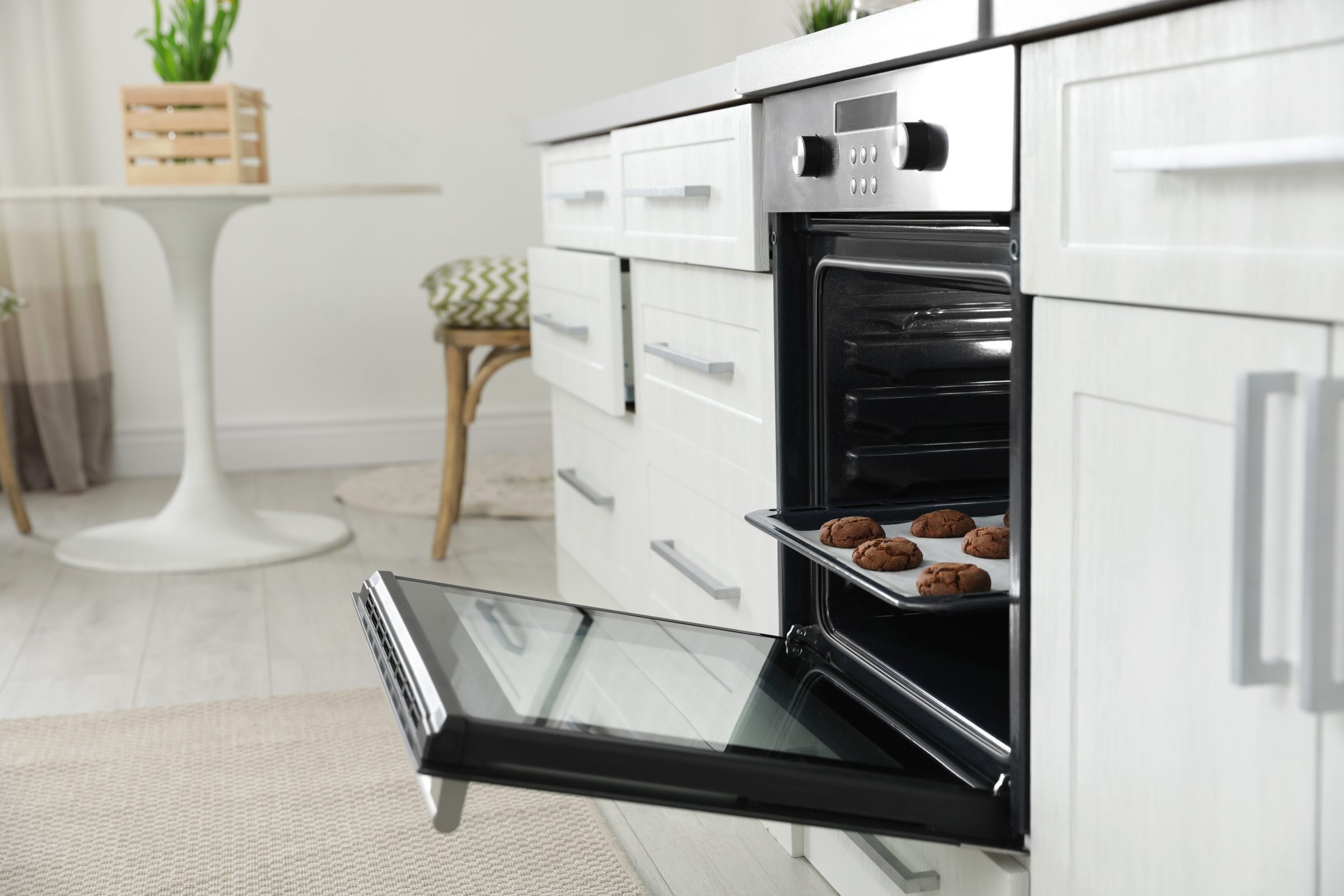
Broil is at the top and bake is at the bottom. If the food browns on the surface and stays raw underneath, broil is working. If a tray comes out cooked from below with no color on top, bake is working. That observation is worth reporting exactly as you saw it.
Is this an expensive repair?
It is one of the cheaper oven parts, and most of the figure is reaching it. A bake ignitor sits under the oven floor, which usually means the cavity is entered from inside and a panel comes out; a broil ignitor at the roof is often quicker. On a wall oven in a tall housing, the appliance coming forward is part of the appointment.
Can I test it myself?
Not safely without a meter and knowledge of where the gas connection is. What you can do for free is establish the split cleanly — try bake alone for fifteen minutes, then broil alone — and report it. That single observation genuinely does half the diagnosis.
Common Problems
More guides like this one
-
Dishes Come Out Wet: What a Bertazzoni Dishwasher Is Actually Doing
The maker's own answer is rinse aid plus the Extra Dry option, and it is right far more often than a heater problem is. Here is why plastics stay wet on a machine that is working perfectly.
Read more -
Why a Bertazzoni Oven Keeps Shutting Off, and Which Half of It Is Wrong
An oven that never heats and an oven that heats and then stops are different problems with different parts. On a gas machine the second one is nearly always flame sensing; on the electric half it is a thermal cut-out or a relay.
Read more -
Reading the Analog Temperature Gauge on a Bertazzoni Range
The maker says plainly that the gauge is a reference point rather than a measurement. Owners read the gauge, see a gap, and book a calibration call. Here is what the gap means and where a real problem starts.
Read more
Tell us the model number and what it is doing.
This article is based on:
- Official manufacturer documentation
- Internal repair procedures
- Technician repair history
- Company quality standards