
Cost Expectations
What Replacing the Glass on an Induction or Radiant Cooktop Costs
Cooktop glass replacement starts at from $295 on this equipment, and unusually for this site it is the part rather than the labor that sets the number. The size of the top, whether it is a cooktop or the surface of a range, and whether the model is current all move it more than anything we do. Two things are worth knowing before the price. First, a cracked ceramic top cannot be repaired at any price by anybody — there is no filler and no bond that survives repeated heating, and the crack is a line of weakness that heat will keep working on. Any offer to repair one is either a misunderstanding or a sale. Second, if the appliance is induction, switch it off at the breaker now. The electronics sit directly under the glass and the glass is the seal, so a crack is a direct path for spilled liquid onto a high-power board. On a radiant top it is a burn and shock risk instead. Either way the machine should not be used until the top is replaced.
The full guide
How much does it cost to replace the glass on a glass top stove? From $295
Read the next two paragraphs before the price, because they matter more.
Stop using it, and if it is induction, switch off the circuit
On an induction machine the electronics live directly under the glass, and the glass is the seal. A crack is a direct path for anything spilled onto it to reach a high-power board — which turns a glass replacement into a glass and a board.
Switch it off at the breaker. Not at the control panel.
On a radiant top the risk is different and still real: an exposed element, a burn hazard, and water reaching a live circuit.
Either way, the appliance should not be used again until the top is replaced. It is a few days.
Nobody can repair it
There is no filler, no resin and no adhesive that survives what a cooktop does.
The surface is a ceramic glass, formulated so it barely expands when heated — which is what lets it take a cold pan onto a hot zone without shattering. A crack in that material is a permanent line of weakness, and every heating cycle works on it a little more. The failure, when it arrives, is sudden.
Any offer to repair a cracked ceramic top is either a misunderstanding or a sale. A cost page that implied otherwise would be doing you harm.
Why the figure is parts-led
Almost every other row on this site is labor-led: an inexpensive component and a careful hour. This one is the other way round.
What moves it:
Size. A 36-inch top costs more than a 24-inch one, straightforwardly.
Cooktop or range surface. On a range the glass is part of a larger assembly and the job reaches further into the appliance.
Availability. A top for a current model is ordered against the plate. On an older machine, availability is checked before anything is promised — a figure we cannot keep is worse than no figure.
What is underneath. A hard impact that cracked the glass may also have reached a coil or a sensor, and a crack that has been cooked over for weeks has usually let something through. That is established before the new top goes on.
What is included
The top, the labor, an inspection of everything underneath before it is closed up, seals renewed, and the appliance run across every zone before the appointment ends.
Exact cost is confirmed after an on-site diagnostic and agreed in writing before anything is opened.
How they crack in the first place
Worth knowing, because most of these are preventable.
Impact — something dropped, usually a lid or a jar, usually at a corner where the glass is supported.
Thermal shock — a genuinely cold, wet pan onto a zone at full power. Rare on induction, where the glass itself is not the heat source, more common on radiant.
A pan with a distorted base rocking on a zone and concentrating load at two points.
Sliding heavy cast iron across the surface rather than lifting it. That does not usually crack the glass on its own; it scratches, and a deep scratch is where a later crack starts.
None of that is careless. It is a kitchen.
If it turns out to be a repair
What this leads to, and what it costs
Every job on this site is priced the same way: an on-site diagnostic first, the figure agreed in writing before anybody starts.
-
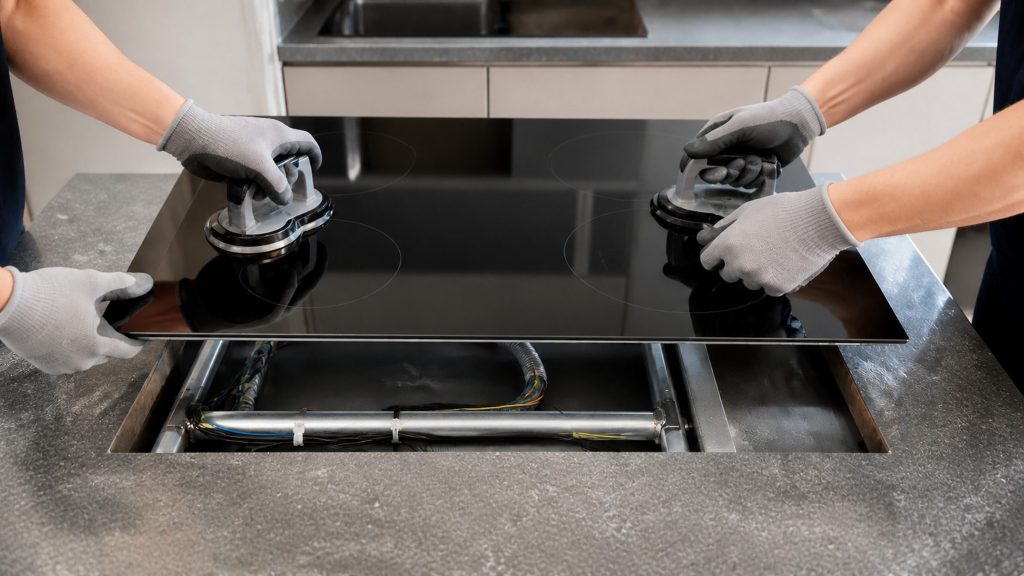
from $295 Cooktop glass replacement
A crack, a chip at the edge, or a ring that has gone rough and milky. On an induction or radiant surface the glass is not a cover over the working parts — it is structural, and it is what keeps liquid out of the electronics underneath. It is a reason to stop using the appliance rather than to cook around it.
- Stop using it and switch it off at the breaker until it is seen
- The seal and the frame checked as well as the glass
- Availability established before anything is dismantled
-
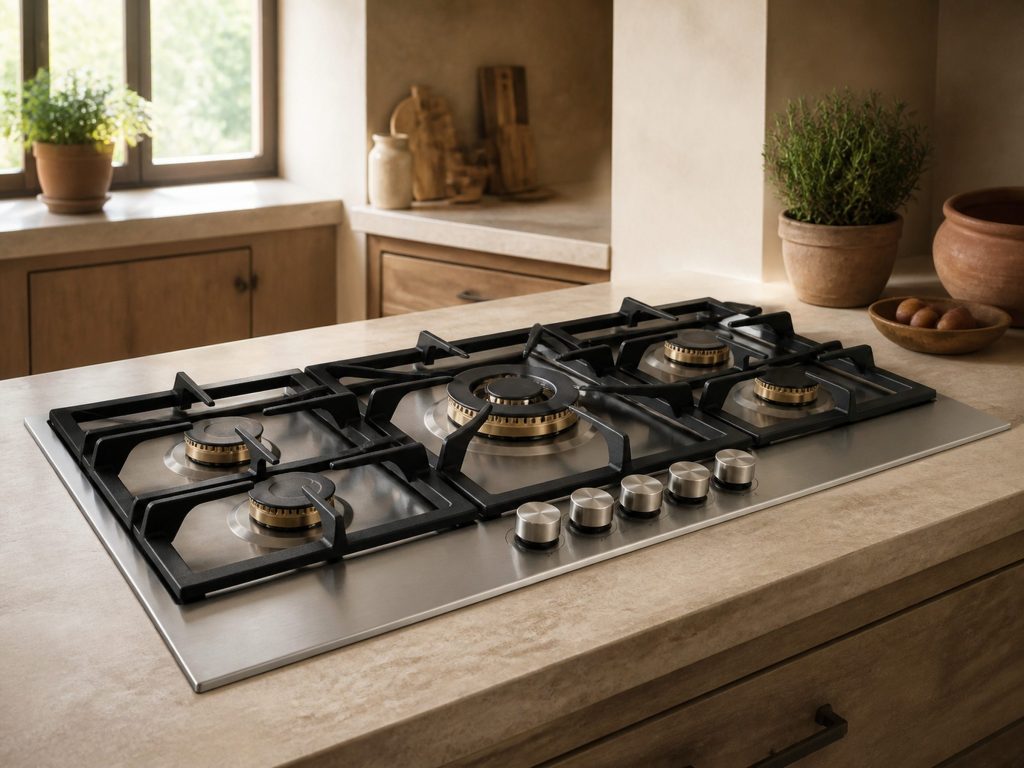
Induction · Sealed gas · Brass burners · Rangetops · 24" · 30" · 36" · 48" Cooktops and rangetops
Thirty-four surfaces: nineteen gas, fifteen induction, and nine of them rangetops rather than cooktops — the same repair under a different word. Ten run the same brass burners as the ranges. The induction tops publish no code table — the maker issues installation sheets for them and nothing more — so what settles an induction call is the cabinet underneath and whether its boards can shed their heat.
- One induction zone cutting out while the rest keep going
- A gas burner clicking without catching, or dropping out on simmer
- A code on the induction panel that comes back after the power is cycled
Questions people ask about this
Can a cracked glass stove top be repaired instead of replaced?
No. The surface is a ceramic glass chosen for how it behaves under heat, and a crack is a permanent line of weakness that thermal cycling keeps working on. There is no adhesive or filler that survives what a cooktop does. Anyone offering to repair one is selling you a delay.
Can I keep using it until the part arrives?
On an induction top, no — switch the circuit off. The electronics are directly under the glass and the glass is the seal, so any spill goes onto a high-power board. On a radiant top it is a burn and shock risk. It is a few days, and the alternative can be a much larger repair.
Why is the glass so expensive?
Because it is not window glass. It is a ceramic glass formulated to take repeated thermal shock without expanding, and on an induction machine it is also the part that positions and seals everything underneath. It is a large, fragile, model-specific component that ships carefully.
It is only a hairline crack and nothing has changed.
It will. A hairline crack in ceramic glass propagates with each heating cycle, and the failure when it comes is sudden. On induction the risk is liquid reaching the board long before the crack becomes visible damage.
What if something underneath was damaged too?
That is established before the new top goes on rather than after, because finding it afterwards means doing the job twice. A hard impact that cracked the glass can also have reached a coil or a sensor, and a crack that has been cooked over for weeks has usually let something through.
Is it worth replacing the glass or the whole appliance?
On a built-in cooktop, almost always the glass — replacing the appliance means matching an opening and often a new cutout. You will get that arithmetic in plain numbers before anything is ordered.
Cost Expectations
More guides like this one
-
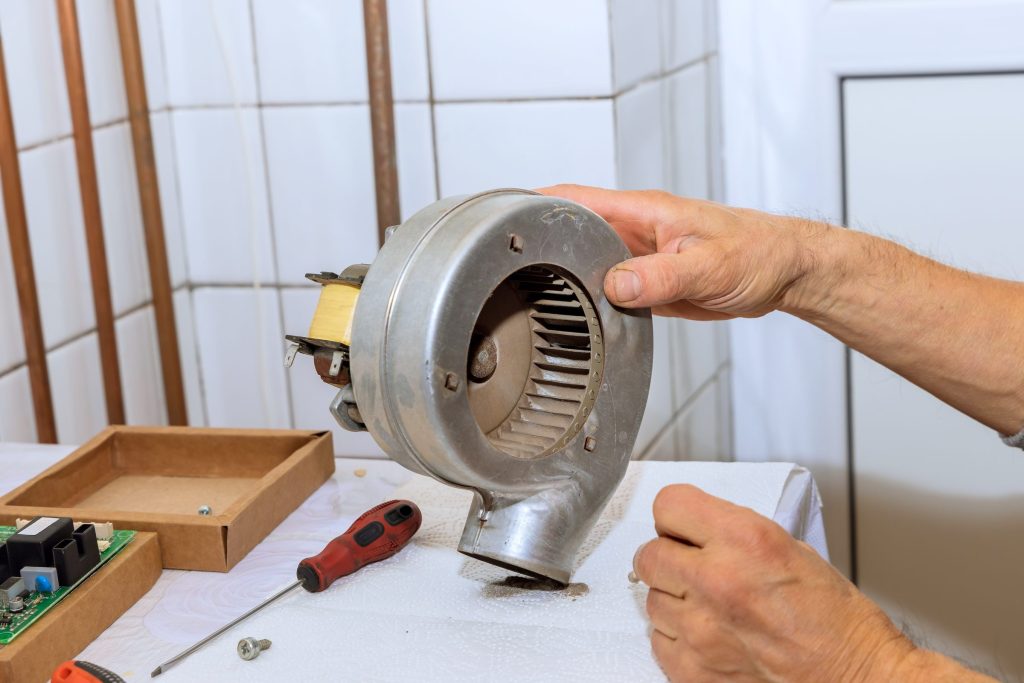
Range Hood Motor Replacement Cost — and Why It Is Usually Not the Motor
Written to stop people buying motors they do not need. A capacitor, a speed control or a grease-loaded blower wheel produce the same complaint for far less, and the duct produces it for nothing at all.
Read more -
Labor Cost to Replace a Range Hood, Line by Line
Four separate jobs get quoted as one number. Here they are apart, so you can read a quote rather than accept one.
Read more -

What a Bertazzoni Range Costs to Own, Not to Buy
Everybody publishes the purchase price. Nobody publishes the other half — what the thing costs to keep running for fifteen years. Here is that number, from this site's own figures.
Read more
Tell us the model number and what it is doing.
This article is based on:
- Official manufacturer documentation
- Internal repair procedures
- Technician repair history
- Company quality standards