Cost Expectations
Range Hood Motor Replacement Cost — and Why It Is Usually Not the Motor
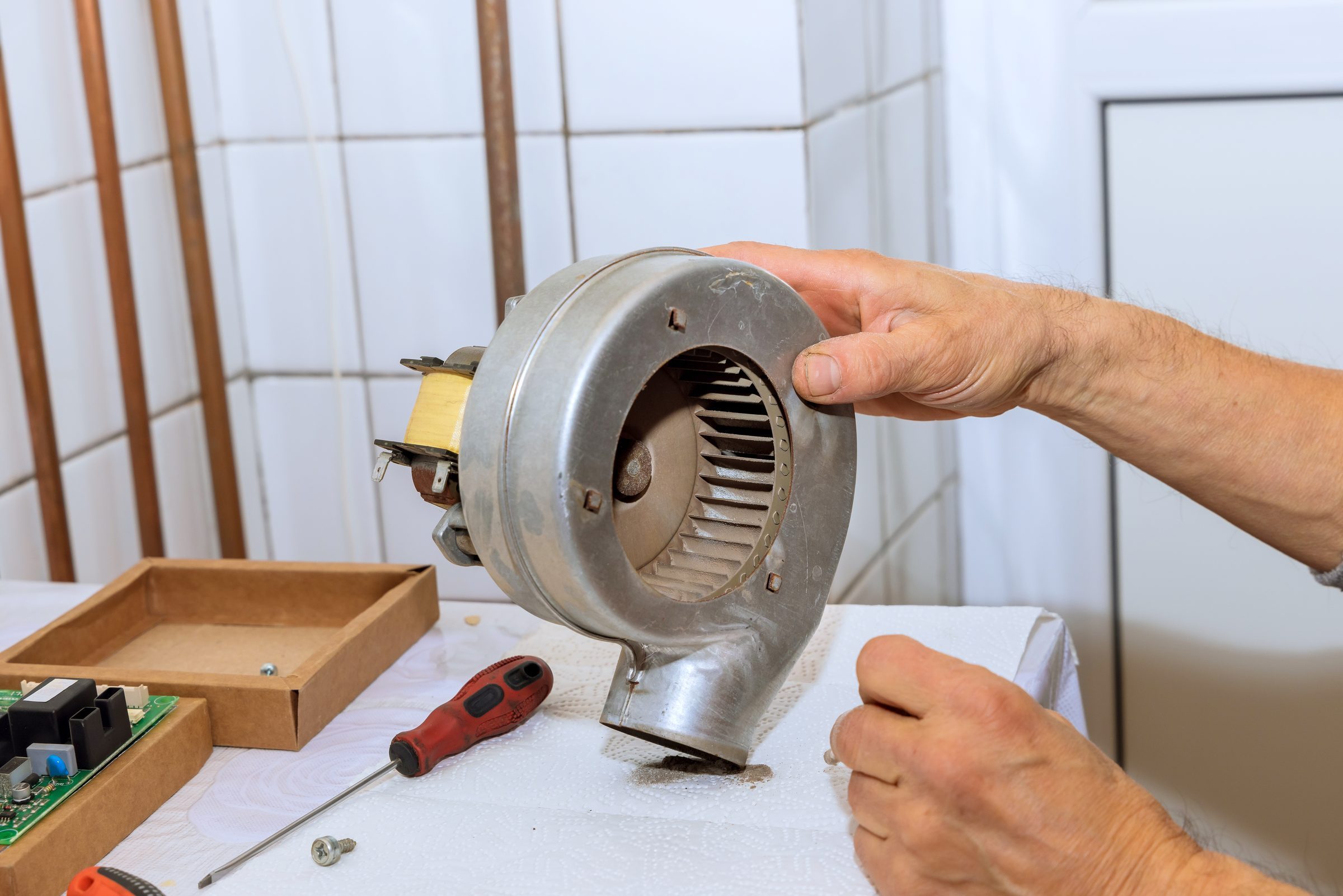
Hood motor and blower work starts at $165 on this equipment, and the honest headline is that a real share of the calls that arrive as motor replacements are not. Four things produce most hood complaints and only one of them is the motor. A hood that hums and will not turn is nearly always a failed run capacitor, an inexpensive component that the motor cannot start without. A hood that runs on the highest speed and nothing else is a speed control or, on an electronic hood, its board — the top speed is often a direct path and the lower ones go through the control, so losing everything but high points straight at it. A hood that has become loud and slow over a couple of years is usually a blower wheel loaded unevenly with grease, out of balance, dragging on the motor it is bolted to. And a hood that sounds completely normal and clears nothing is not an appliance problem at all — it is the duct, the damper or the make-up air, and that is a different page and a cheaper one at from $145.
The full guide
Range hood motor replacement cost: from $165, and usually unnecessary
Ventilation is a fifth of this maker's catalog — thirty-seven hoods — so we see a great many of these. The pattern is consistent enough to publish.
Most people arrive having already decided it is the motor. It usually is not.
The four things that produce a hood complaint
The run capacitor. A hood that hums and does not spin is describing this almost every time. The motor cannot start itself; the capacitor gives it the shove. When it fails, the motor sits there energised, humming, going nowhere. Inexpensive part, quick job, and it is checked before anything else for exactly that reason.
The speed control. A hood that works on high and on nothing else is pointing at the control rather than the motor. On many of these the top speed is a direct path and the lower speeds are switched through the control or its board, so the pattern of what still works is genuinely diagnostic.
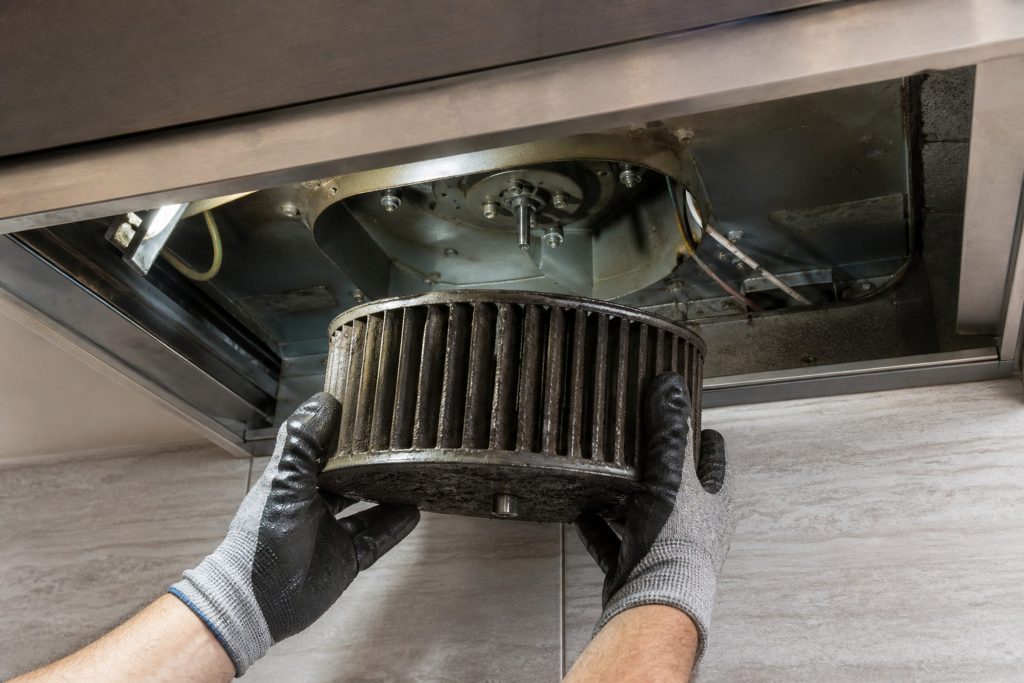
The blower wheel. A hood that has become loud and slow over a year or two has usually collected grease unevenly on the blades. The wheel goes out of balance, it drags, it whines, and it shortens the life of the motor it is bolted to. It is cleaned as part of any job that has the panel off.
The motor itself. Real, and the answer once the other three are cleared. Bearings dry out, windings fail. On a coastal installation, salt gets into it faster than anywhere inland.
And the fifth thing, which is not the hood at all
A hood that sounds completely normal and clears nothing.
That hood is fine. The air has nowhere to go: a duct run that is too long, three elbows where the rating assumed none, a flexible section crushed behind a cabinet, a wall cap whose flaps have seized shut with old grease, or a house tight enough that no replacement air can get back in.
No motor fixes any of that. People buy one anyway, fit it, and get precisely the same result — which is why that page exists separately and costs less: ducting and airflow service, from $145.
What moves the figure
Where the blower is. In the hood, or remote in the duct run. A remote blower in a soffit or an attic is a different appointment from a panel and four screws.
Whether the hood has to come down. On a chimney or island hood the unit may have to come off its mount, and on an island that is two people.
How much grease is in it. A wheel that has never been cleaned takes time.
What is included
Diagnosis of the electrical side rather than a swap on suspicion, the part, the labor, the blower wheel cleaned and balanced while it is out, and the hood run on every speed before the appointment ends.
Exact cost is confirmed after an on-site diagnostic and agreed in writing before anything is opened.
Before you book anything
Wash the filters. Then run the hood and stand where you normally cook.
If it still sounds strong and still does nothing, read the ducting page instead of this one — it is cheaper, and it is far more likely to be your answer.
If it turns out to be a repair
What this leads to, and what it costs
Every job on this site is priced the same way: an on-site diagnostic first, the figure agreed in writing before anybody starts.
-
from $165 Range hood motor & blower repair cost
Ventilation is a fifth of this catalog — thirty-seven hoods. When the motor really is the cause, this is the row; the point of the page beside it is that most of the time it is not.
- Motor, blower wheel, capacitor or speed control
- A hood that has to come down is the labor
- Check the airflow page first — it is cheaper and likelier
-
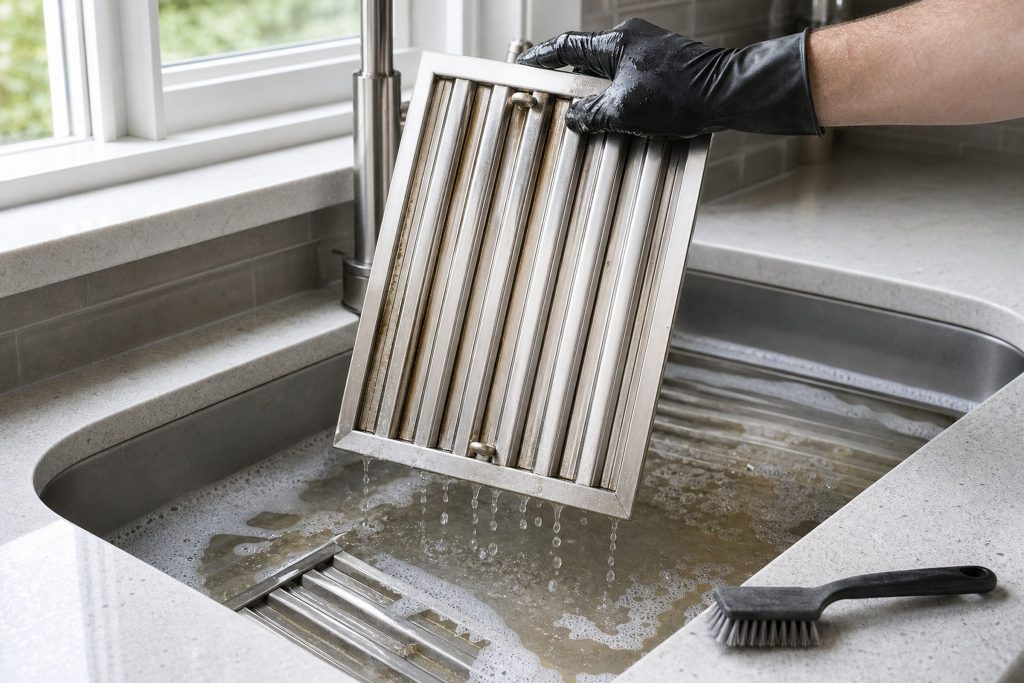
from $145 Range hood ducting & airflow service cost
One of the two cheapest rows on the site, and the one that ends most hood complaints. A real share of these visits finish with nothing fitted at all, because the appliance was never the problem.
- Duct run, transitions, damper, make-up air, filters
- A large share end with no part fitted
- The cheapest honest answer to "it does not clear steam"
-
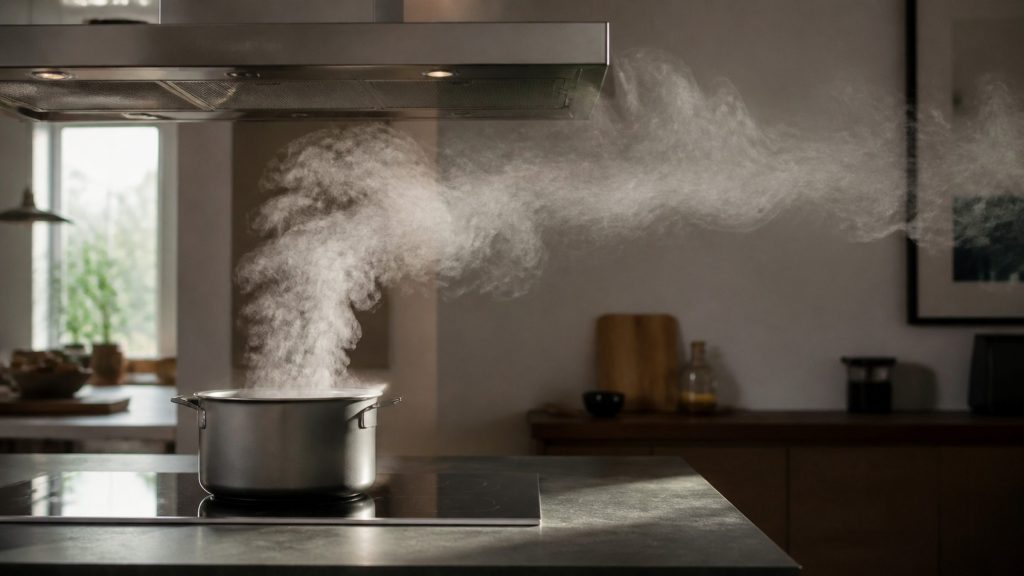
Mostly not the hood Range hood not clearing the air
The hood runs, the kitchen still fills with steam, and nothing about the appliance is broken. This is the most under-diagnosed complaint in the kitchen: a hood is a blower, a filter and a path, and three of the four things that stop it working are not in the hood.
- Runs at full speed and clears nothing
- Got gradually worse over a year or two
- Has never really worked since it was installed
Questions people ask about this
My hood hums but the fan does not move. Motor?
That is the textbook signature of a failed run capacitor, and it is checked first for that reason. The motor needs the capacitor to get started; without it, it sits there energised and humming. The part costs a fraction of a motor.
It has got much louder in the last year.
More often the blower wheel than the motor. Grease builds up unevenly on the blades, the wheel goes out of balance, and it gets noisy long before anything fails. Cleaning it is part of the job rather than an upsell, and doing it saves the motor it is bolted to.
Only the top speed works. What is that?
The speed control, or the board on an electronic hood. On many hoods the highest speed is a direct connection and the lower speeds are switched through the control, so losing every speed except high is a very specific pointer.
Where is the motor, exactly?
It depends on the hood. An in-hood motor is reached by dropping the filters and a panel and is a contained job. A remote or in-line blower sits in the duct run — in a soffit, an attic or on an outside wall — and that is a completely different appointment. Knowing which you have changes the figure.
Is a new hood cheaper than a motor?
Almost never, once the real cost of a swap is counted: taking the old one down, matching the width to the cooking surface, a duct transition, and the electrical. The exception is a hood whose housing has corroded, which does happen on coastal installations.
The lights work but the fan does not. Does that help?
Yes, considerably. It proves the hood has power and that the control is at least partly alive, which points at the capacitor, the motor or the speed circuit rather than at the supply. Report it.
Cost Expectations
More guides like this one
-

What Replacing the Glass on an Induction or Radiant Cooktop Costs
A parts-led repair on a site where almost everything else is labor-led, and the only page here that starts by telling you to stop using the appliance.
Read more -

Labor Cost to Replace a Range Hood, Line by Line
Four separate jobs get quoted as one number. Here they are apart, so you can read a quote rather than accept one.
Read more -

What a Bertazzoni Range Costs to Own, Not to Buy
Everybody publishes the purchase price. Nobody publishes the other half — what the thing costs to keep running for fifteen years. Here is that number, from this site's own figures.
Read more
Tell us the model number and what it is doing.
This article is based on:
- Official manufacturer documentation
- Internal repair procedures
- Technician repair history
- Company quality standards