
Cost Expectations
What a Bertazzoni Range Costs to Own, Not to Buy
Budget around one service visit a year and one repair every three or four years, and the arithmetic is far kinder than the purchase price suggests. A brass burner service starts at $135 and is the one thing genuinely worth doing on a schedule — it is maintenance rather than repair, and it prevents the ignition call that would otherwise arrive. The repairs that do turn up are cheap in parts and moderate in labor: ignitors, thermocouples, burner caps, a valve stem that has stiffened, and on the sixteen ranges with a cast-iron griddle, that circuit's own burner and valve. Range repair on this equipment starts at $155 and gas oven ignition work at $195, both toward the low end of the market band because the commonest version of each ends with a component cleaned and seated rather than replaced. What is genuinely expensive on this make lives elsewhere — refrigeration sealed-system work at from $650 — and a range simply does not have one of those. Over fifteen years the running cost of one of these is measured in hundreds a year, not thousands.
The full guide
How much do Bertazzoni ranges cost — to keep, rather than to buy
Purchase prices are everywhere. The number nobody publishes is the one that matters after the first year.
Here it is, from this site's own figures rather than from a shrug: roughly one service visit a year, and one repair every three or four years.
The annual number
Brass burner service, from $135. Twenty machines in this line carry brass burners rather than sealed steel, and on those the burner is a serviceable assembly: the cap lifts, the crown comes out, the ports clear individually.
It is priced below every repair on this site on purpose. A maintenance job that costs more than the repair it prevents is a maintenance job nobody books, and the repair it prevents is the ignition call.
If your machine has sealed steel burners rather than brass, the equivalent is the general maintenance visit, from $135, which also covers hood filters, refrigeration condensers and anything that wants descaling.
The repairs that actually happen
Range burner and ignition repair, from $155. The largest category by a wide margin, and set at the low end of the market band deliberately — the commonest version of this call ends with a burner cleaned and seated correctly rather than with a part fitted.
Gas oven ignition and valve repair, from $195. Higher because the cavity has to be opened from below or behind and the gas connection is remade and leak-tested.
Cooktop control and dial repair, from $145. A stiff dial is old grease in a valve stem, and it is a service until somebody forces it — at which point it becomes a valve.
Griddle and grill plate repair, from $175. On the sixteen ranges that carry a cast-iron plate. Its own burner, its own valve, its own ignition, under a plate that comes out first.
What a range does not have
This is the part that changes the arithmetic.
The single expensive repair on this fleet is refrigeration sealed-system work, from $650 — regulated work with recovery, evacuation and a measured recharge, on a machine that comes out of cabinetry.
A range does not have a sealed system. There is no compressor, no refrigerant, no EPA-certified anything. The most expensive thing that can go wrong with a gas range is a control board on a machine that has one, and most of these do not have much of one.
Fifteen years, roughly
A range serviced annually, with one ignition repair somewhere in the middle and perhaps a valve or a griddle circuit later, lands in the low thousands over its whole life. Spread across fifteen years that is a few hundred a year — less than most people spend on the extended warranty they were offered at purchase.
The machines that do not get serviced are the ones that cost more, and they cost more in an entirely predictable way: burner ports that were never cleaned turn into ignition failures, valve stems that were never re-greased turn into valves, and a hood that was never looked at puts grease into all of it.
What we will not tell you
We will not tell you whether it was worth buying. That is a question about how you cook, and every answer to it online is somebody selling something.
What we can tell you is that it is not expensive to keep, and that the things that go wrong with it are mechanical, inexpensive and predictable — which is more than can be said for most of what is in a modern kitchen.
If it turns out to be a repair
What this leads to, and what it costs
Every job on this site is priced the same way: an on-site diagnostic first, the figure agreed in writing before anybody starts.
-
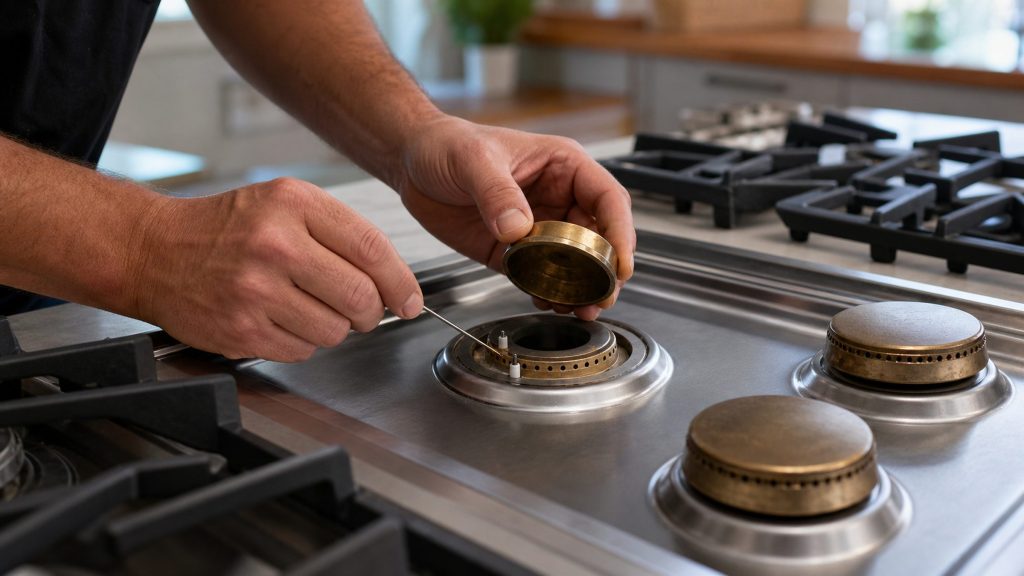
from $135 Brass burner service cost
Twenty machines in this line carry brass burners rather than sealed steel. This is maintenance and it is priced as maintenance — below every repair row on the site, because pricing a service like a repair is how people learn not to book it.
- The 20 models with brass burners: 10 ranges, 10 cooktops
- Caps, crowns, ports and flame set — the finish left alone
- The cheapest cooking row on this site, on purpose
-
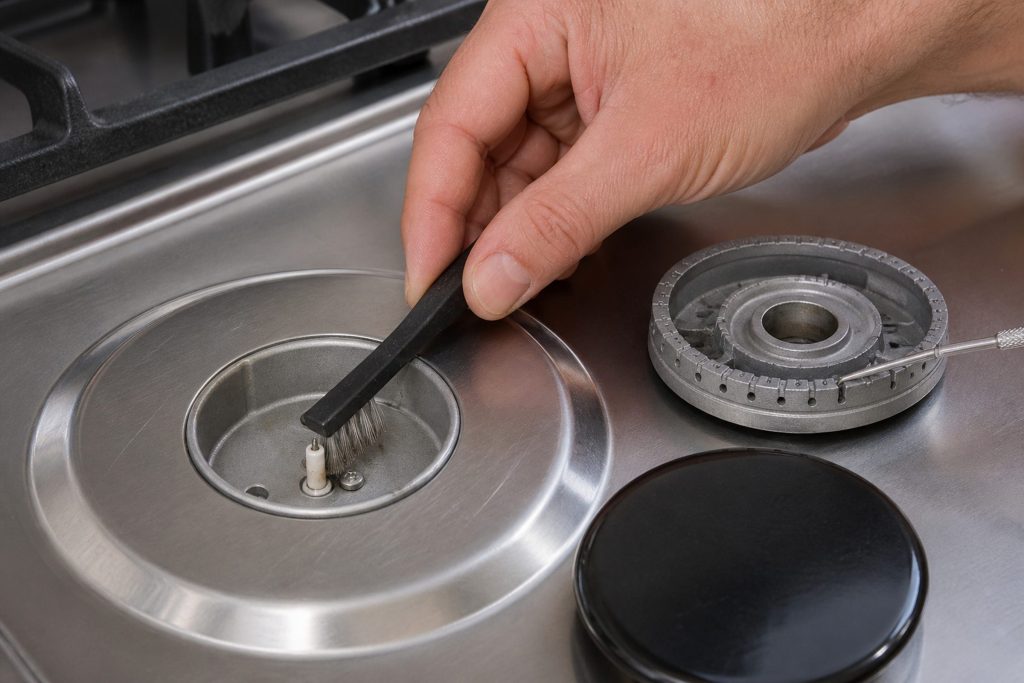
from $155 Range burner & ignition repair cost
The commonest gas call on this make, and one of the cheapest rows on the site on purpose: the usual version of it ends with a burner cleaned and reassembled properly rather than with a part.
- Ignitor, cap, port cleaning, valve or thermocouple
- Set at the low end of the market band deliberately
- One burner or all of them is the first question
-
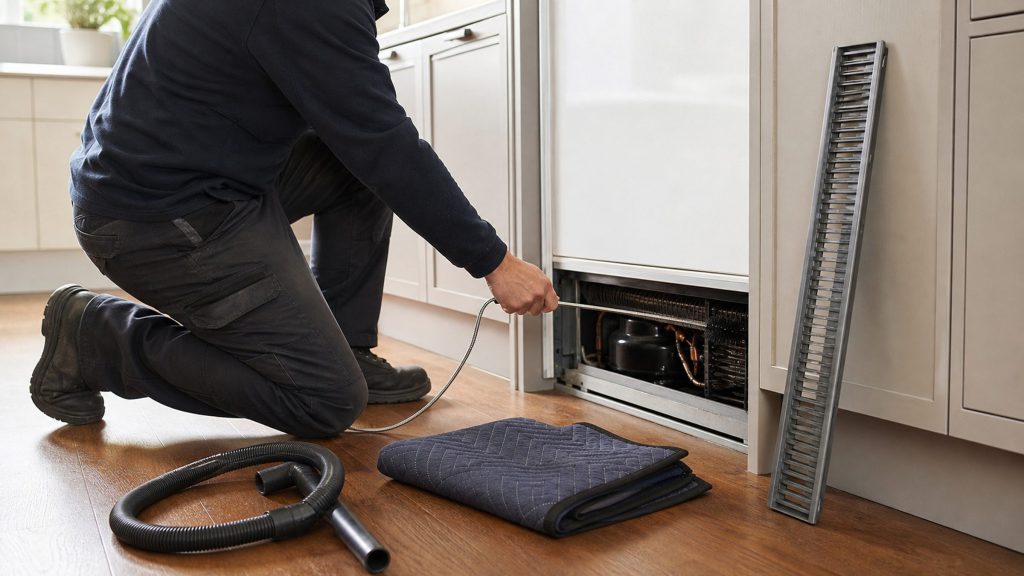
from $135 Appliance maintenance visit cost
The cheapest visit on the site and the one that prevents the expensive ones. Priced per visit rather than per appliance, which on a matching suite makes it cheaper per machine the more of them we see.
- Condensers, filters, seals, burners, hood ducting, descale
- Priced per visit — cheaper per machine on a full kitchen
- Most of what appears elsewhere on this site starts here
-
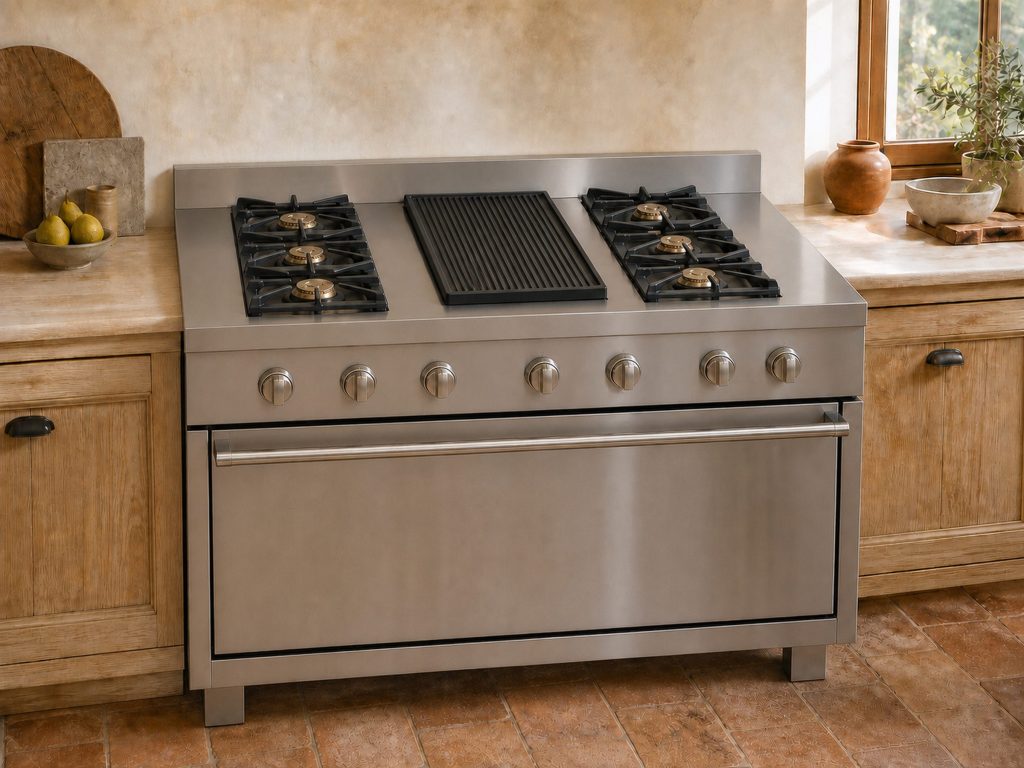
All gas · Dual fuel · Induction · Brass burners · Cast iron griddle · 30" · 36" · 48" Ranges
Thirty-seven ranges in the current line and the reason most people know this maker at all. Eleven are all gas, nine dual fuel, thirteen induction; ten of them run brass burners and sixteen carry a cast iron griddle across the middle. A 48-inch range is two ovens, six burners and that griddle in one machine, and any one of those is a reason to call. Almost none of it announces a code when it stops — this is a make you diagnose by what it does, not by what it displays.
- A burner that clicks and will not catch, or catches and drops out
- The oven running hot or cold with nothing on the display to say so
- The griddle heating unevenly while the burners either side are perfect

Questions people ask about this
Is a Bertazzoni range expensive to repair?
Less than people expect, because the failures are mechanical and the parts are ordinary. An ignitor, a thermocouple, a burner cap and a valve stem are all inexpensive components; what you pay for is a careful hour and, on gas, remaking and leak-testing a connection. Nothing on this site is priced higher because the badge is Italian.
What actually fails on these?
Ignition, in one form or another, is the largest category by a wide margin. After that, valve stems that stiffen because the grease inside them has aged, burner caps that stop seating properly, and on the machines with a cast-iron griddle, that separate circuit. The cavity itself and the burners as castings tend to outlive everything around them.
Is the annual service worth it?
On this make more than most, because the brass burners are serviceable by design and cleaning them is what prevents the ignition call. It is priced below every repair on this site deliberately — a maintenance job that costs more than the repair it prevents is a maintenance job nobody books.
Do the Professional, Master and Heritage series cost different amounts to repair?
No. Seventy-four of this maker's model numbers are published under two or three series at once — the same machine, the same number, listed differently — and no figure on this site moves with the series name.
What about parts availability on an older range?
Common wear parts for gas cooking are widely available and often not model-specific at all. Where availability becomes a real question is electronics on a discontinued line, and a gas range has very little of that. It is checked before anything is promised.
Does the climate here change the arithmetic?
For a range, less than you would think — salt air is hard on refrigeration condensers and hood housings rather than on burners. What does affect a range is what happens above it: a hood that is not clearing properly puts grease onto the cooking surface and into the burner ports, and that ends up as an ignition call.
Cost Expectations
More guides like this one
-

What Replacing the Glass on an Induction or Radiant Cooktop Costs
A parts-led repair on a site where almost everything else is labor-led, and the only page here that starts by telling you to stop using the appliance.
Read more -
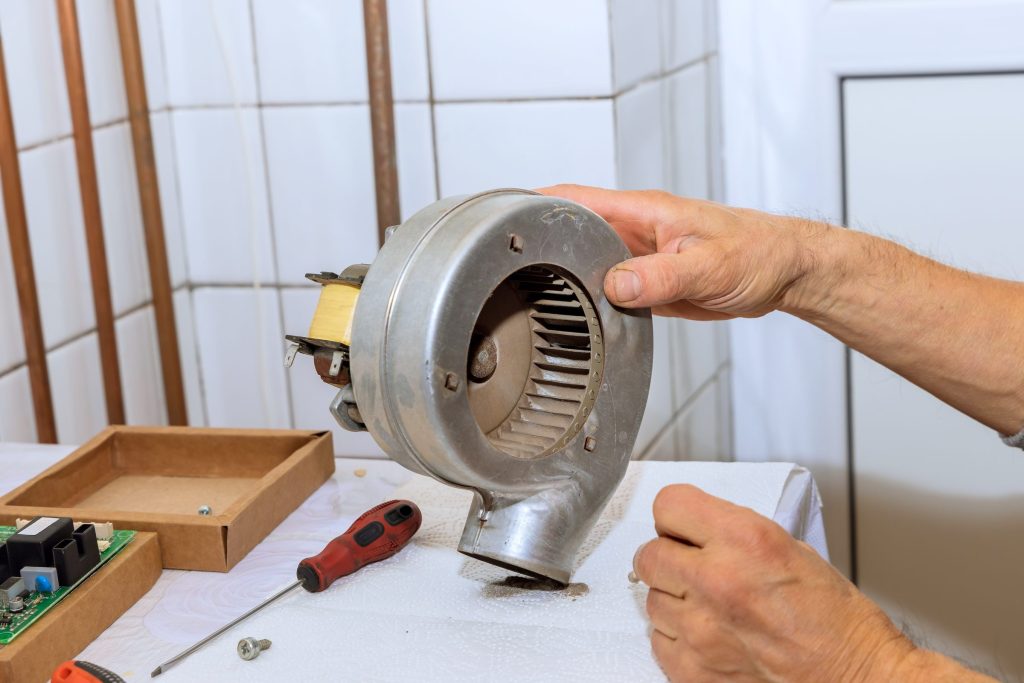
Range Hood Motor Replacement Cost — and Why It Is Usually Not the Motor
Written to stop people buying motors they do not need. A capacitor, a speed control or a grease-loaded blower wheel produce the same complaint for far less, and the duct produces it for nothing at all.
Read more -

Labor Cost to Replace a Range Hood, Line by Line
Four separate jobs get quoted as one number. Here they are apart, so you can read a quote rather than accept one.
Read more
Tell us the model number and what it is doing.
This article is based on:
- Official manufacturer documentation
- Internal repair procedures
- Technician repair history
- Company quality standards