Troubleshooting
Resetting a Bertazzoni Dishwasher, and Reading the Code First
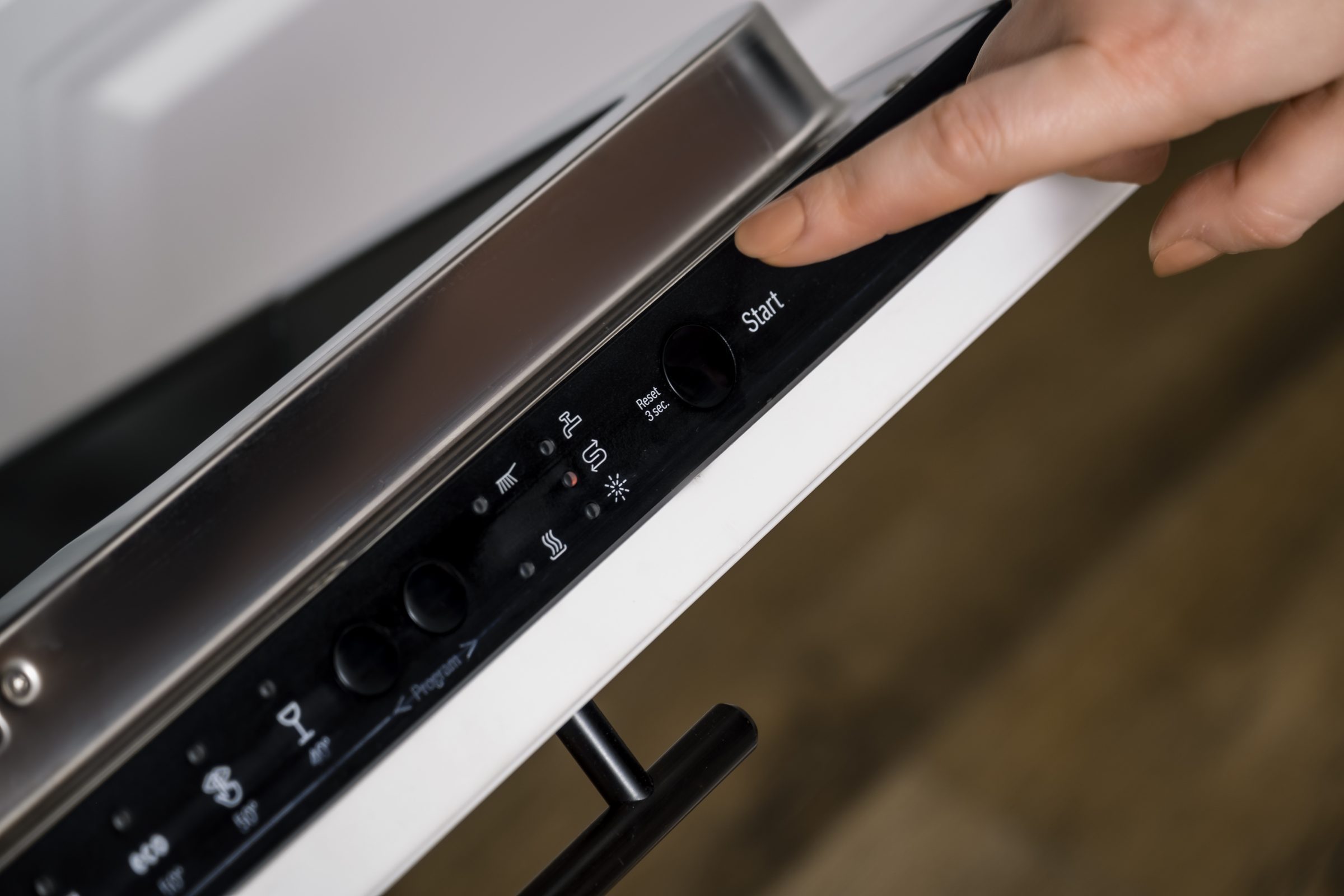
Photograph the display before you touch anything. These dishwashers are one of only two appliance families this maker documents with a real error table — F1 through F9, plus FF and HI, each with a published meaning — and clearing the code destroys the single most useful piece of evidence the machine will ever give you. Once you have it, work gently upward. Cancelling the running program is the first step and on most of these it is a long press of the program or start control until the machine goes into a drain cycle; let that finish, because a machine left holding water is the commonest cause of the next complaint. If that does not settle it, open the door for a minute and close it again, which interrupts the cycle properly. Only then go to the power: off at the breaker, two full minutes, back on. And know what the reset cannot do. FF is water not arriving, F2 is water not leaving, F1 and F3 are water where it should not be — all four are conditions in the world rather than states in a control, and no amount of resetting changes any of them.
The full guide
How to reset Bertazzoni dishwasher: photograph the code first
This is the one appliance in the kitchen where "just reset it" is the wrong instinct.
Why the code matters more here than anywhere else
Almost nothing this maker builds publishes an error code. The gas ranges do not. The ovens do not. The thirty-seven hoods do not.
The dishwashers do, and properly: FF, F1, F2, F3, F5, F6, F7, F8, F9 and HI, each with a meaning and an instruction the maker prints in the manual.
That makes it the most diagnosable appliance on the site — and it makes clearing the code the most expensive free action available to you. On an intermittent problem, that display may be the only evidence there is, because the machine will happily run a normal cycle afterwards and show nothing at all when a technician arrives.
Photograph it. Then reset.
The ladder, gentlest first
One — cancel the running program. On most of these a long press of the program or start control puts the machine into a drain cycle.
Let the drain finish. A machine left holding water is the commonest cause of the next complaint, and standing water in a warm tub grows a smell within days.
Two — open the door for a minute, then close it. This interrupts the cycle properly and clears transient states without cutting power. It is gentler than the breaker and it is often enough.
Three — power down at the breaker for two full minutes. Not two seconds; a control board holds enough charge to carry its state across a brief interruption.
Four — run a short cycle and watch it.
What a reset cannot fix, and the codes that say so
Four of the eleven codes describe conditions in the world rather than states in a control. No amount of resetting touches any of them:
FF — water is not arriving. Check the supply tap is fully open, then clean the small filter in the inlet hose end. That filter silts up and it is the commonest cause.
F2 — water is not leaving. The maker names the discharge hose and the filters. Take the filter assembly out, wash it, clear the sump underneath by hand, and check for a kinked hose or a new waste disposer whose inlet plug was never knocked out.
F1 — overflow. Switch it off, close the tap, and stop. The machine has found water where there should not be any and has protected itself for a reason.
F3 — water arriving continuously. Close the tap. A fill valve that no longer shuts will keep filling regardless of what the control does.
HI deserves its own note: the maker gives it as a high-voltage supply failure, which is about the electricity reaching the machine rather than about the dishwasher. Repeated restarting does not help, and this is occasionally an electrician's job rather than ours.
The things that are not problems
Salt and rinse-aid indicators report a real state and clear when the consumable is topped up. A reset that cleared them would only be hiding the reminder.
A control lock, which makes a healthy machine look completely dead.
A delay start left set from last time, which produces a machine that does nothing and gives no reason.
All three have ended calls before anybody drove out.
What to report if you do book
The code, exactly, with the letter. Whether it appears every cycle or occasionally. Whether the tub had water in it. Whether anything in the kitchen changed — a new disposer, plumbing work, a power cut. And the model number, which is on the tub rim just inside the door.
If it turns out to be a repair
What this leads to, and what it costs
Every job on this site is priced the same way: an on-site diagnostic first, the figure agreed in writing before anybody starts.
-
The latch, before the board Dishwasher will not start
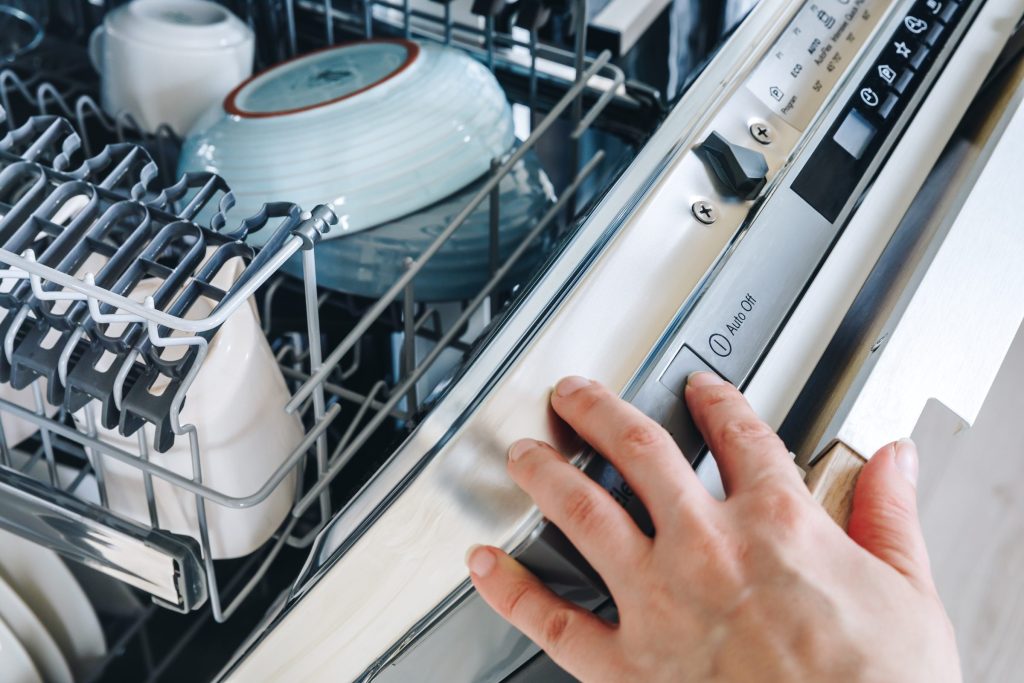
The panel lights, you press start, and nothing happens — or nothing lights at all. The door latch is the answer far more often than the electronics, and it is one of the least expensive parts in the machine.
- Lights on, nothing happens on start
- Completely dead panel
- Starts only if the door is pushed hard
-
It is trying to tell you something Dishwasher beeping or panel unresponsive
Beeping that will not stop, a panel that answers half its presses, or a machine that has stopped mid-cycle and is complaining. On this appliance — unlike the rest of the line — there is usually a code behind it, and the code is worth more than the sound.
- Beeping with a cycle abandoned part-way
- Some pads working, others dead
- A code that will not clear
-
from $215 Dishwasher control & electronics repair
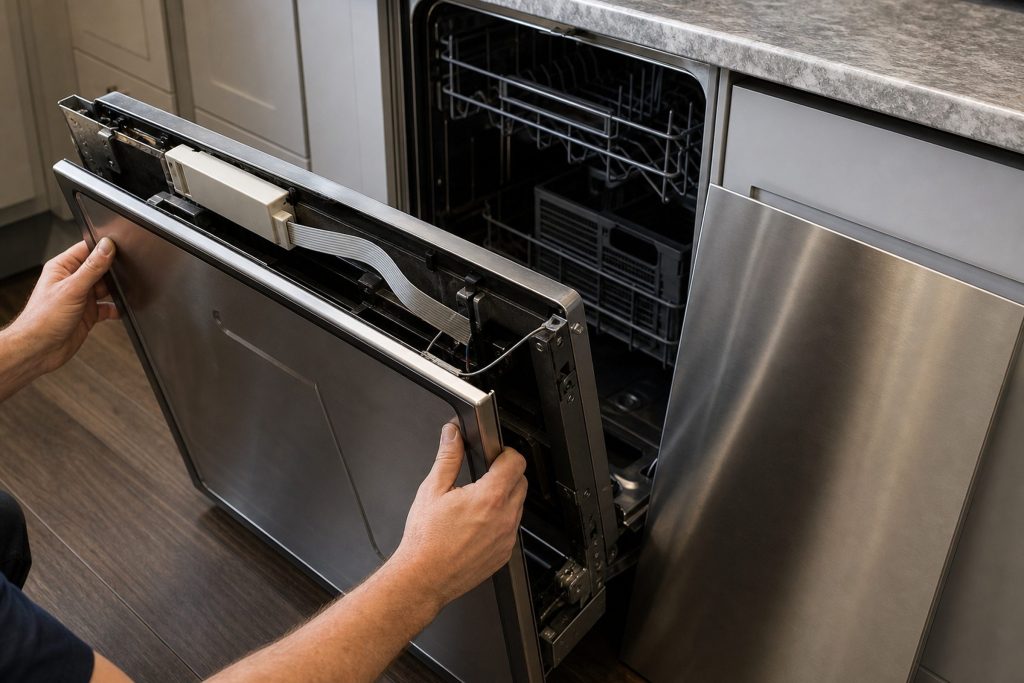
A panel that ignores half its pads, a machine that starts a cycle and abandons it, a code that will not clear. Because these dishwashers actually publish codes, this is the one place on the site where the electronics can often be diagnosed before anybody opens anything.
- The code used as evidence rather than cleared and forgotten
- Latch, supply and water sensing ruled out before a board is named
- The machine run through a full cycle after the repair

Questions people ask about this
Why photograph the code first?
Because on this make it is unusually valuable. Almost nothing else in the kitchen publishes codes at all, and the dishwasher table has a meaning and an instruction against every entry. On an intermittent problem the code may be the only evidence there is, and a reset erases it.
How do I cancel a running program?
On most of these, a long press of the program or start control puts the machine into a drain cycle. Let it finish rather than cutting power part way — a machine left holding water is what produces the next complaint, and standing water in the tub grows a smell within days.
It shows F2 and a reset does nothing.
It will not. F2 is the maker's own code for a machine that cannot discharge water, and the maker's instruction with it is to check the drain hose and the filters. Take the filter assembly out, wash it, clear the sump by hand, and check the drain hose is not kinked. That is a real fix; a reset is not.
The machine shows HI. Is that a reset problem?
No, and it may not be the dishwasher at all. The maker gives HI as a high-voltage supply failure, which is about the electricity arriving rather than the machine. Do not keep restarting it — a supply problem does not improve by being asked again, and this is occasionally an electrician's job.
Does opening the door reset anything?
It interrupts the cycle properly, which on many machines is enough to clear a transient condition without cutting power. It is worth trying between cancelling the program and going to the breaker, because it is gentler than both.
Will resetting clear the salt or rinse-aid warnings?
No, and it should not. Those are consumable indicators reporting a real state, and they clear when the consumable is topped up. A reset that cleared them would just be hiding the reminder.
Troubleshooting
More guides like this one
-
Resetting a Bertazzoni Refrigerator, and the Alarm That Is Not a Problem
Most searches for a refrigerator reset are really searches for how to stop the noise. The door alarm silences with a two-button hold, and neither it nor the filter reminder is a problem.
Read more -
How to Reset a Bertazzoni Oven, and What a Reset Cannot Fix
A proper power-down is two full minutes at the breaker, not a switch off — and after a storm-season outage that genuinely does clear a confused control. Here is which problems come straight back.
Read more -
Bertazzoni Ice Maker Not Making Ice: Three Things Before You Book Anyone
The maker documents two things owners miss entirely: the ice maker is off unless its button is backlit, and the mold has to be locked level to work at all.
Read more
Tell us the model number and what it is doing.
This article is based on:
- Official manufacturer documentation
- Internal repair procedures
- Technician repair history
- Company quality standards