Appliance
Bertazzoni wine cellars
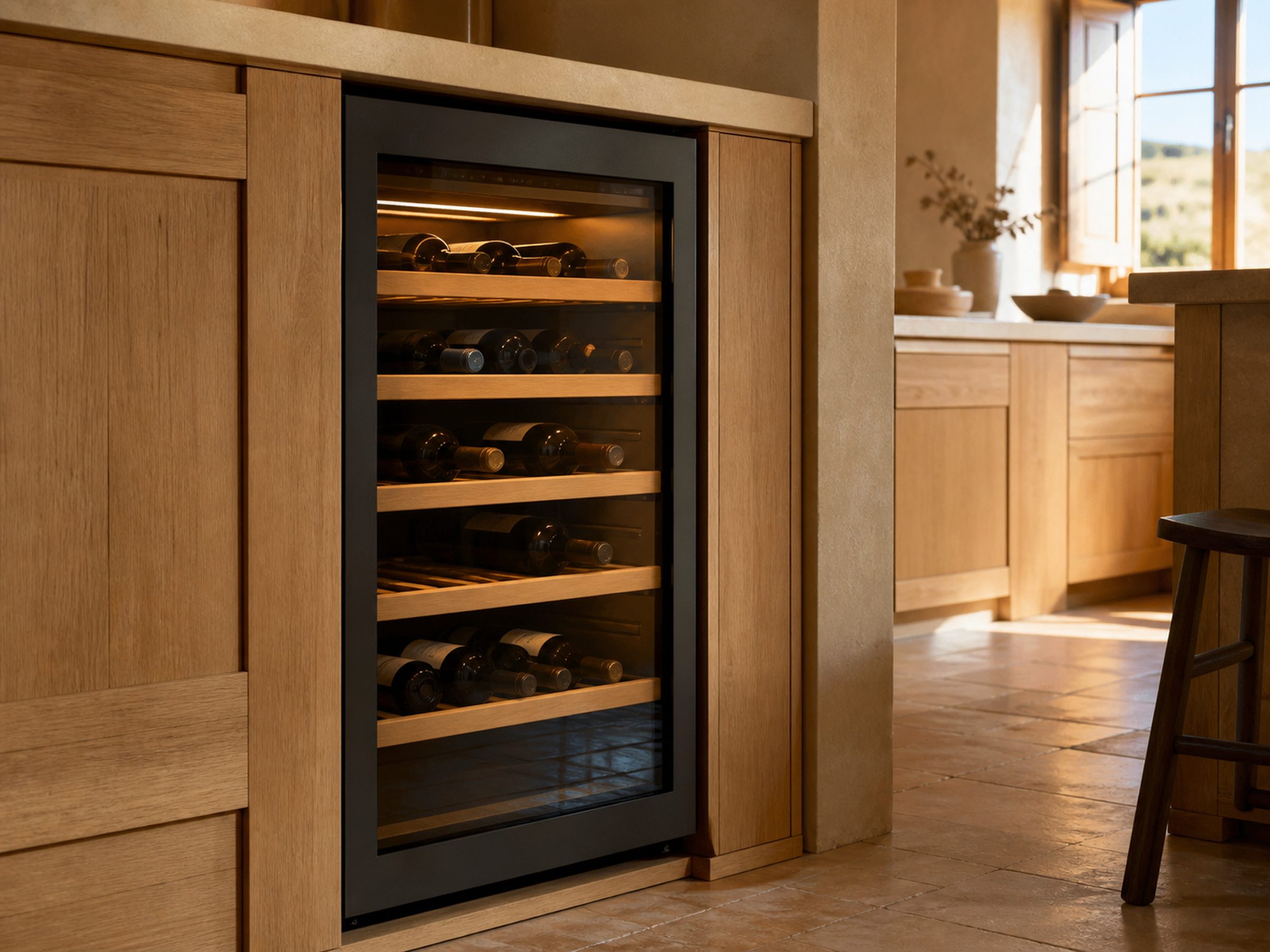
Four wine cellars, both widths, all of them built-in columns that wear your own cabinet fronts. A wine cellar is not a cold refrigerator: it is asked to hold a narrow band of temperature and a sensible humidity for years without interruption, and to do it quietly and without vibration. That is why the complaints here are different from every other cold appliance on this site.
- 1 symptoms we are called out to
- From $95 diagnostic, credited to the repair
- 59 cities and neighborhoods covered
- OEM parts available on order
The short version
What this equipment is, for a repair
Configurations
Built-in columns · 18" · 24" · Panel ready
Access
Planned before the visit, not discovered on arrival
Parts
OEM, available on order
Diagnostic
From $95, credited to the repair
What goes wrong with it
Symptoms we are called out to on Bertazzoni wine cellars
Each one covers the likely causes in the order they are worth checking, and what to do in five minutes before booking anything.
-
Usually the door, and worth heeding Refrigerator beeping
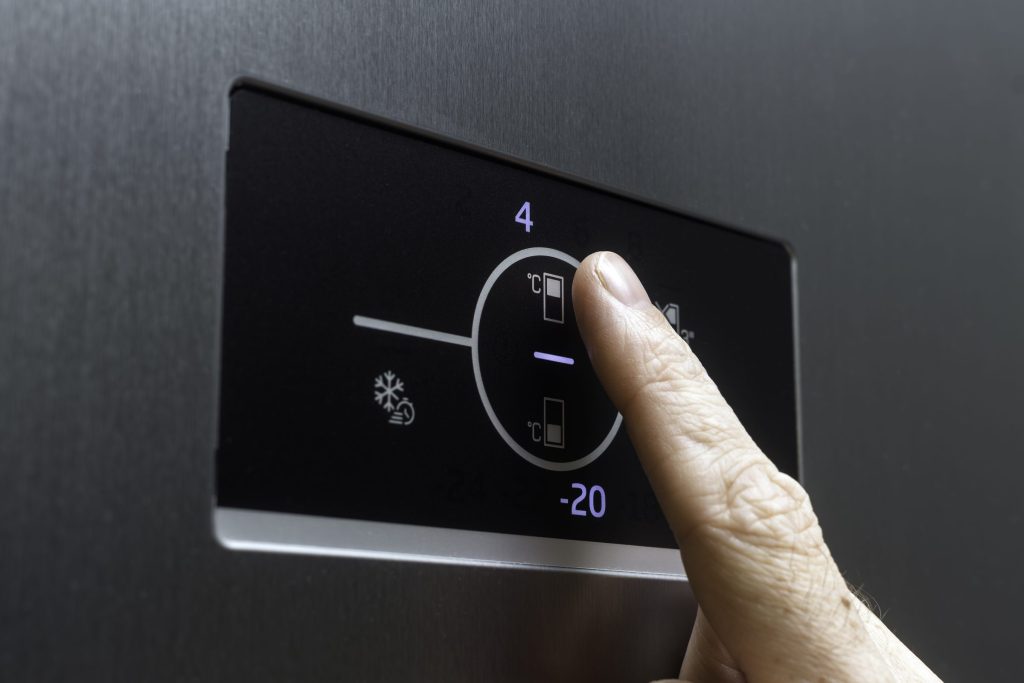
A refrigerator that beeps is nearly always saying one of two things: a door has been open too long, or the temperature has gone outside the band it will accept. Both are worth acting on rather than silencing.
- Beeping with a door apparently closed
- An alarm after a power cut
- Beeping that started with no obvious change
What we do on it
Repairs we carry out on Bertazzoni wine cellars
Starting figures for this equipment in South Florida. The exact cost is confirmed after an on-site diagnostic — and this is not the whole list of what can go wrong, so call if your problem is not here.
-
from $95 Diagnostic visit
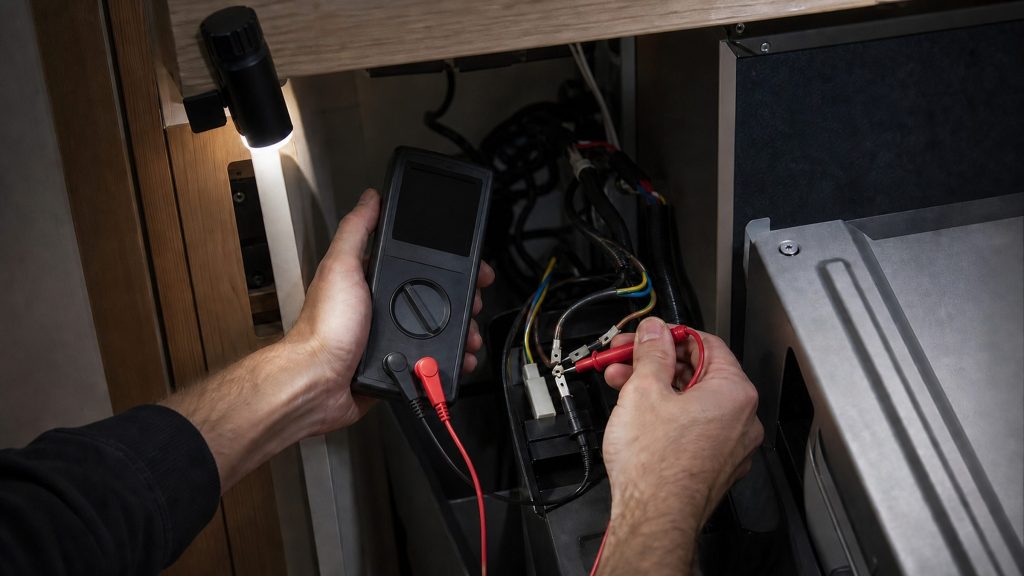
We work out what is actually wrong before anybody quotes a part. On this make that usually means measuring rather than reading, because most of these appliances report nothing at all when they stop. The fee is credited toward the work when you go ahead.
- Measured rather than guessed — resistance, current, temperature, airflow
- The free causes checked first, before any part is named
- Credited toward the repair
-
from $650 Refrigerator sealed system repair
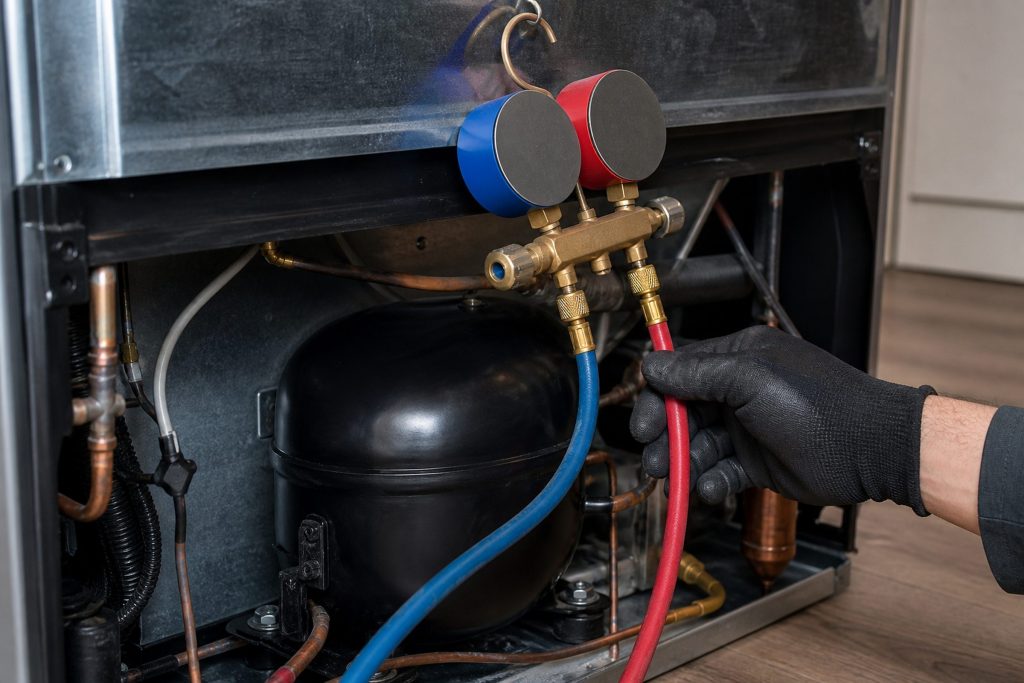
Compressor, condenser, evaporator and the refrigerant between them. The expensive end of refrigeration, and the one job on this site where we will tell you plainly when a machine is not worth it — because on a freestanding unit it sometimes is not, and on a built-in column it almost always is.
- Only quoted after airflow and defrost have been ruled out
- A straight answer about whether the machine is worth the work
- Recovered, repaired, evacuated and weighed in — not topped up
-
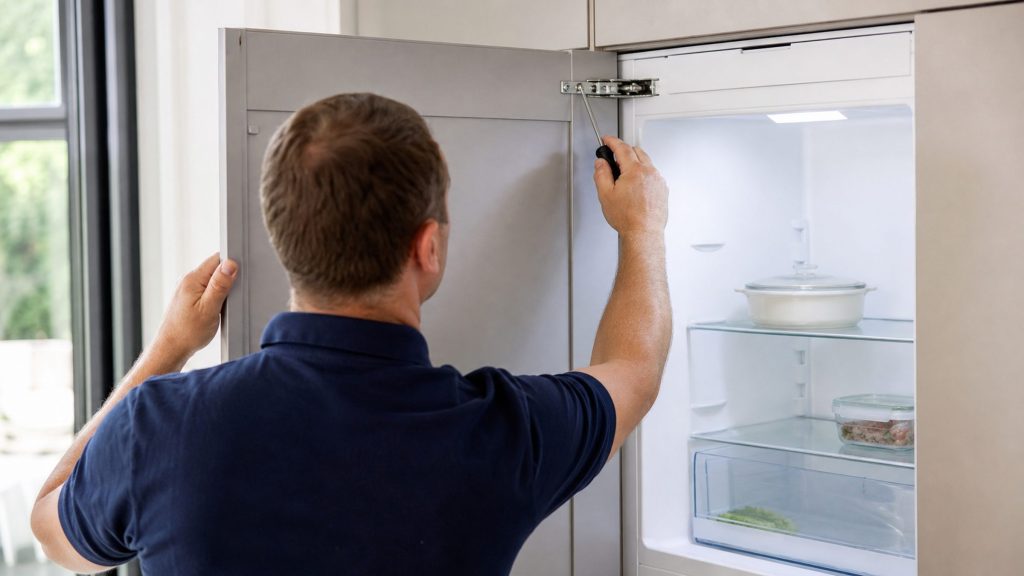
from $155 Column panel & door alignment
Fourteen of the machines in this line live behind your own cabinet fronts — five refrigerator columns, five freezer columns and four wine cellars. A custom door front is heavy, and when a column door drops a few millimeters it stops sealing along the top long before anything looks wrong.
- Doors set square against the cabinetry, not against the appliance alone
- Seals tested with the panel on, because that is how they live
- Hinges and closers adjusted as a set
-
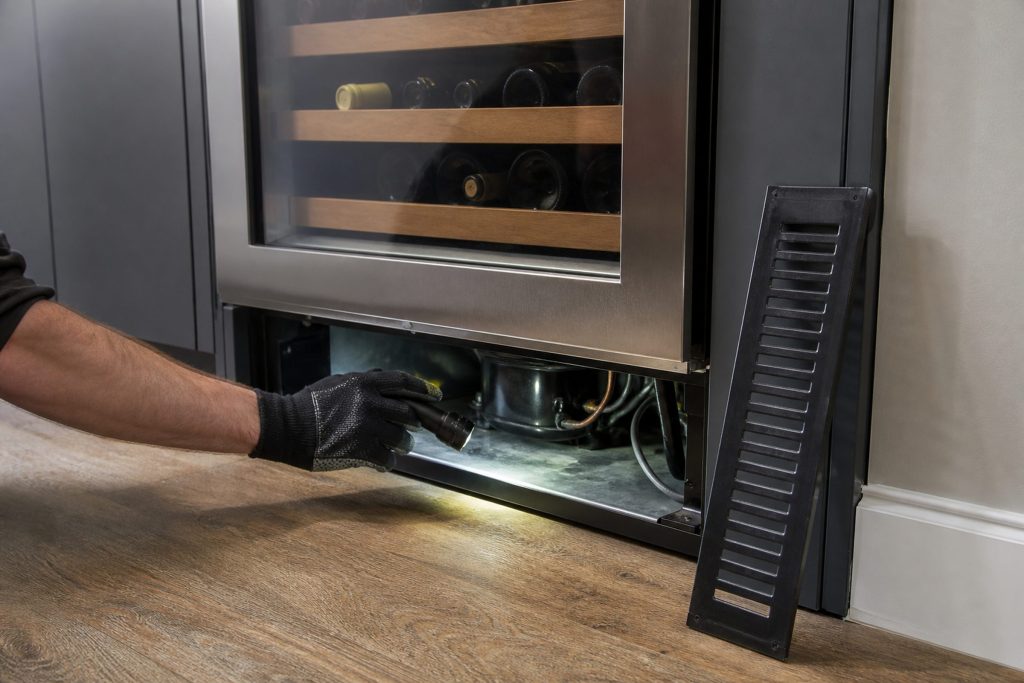
from $195 Wine cellar repair
Four built-in wine columns, 18 and 24 inches. A wine cellar is not a cold refrigerator: it holds a narrow band of temperature and a sensible humidity for years, quietly and without vibration. That is why the complaints here — drift, condensation, a hum — would not even be complaints on a fridge.
- Stability treated as the measurement, not the number on the display
- Condensation traced to the seal, the humidity control or the room
- Vibration checked at the loading before it is checked at the compressor
-
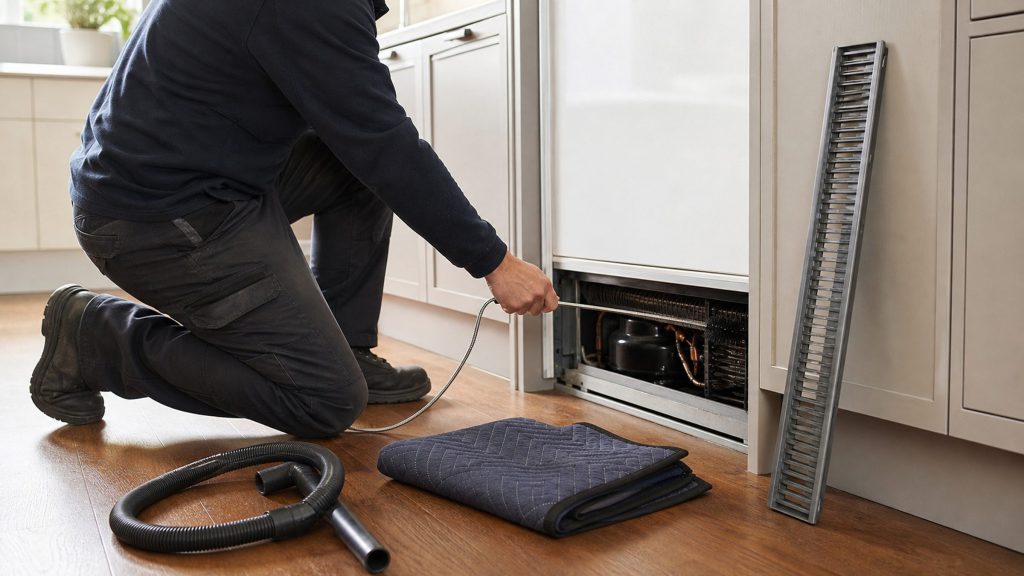
from $135 Appliance maintenance visit
A planned visit rather than an emergency one. On this make it earns its keep in three specific places: brass burners that want cleaning rather than replacing, hood filters and ducting nobody has looked at, and the scale that South Florida water puts into every dishwasher, steam oven and coffee machine in the house.
- Several appliances in one visit, which is where the saving is
- Burners, filters, condensers and scale — the four things that actually shorten a life
- A written note of what is starting to age, before it stops
-
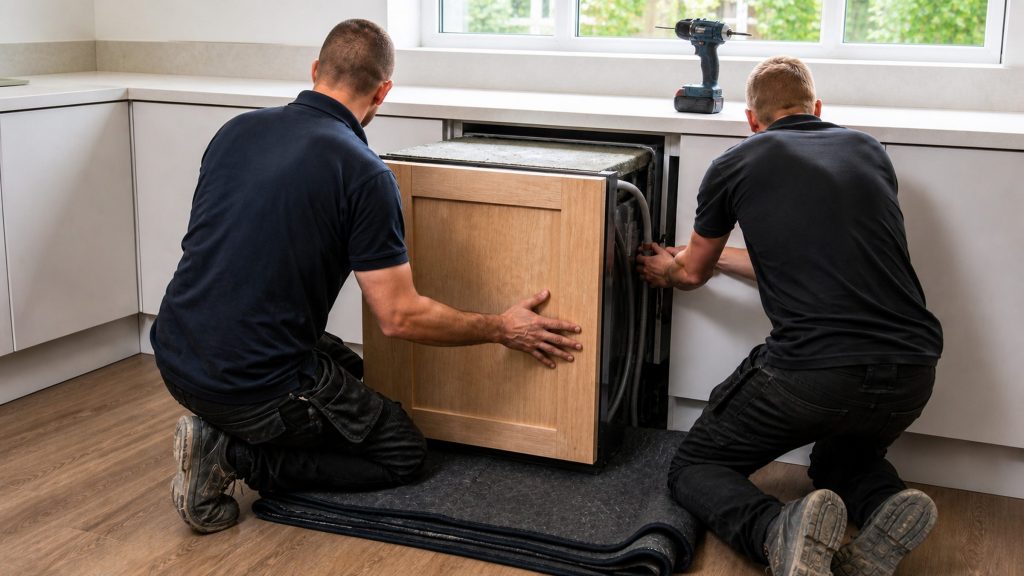
from $175 Appliance installation & refit
Setting a machine back into cabinetry it was taken out of, hanging a custom panel on a column, or putting right an installation that was never quite right. On this make it matters more than most: a great deal of the line is built in, and induction in a sealed island is the commonest self-inflicted failure we see.
- Clearances and ventilation checked against what the appliance actually needs
- Custom panels hung square and aligned to the neighboring cabinetry
- Anti-tip, gas connections and leveling treated as the safety items they are
In more detail
About Bertazzoni wine cellars
What a wine cellar is asked to do
Hold a narrow band of temperature and a reasonable humidity, continuously, for years, without vibration and without light. None of those is what a refrigerator is optimized for, and it is why the repair conversation is different: a drift of two degrees matters here in a way it does not in a fridge, and a hum matters at all.
The four in the line
All of them built-in columns, 18 and 24 inches, panel ready — which means the front you see is your kitchen's, not the appliance's. As with the freezer and refrigerator columns, the panels come off before the diagnosis starts and go back on aligned afterwards.
What we are called out for
- Temperature that drifts rather than temperature that is wrong — a sensor, a control, or a door.
- Condensation, which in South Florida is as often the seal and the ambient humidity as it is the humidity control.
- Noise and vibration, where the first two suspects are the loading rather than the machine.
- Uneven cavity temperature, which is airflow: a shelf, a fan, or bottles against the back wall.
What to have ready when you call
The model number, the set point and the actual reading, whether the drift is steady or swinging, and a photograph of how the cabinet is loaded.
This article is based on:
- Official manufacturer documentation
- Internal repair procedures
- Technician repair history
- Company quality standards
Before you book
Questions about bertazzoni wine cellars
It is two degrees off. Does that really need a technician?
It depends on whether it is stable. Wine is far more tolerant of a steady temperature slightly away from the ideal than of a temperature that moves. A cabinet sitting reliably two degrees high is worth adjusting and watching; a cabinet that swings four degrees across a day is worth a visit, because something is cycling that should not be. Tell us which of those you are seeing — the difference decides how urgent it is.
There is condensation on the inside of the glass.
Start with the door. On these cabinets the glass is treated and the door is sealed, and the two commonest causes of condensation are a seal that is no longer making contact along one edge and a door that is being opened often in a humid kitchen. If the seal is good and the door is left alone, condensation means the humidity control is not doing its job, and that is a repair. In this city the ambient humidity makes this a more frequent call than it would be anywhere else.
It has started to hum.
Worth attending to, because a wine cabinet is designed to be quiet and vibration is bad for what is inside it. In order: bottles or a rack touching the cabinet wall, which is free to fix; a shelf not seated in its runners; the compressor mounts, which age; and the fan. The first two account for most of these calls and neither of them is a repair.
Half the cabinet is at the wrong temperature.
That points at airflow rather than cooling. These cabinets move air deliberately to keep the whole cavity even, and anything that blocks that path — a shelf out of position, bottles packed hard against the back wall, a fan that has stopped — produces exactly this. It is worth taking a photograph of how the cabinet is loaded before you call, because sometimes the answer is in the picture.
Does it have to come out of the cabinetry?
Usually the front comes off rather than the appliance coming out, and for a diagnosis that is often enough. What we would rather know beforehand is whether the cabinet has a custom door front and whether anything has been built around it since installation, because both change how long the visit takes.
Where we do it
Across Miami-Dade, Broward, and Palm Beach
Same terms everywhere we go: an on-site diagnostic first, the price agreed in writing, and the exact figure confirmed once we have seen the unit.
Neighborhoods people ask for by name