Diagnostic visit
from $95
Credited toward the repair when you go ahead. If you do not, you pay this and nothing else.
Miami-Dade · Broward · Palm Beach
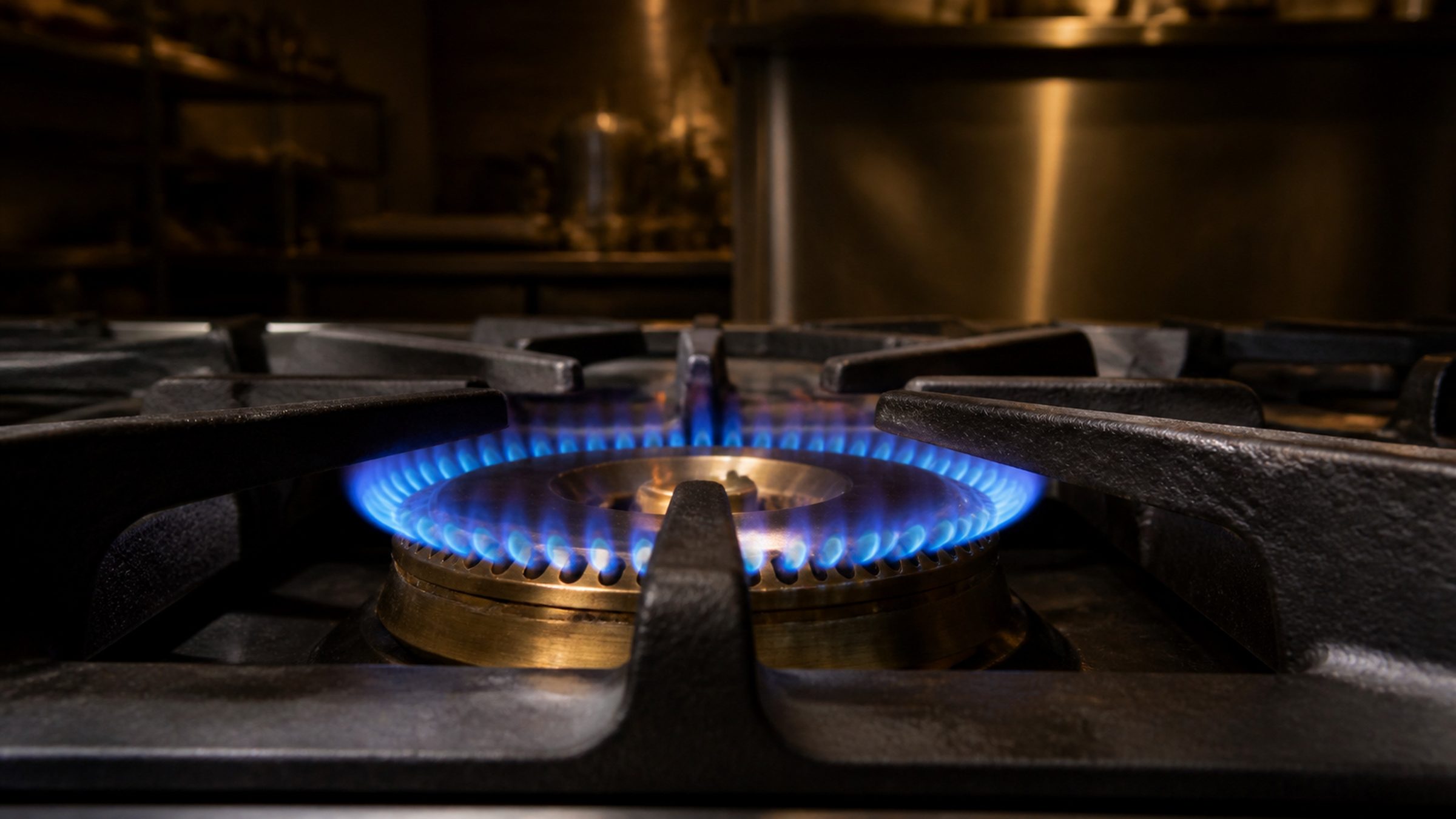
Only two families of Bertazzoni appliance publish an error code: the dishwashers and the induction tops. Every gas range, every gas oven and all thirty-seven hoods diagnose by behavior instead — a flame that lifts off the port, a yellow tip where there should be blue, an oven that browns on one side. Reading that is the job, and it is why nobody can price one of these down the telephone. Independent company, diagnosis on site, scope and price in writing before anything is opened.
What we repair
Ranges and rangetops, gas and induction cooktops, wall ovens including steam and speed, thirty-seven hoods, built-in refrigeration and freezer columns, wine cellars, dishwashers, microwave drawers and one built-in coffee machine. Start with whichever one is misbehaving.
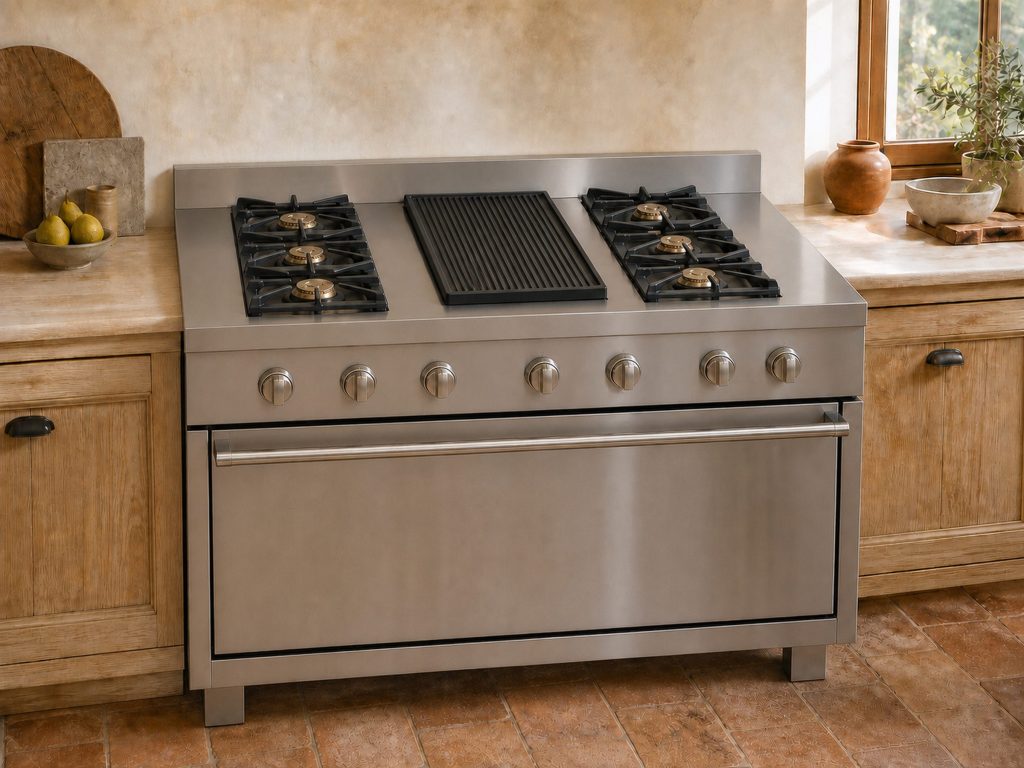
Thirty-seven ranges in the current line and the reason most people know this maker at all. Eleven are all gas, nine dual fuel, thirteen induction; ten of them run brass burners and sixteen carry a cast iron griddle across the middle. A 48-inch range is two ovens, six burners and that griddle in one machine, and any one of those is a reason to call. Almost none of it announces a code when it stops — this is a make you diagnose by what it does, not by what it displays.
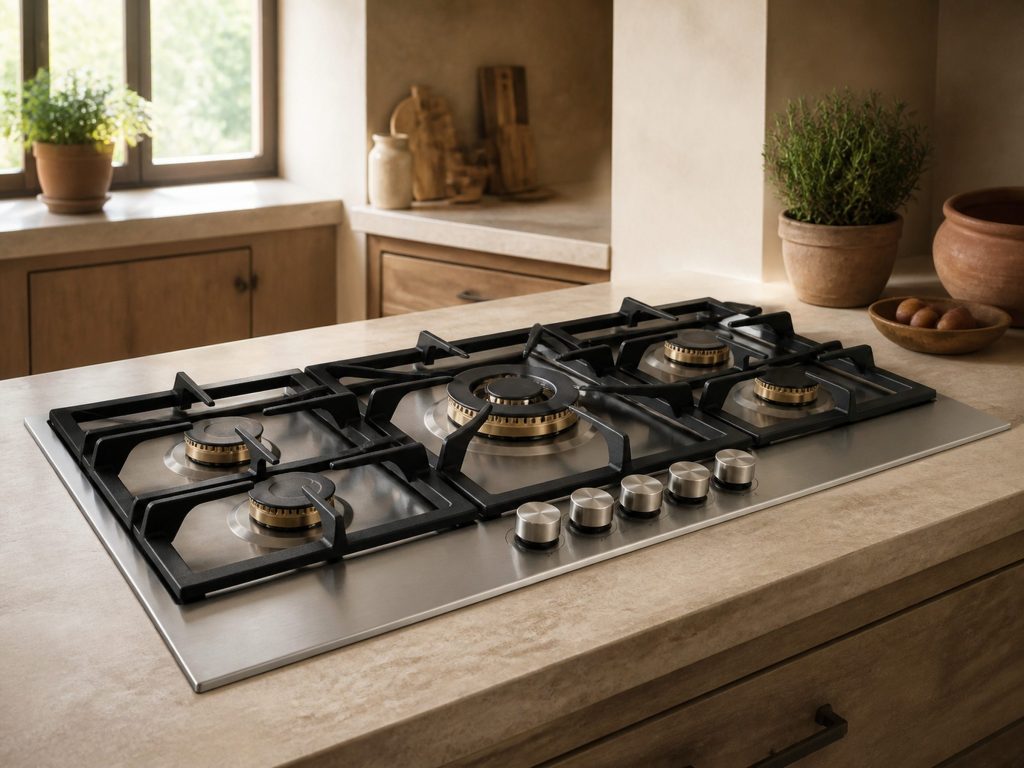
Thirty-four surfaces: nineteen gas, fifteen induction, and nine of them rangetops rather than cooktops — the same repair under a different word. Ten run the same brass burners as the ranges. The induction tops publish no code table — the maker issues installation sheets for them and nothing more — so what settles an induction call is the cabinet underneath and whether its boards can shed their heat.
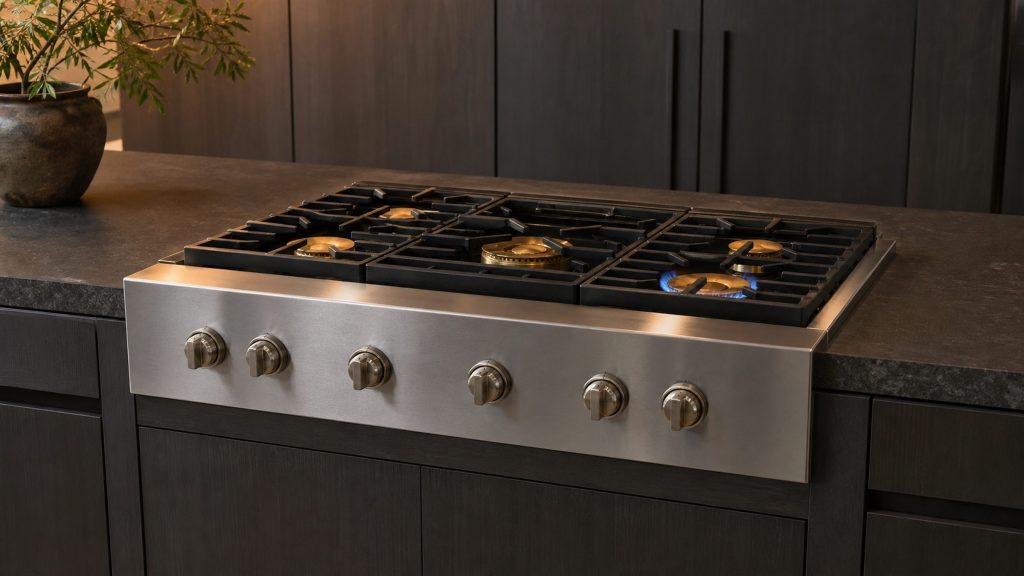
A Bertazzoni range top is the cooking deck off a range with a cabinet underneath instead of an oven — thirty-six inches of brass burners and cast grates, or an induction deck, set into a counter. Above the counter it is the range you know. Below it, the controls, the valve bank and the gas manifold sit in a cupboard, and that is what makes it its own appointment.
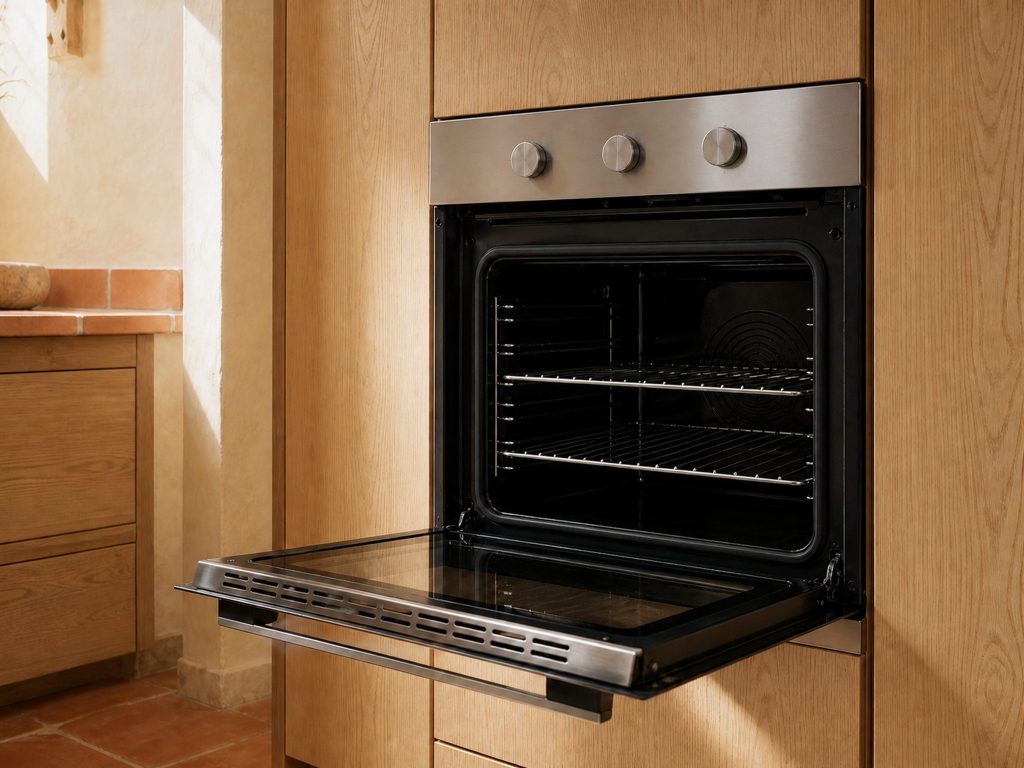
Eighteen built-in ovens, and they are not all the same machine. Five are speed ovens — a microwave and a convection oven sharing one cavity — five cook with steam, eight self-clean, and three carry the maker's own guided cooking. Two are doubles. What they have in common is that they are built into cabinetry, which decides how a repair starts: the oven comes forward before anything else happens.
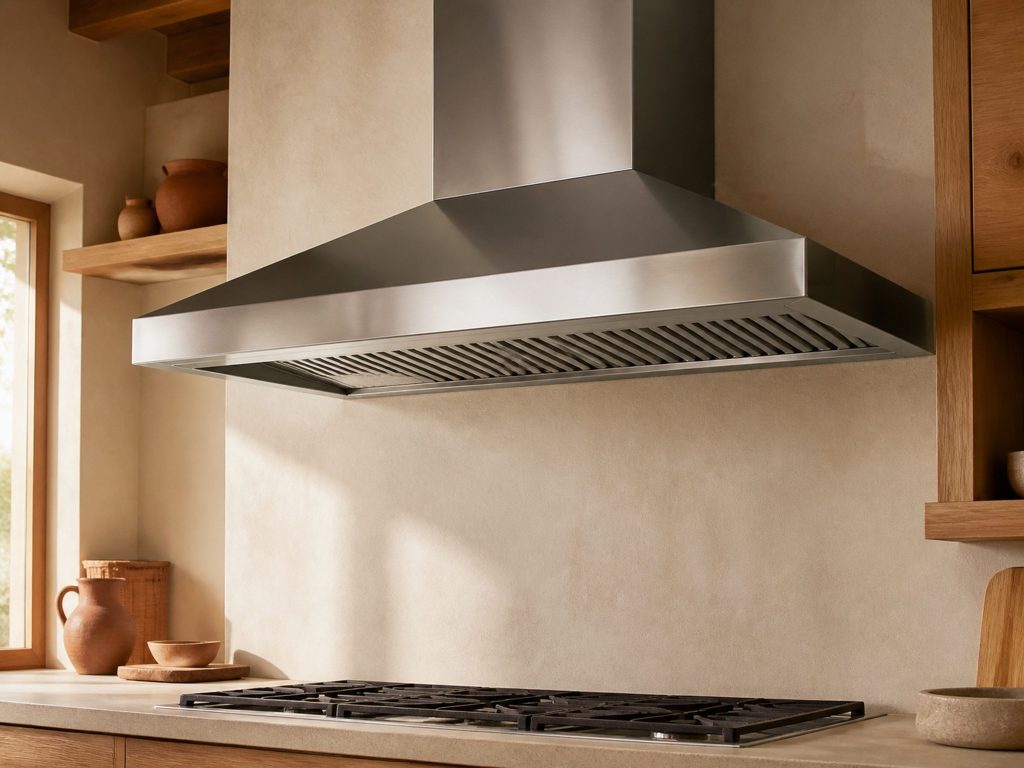
Thirty-seven hoods, which is as many as there are ranges — this maker expects the two to be bought together. Twenty-one are wall mounts, seven chimney hoods, five inserts built into a cabinet, three island hoods hanging over a counter. Nineteen move 600 cubic feet a minute. When one stops pulling, most of the diagnosis is not in the hood.
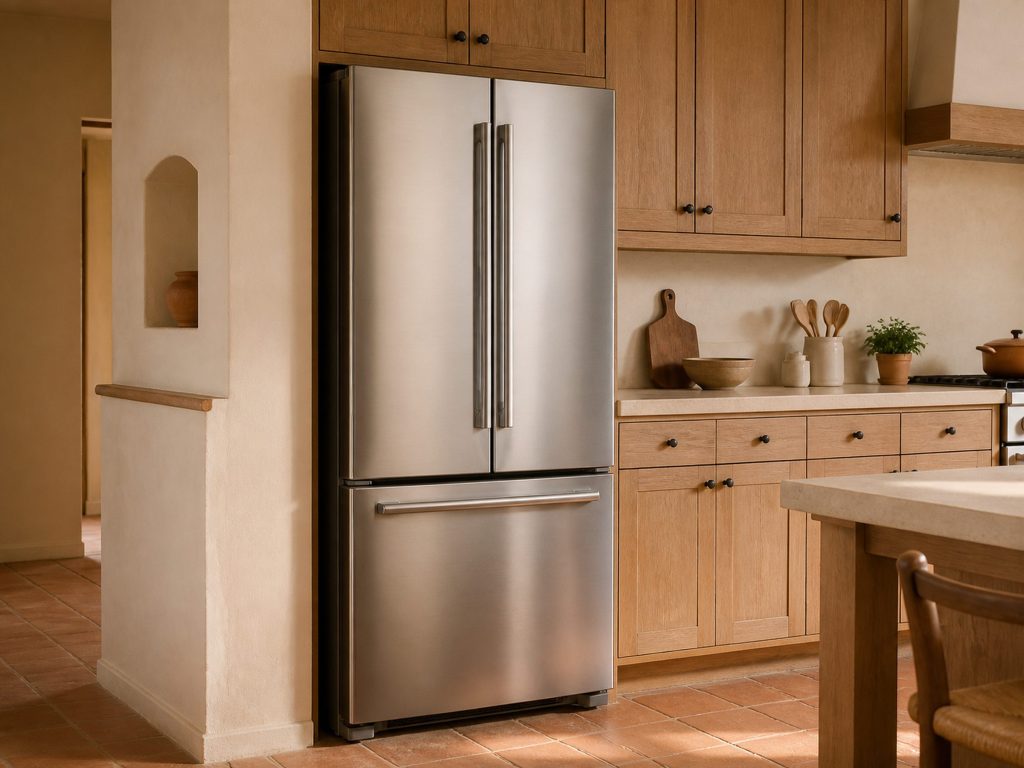
Thirty refrigerators, and they divide sharply: seventeen freestanding machines that can be pulled out into the room, eleven built-in, and five columns that live behind your own cabinet fronts. Twelve are French door, thirteen bottom mount. Which of those you have decides almost everything about how the visit goes — a column comes apart before it can be diagnosed, and a freestanding bottom mount does not.
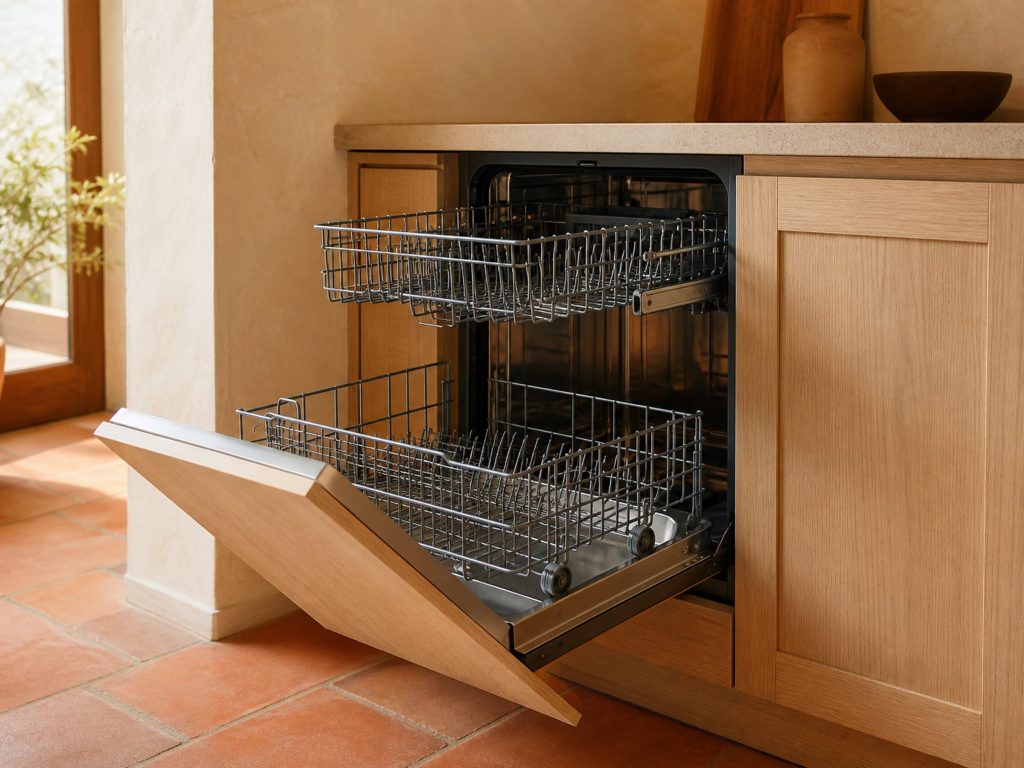
Eight dishwashers, and the one part of this make that talks. Five are tall tub, three standard; one is panel ready and one is an 18-inch. Two run at 39 decibels, which is quiet enough that "it has stopped" and "it is running" can be hard to tell apart. Unlike almost everything else here, these publish a real error table — F1 through F9, plus FF and HI, each with a meaning the maker prints — and a code is worth writing down before you touch anything.
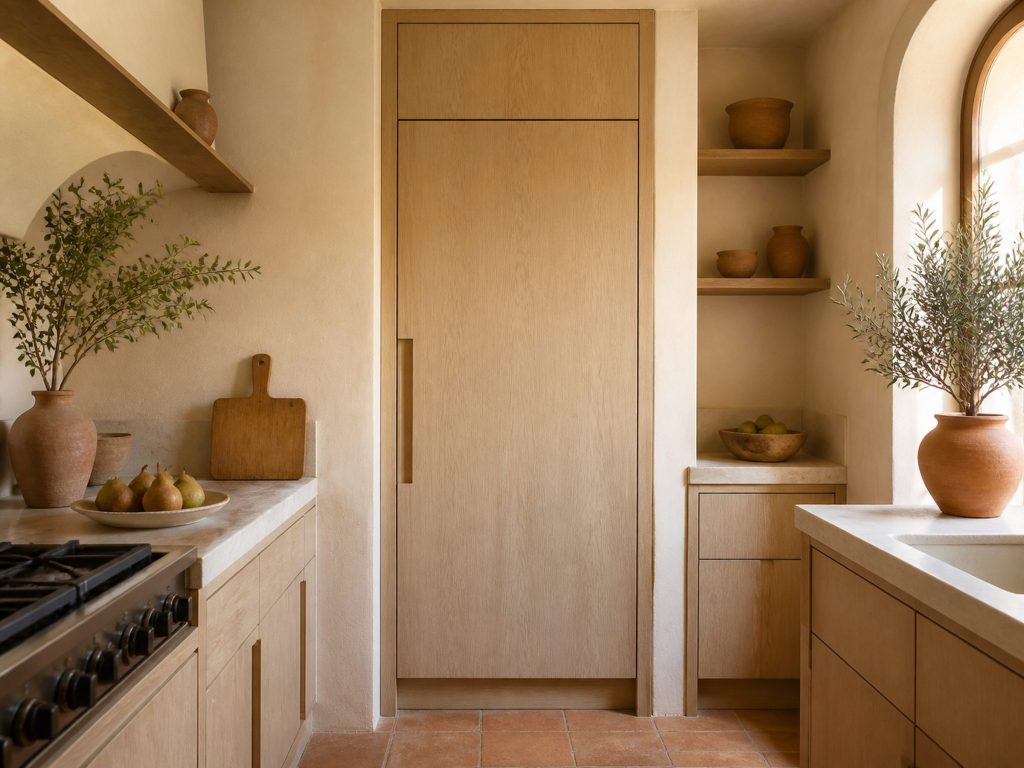
Five freezers, and every one of them is a built-in column — 18, 24 and 30 inches, two of them with an ice maker inside. There is no chest freezer and no freestanding upright in this line at all. A column is a piece of the kitchen rather than an appliance standing in it, and that decides how the repair begins: the front comes off before anything is measured.
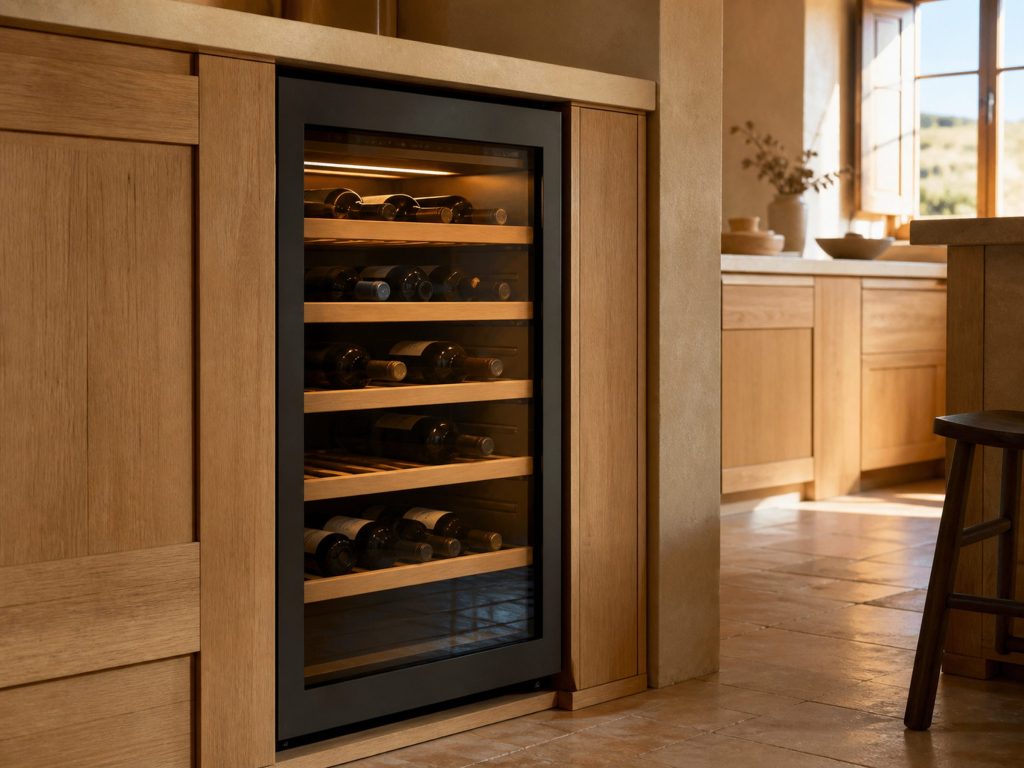
Four wine columns, both widths, all of them built in and wearing your own cabinet fronts. Wine cellar, wine cooler, Bertazzoni wine fridge — one appliance under four names, and this page covers all of them. Wine refrigeration is not a cold refrigerator: it is asked to hold a narrow band of temperature and a sensible humidity for years without interruption, and to do it quietly and without vibration. That is why the complaints here are different from every other cold appliance on this site.
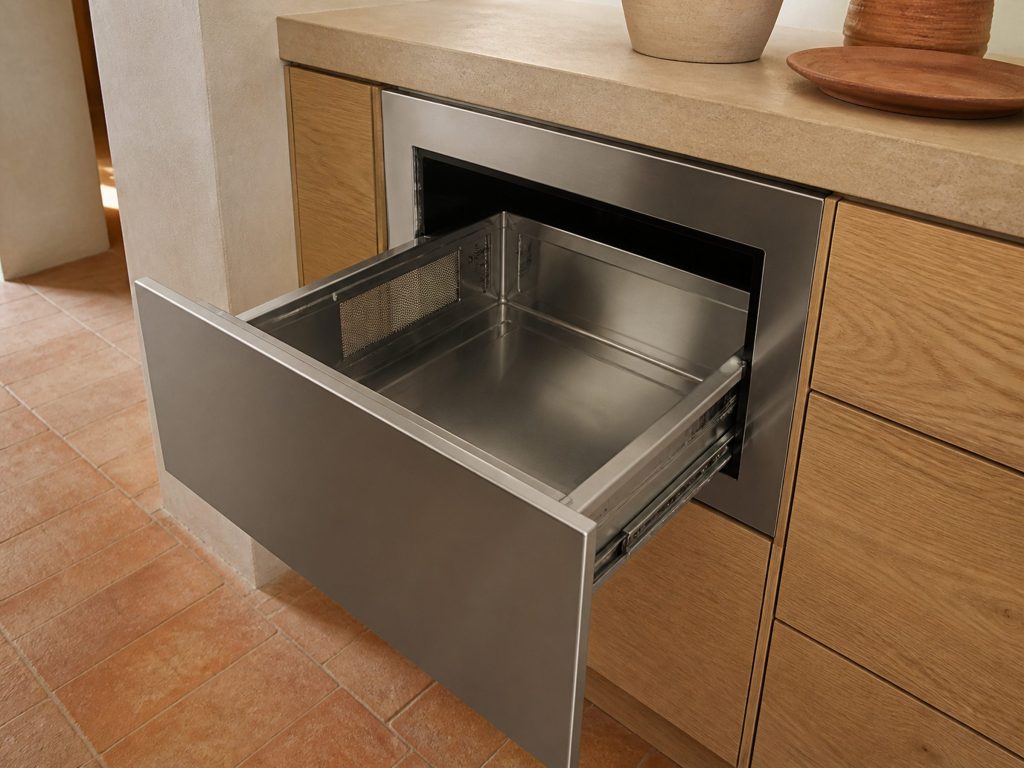
Four microwaves and three of them are different machines: two over-the-range units that double as the hood, a 30-inch built-in, and a microwave drawer that opens downward from under the counter. The drawer is the one worth knowing about — it is a different mechanism from anything else on this site, and it fails in ways a door-and-hinge microwave never does.
South Florida
Error codes
We read every manual Bertazzoni links from its own 288 product pages — sixty-nine of them — to find out what it actually publishes. Three carry a table of codes. That is the whole of it, and knowing that is worth more than a long list somewhere else that somebody wrote rather than found.
Reading F2 on a dishwasher
Fleet research told us this maker's dishwashers used E1, E4, Ed, E8 and E9, at high confidence. Its current manuals print F1 to F9, FF and HI instead — the research was describing an older generation. We publish the manuals, and we would rather have a short archive that is right.
The shapes this maker writes
F2
F and a digit, on the dishwashers. Ten conditions with a published meaning and a published instruction for each
E5
E and a digit or a letter, on refrigeration that has a display. Eight sensing conditions, and the maker notes the machine usually keeps cooling through them
dr
Not a problem. A refrigeration door left open too long, with a buzzer three times a minute for eight minutes
· ·
A flashing key or display item on a hood — the filter alarm. Three hood families do it three different ways, and on one of them the flash RATE is the message
What each machine publishes
| Dishwashers | 10 codes with a meaning and an instruction for every one — the best-documented appliance this maker sells |
|---|---|
| Refrigeration | 8 sensing codes on the machines with a display, plus a door alarm and a water-filter reminder that counts days rather than measuring anything |
| Range hoods | No codes. Three different filter-saturation signals across the KG, KPH and KMC families, all of them documented |
| Ranges & rangetops | Nothing. No code table exists for any of the 37 ranges or 34 cooktops in the current line |
| Ovens | Nothing — gas, electric and dual-fuel alike. If your oven display is showing something, photograph it; there is no published table to look it up in |
| Induction | The product pages publish installation sheets with no code chapter. Anything you find quoted as an induction code for this make has no first-party source behind it |
| Speed oven, warming drawers, coffee | Nothing published. These are covered by the symptom pages |
There is no induction row of codes here and there will not be one until there is a source for it. Fleet research names three; the maker's own induction pages publish installation sheets with no code chapter at all, and a table copied from somewhere else that turned out to describe a different machine would cost you a visit rather than save you one.
23 entries, every one of them read off the maker's own paper. Eighteen are numbered codes; the rest are indicators the maker documents without numbering — a door alarm, a filter reminder, three hood families that flash at you differently. Everything else in this kitchen is diagnosed by what it is doing, which is what the symptom pages are for.
Browse all error codesNo number on the display, or no display at all? On this maker that is the normal case rather than the exception. A burner that lights and dies, an oven that runs cold at the back, a hood that sounds right and clears nothing — those live under symptoms, and here the symptom pages are the main road rather than the fallback.
How a visit runs
The number from the plate and a line about the behavior. On a range the plate is usually behind the kick panel; on a wall oven, inside the door frame. A photograph of it beats reading it out. If it is a dishwasher or an induction top showing a code, photograph that too and do not clear it.
Ignitors, thermocouples, burner caps and hood capacitors travel as a matter of course. A control board for a particular model is ordered against the number on the plate, which is why that number matters more than it sounds.
Nothing is opened until you have both and have agreed to them. The diagnostic comes off the bill when you go ahead. If the machine is still inside the maker's own warranty, we tell you that instead of quoting.
We guarantee the work we performed and the parts we fitted, and any gas connection we open is remade and leak-tested before we leave. Where a repair approaches the value of the appliance, you get told that rather than a quote.
What it costs
On this equipment the same behavior has several ordinary causes hundreds of dollars apart, and the machine will usually not narrow it for you. Every figure here is a starting point for this equipment in South Florida, researched rather than invented.
from $95
Credited toward the repair when you go ahead. If you do not, you pay this and nothing else.
from $135
Twenty machines in this line have brass burners. This is maintenance and it is priced below every repair on the site, because it is the job that prevents the ignition call.
from $155
The commonest gas call, set at the low end of the band: a large share end with a burner cleaned and seated properly rather than a part fitted.
from $175
Eighteen appliances carry a cast-iron plate with its own burner, valve and ignition. It fails on its own while the rest of the top is perfect.
from $195
A glowing ignitor is not a working ignitor — it is the current-sensing element in the safety circuit, and an aged one glows brightly while the gas never arrives.
from $145
Most hood complaints are the duct, the damper or the make-up air. A real share of these visits end with no part fitted at all.
Exact cost is confirmed after an on-site diagnostic, and the scope and the figure are in writing before anything is opened.
The cost of a Bertazzoni repair, item by itemWhere we work
Fifty-nine cities and neighborhoods, each with a page saying what we actually see there. Tell us where you are when you book — a range in a Coral Gables kitchen is a different hour from the same range on the sixteenth floor.
Neighborhoods people ask for by name
Coverage is the whole of Miami-Dade, Broward and Palm Beach — the pages below are the places people search for by name, not the edge of where we drive.
You will have the scope and the price in writing before anything is opened.
This article is based on:
Before you book
No, and we will not say we are. We are an independent repair company, not affiliated with, authorized by or endorsed by any manufacturer, and we do not carry out repairs on any manufacturer's behalf. What we do carry is our own warranty on the work we performed and the parts we fitted, and OEM parts are available on order.
There is not one. We read every manual this maker links from its 288 US product pages in order to be sure — no range, rangetop, gas oven or hood in the current catalog has a code table anywhere in its documentation. Only the dishwashers and part of the refrigeration publish codes. If a site is showing you a confident table of range codes for this make, somebody wrote it rather than found it.
Probably not, and the maker says so itself. The surface burners use a thermocouple safety device, and it has to be warmed by the flame before it will hold the gas open. Turn the knob to the highest setting, keep it pressed with the flame on high for four or five seconds, then release. If it still dies after that, it is worth a look.
Check the clearance under the appliance before you book anybody. Induction electronics shed heat downward, and a top fitted into a sealed island or above a tight drawer stack will shut a zone down under load while being perfectly healthy. It is the commonest induction call we get and it is free to rule out.
Almost certainly nothing. It is the filter saturation alarm asking you to wash the grease filters, or to replace the charcoal ones if the hood recirculates. Three hood families on this make signal it three different ways, and on the KPH hoods the flash rate is what distinguishes the two filters. Each has a page on this site.
Both, and gas is the larger half of this make. Any gas connection we open is remade and leak-tested before we leave. If you can smell gas now, do not wait for an appointment — leave, open doors on your way out, do not touch a switch, and call the gas utility from outside.